TL;DR
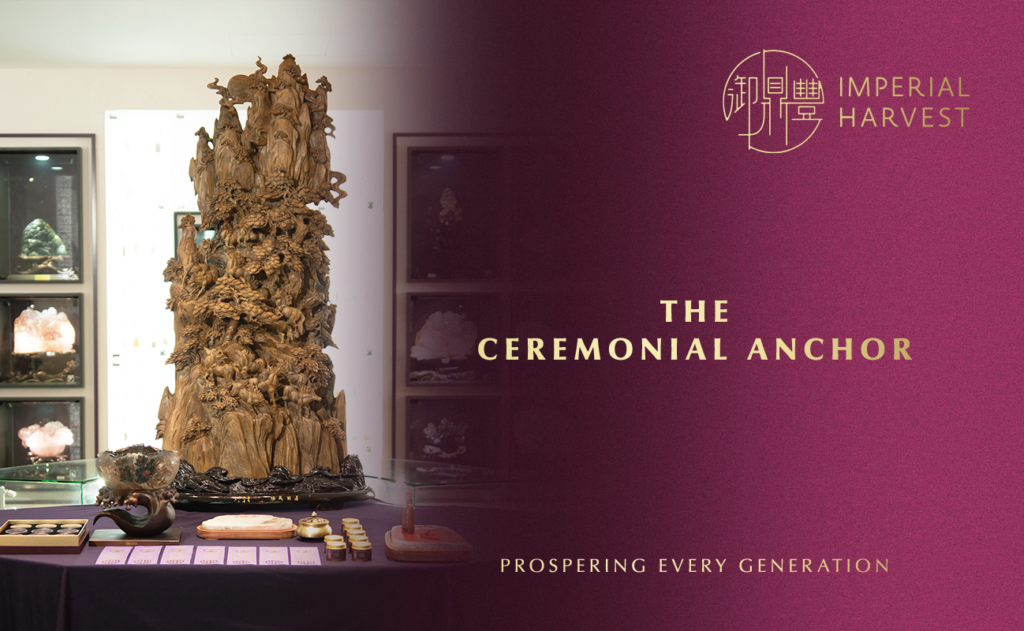
The Ceremonial Anchor isn’t a single masterpiece — it’s a commissioning practice. Grand Master David Goh carves a new anchor every year calibrated to that year’s celestial signature, and another for every major ritual window within it, ensuring every consecration is conducted through an altar continuously calibrated to current conditions.
The artefact at the centre of every Imperial Harvest consecration — commissioned anew each year, and again for every ritual window the year contains. Why the cadence matters more than any single piece.
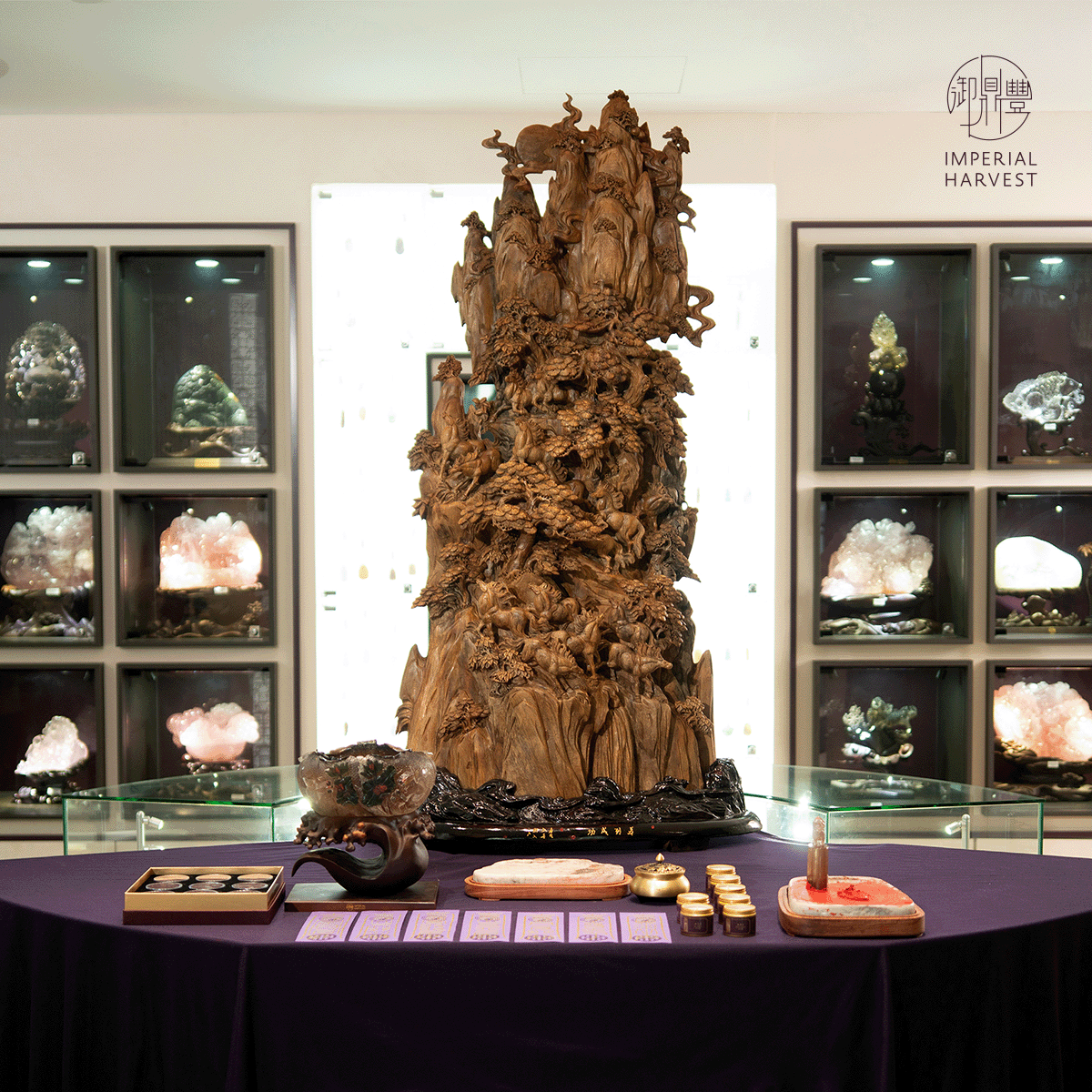
Inside the Imperial Harvest gallery at Delfi Orchard, on the altar where every consecration rite is conducted, sits the artefact the entire practice is oriented around. Clients see it at their consultations. Treasures pass through its presence during their blessing. Grand Master David Goh has described it as the single most important physical object in the practice — the artefact without which the consecration would have no focal point and the blessing no place to land. It is called the Ceremonial Anchor.
A first-time reader might assume the Ceremonial Anchor is a single piece — a masterwork, commissioned once, placed on the altar, and kept there permanently. It is not. The Ceremonial Anchor is a practice, not an artefact. It is a commissioning cadence that renews the altar’s governing piece each year, and for the ritual windows each year contains — celestial birthdays, imperial festivals, auspicious alignments — draws on Grand Master David Goh’s seasonal anchor, a piece kept at his private altar at home and invited to the gallery for the duration of each dedicated Blessing Ritual. To understand Imperial Harvest’s consecration infrastructure is not to understand any one anchor. It is to understand the rhythm through which the anchors are conceived, carved, and brought into ritual service — year after year, season after season, across a practice that has no intention of ever stopping.
What an anchor does
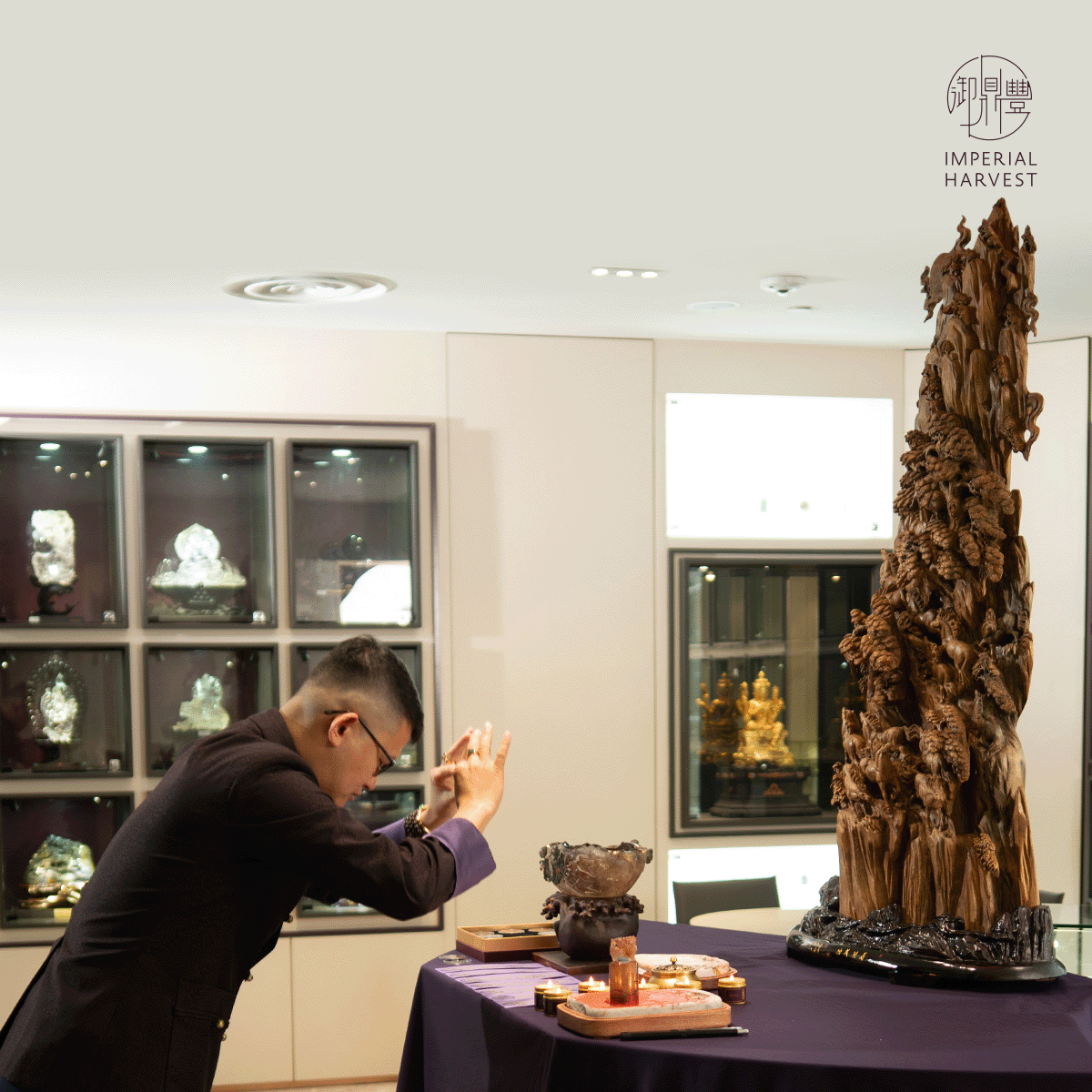
Every consecration rite conducted at Imperial Harvest proceeds through seven prescribed steps, drawing on a coordinated suite of ritual instruments — the Seven Star Candles that establish the Big Dipper’s authority above the altar, the specially commissioned incense shaped in the form of 福 that carries incantations upward for celestial ratification, the ceremonial vermillion Grand Master David Goh has personally concocted and applies to the treasure by his own hand, and the bespoke talismans hand-drawn for the specific client and the specific rite. Each of these instruments has its own function. What holds them together — what gives the rite a spatial centre and a ritual focal point — is the Ceremonial Anchor.
The anchor sits at the elevated centre of the altar. During the rite, the celestial energies invoked through incantation and talisman are received, concentrated, and distributed through the anchor to every treasure placed before it for blessing. Without the anchor, the rite has no axis. Without an axis, the blessing disperses. And in the understanding Grand Master David Goh articulates, what disperses does not arrive.
The anchor is not decoration. It is the single point through which the celestial energies of the consecration are received, concentrated, and distributed to every treasure brought before it. Without an axis, the blessing disperses — and what disperses does not arrive.
— Grand Master David Goh
This is the basis for why Imperial Harvest’s consecration infrastructure is organised around a named, physical anchor at all, rather than proceeding as an untethered ritual in the air above the altar. The celestial forces the rite invokes need a concentrating vessel on the terrestrial side of the transmission — a physical focal point that gathers and holds what the rite brings down, so that the treasures passing through the blessing receive a coherent, concentrated activation rather than a diffuse ambient exposure. The anchor is that vessel. And its properties — the material it is carved from, the iconography it carries, the duration of its commissioning — determine what the vessel is capable of holding.
The yearly anchor
Each year, Grand Master David Goh commissions a new Ceremonial Anchor purpose-built to the energetic signature of the incoming lunar cycle. The cadence is not symbolic. Every year carries its own structural signature in Imperial Chinese cosmology — determined by the interaction of the year’s Heavenly Stem and Earthly Branch, the element it emphasises, the polarity it expresses, and the archetypal conditions the cycle produces. A Wood Snake year carries a different signature from a Fire Horse year. A Water Rabbit year carries a different signature from a Metal Dragon year. Each signature governs, at the macro level, the conditions within which every client’s chart will operate across the twelve months of that cycle.
The yearly anchor is commissioned to answer that signature directly — to become, on the altar, the artefact through which the year’s defining energetic conditions are channelled into every treasure consecrated across the year. The design is not a generic prosperity tableau. It is a specific iconographic response to the specific year the anchor will preside over. The material is selected for the density and duration appropriate to holding the year’s particular forces. The proportions, the motifs, and the symbolic elements are all determined by Grand Master David Goh’s reading of what the year will demand of its clients, and of what the altar will need to concentrate in response.
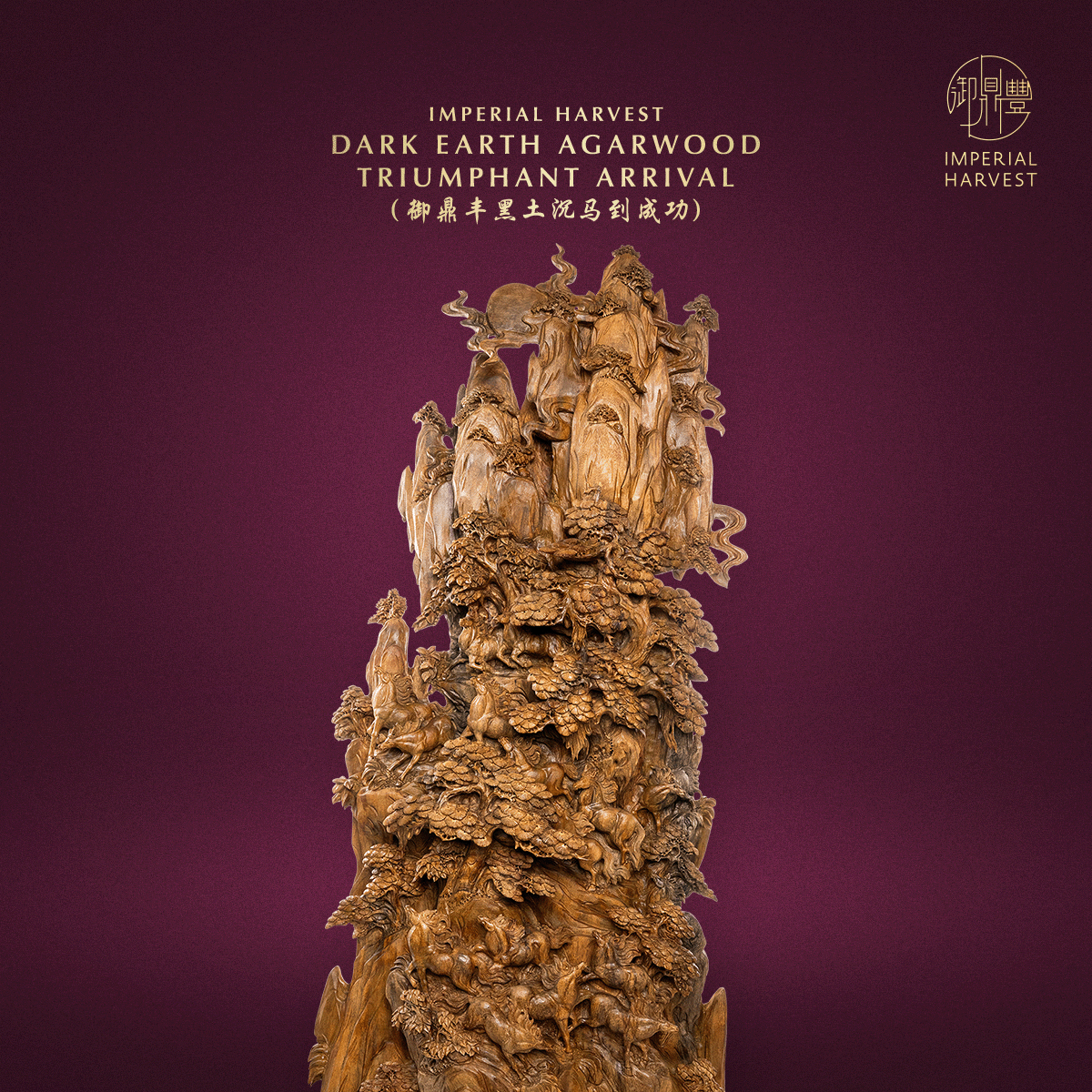
For the 2026 Yang Fire Horse year, that anchor is the Imperial Harvest Dark Earth Agarwood Triumphant Arrival — 马到成功. The commissioning spanned four years of conception before a single cut was made. Every element of the piece was determined by Grand Master David Goh’s reading of the Fire Horse year’s particular signature: a cycle defined by acceleration, visibility, and amplified consequences, where momentum is abundant but completion is rare.
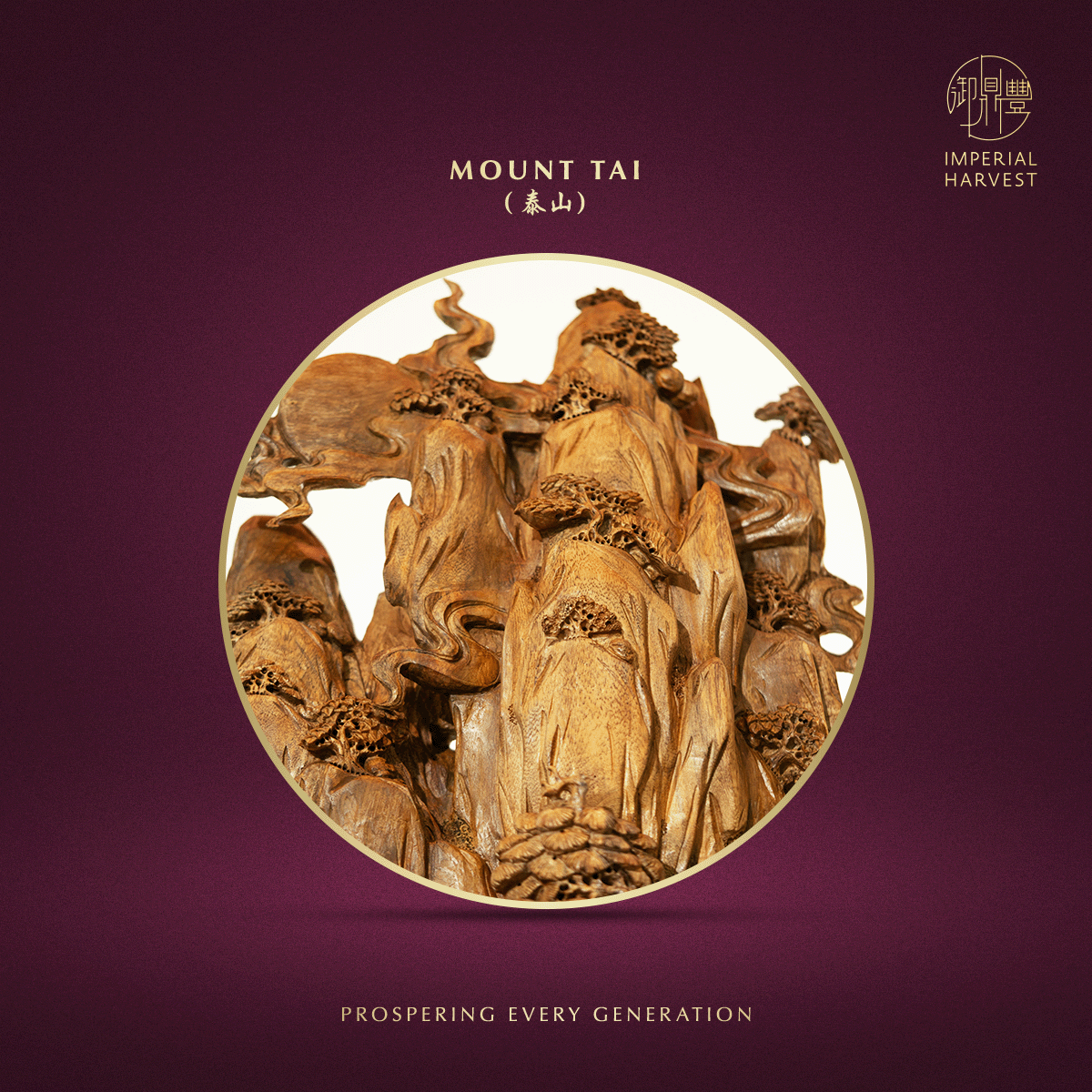
The anchor’s iconographic architecture reads from base to crown. At the foundation sits Mount Tai — 泰山 — the sanctioned gateway between Heaven and Earth, the point in Chinese sacred geography where celestial mandate descends into the human realm. It is the mountain on which imperial sovereigns across dynasties performed the 封禪 Fengshan rites to affirm their legitimacy before the heavens. To carve Mount Tai at the base of the anchor is to establish that the entire piece rests on the classical foundation of every Imperial blessing rite — that what follows on the altar is not a private ceremony but an engagement with the celestial administration through its sanctioned gateway.
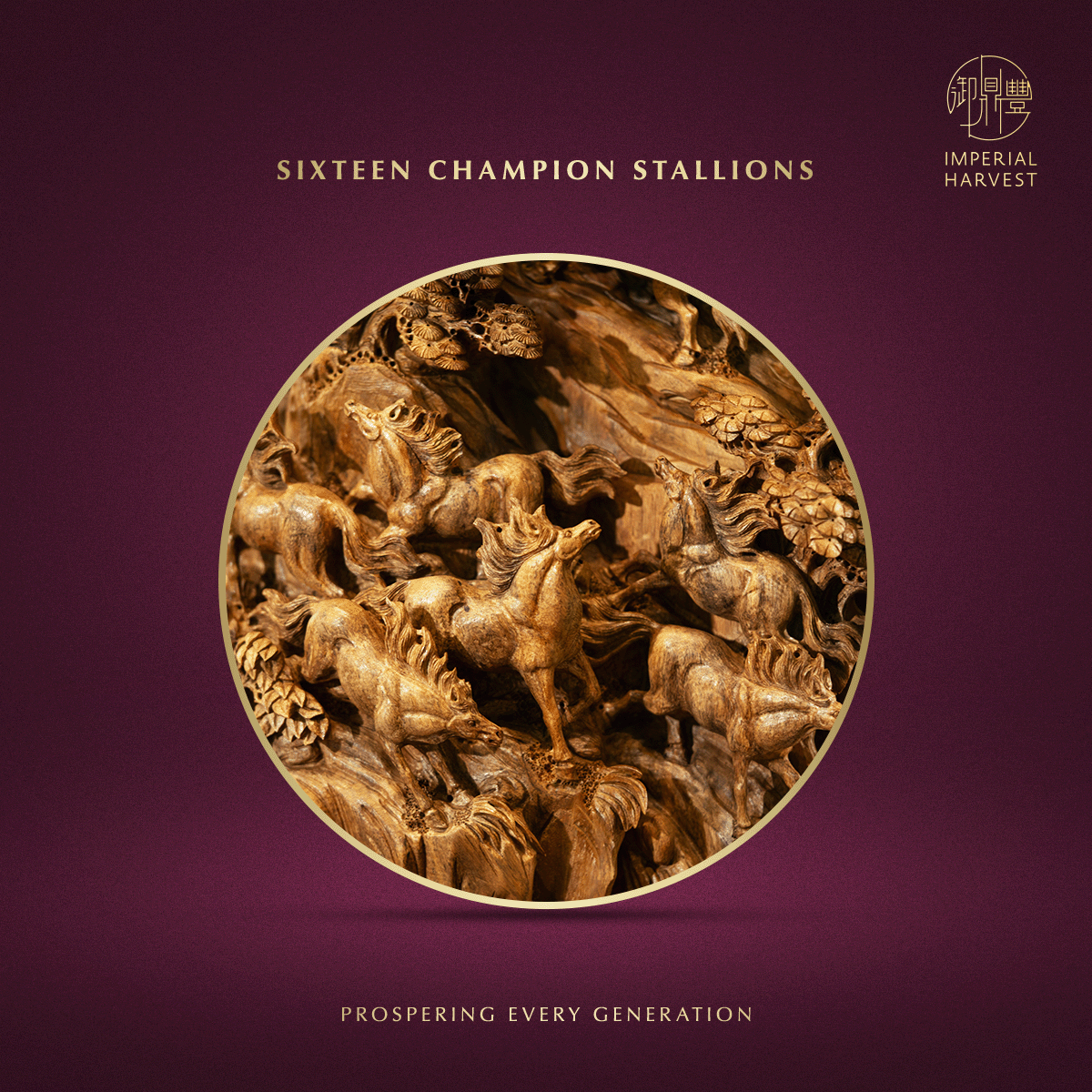
Above the mountain advance sixteen champion stallions in disciplined formation. The number is not arbitrary. In Imperial cosmology, sixteen is the number through which intention is realised, authorised, and held. A single horse is individual momentum. Sixteen is completed authority — the numerical expression of a force that has not merely moved but concluded. In a Fire Horse year, where momentum breaks easily and incomplete initiatives multiply, the sixteen stallions are the anchor’s answer to the year’s defining risk. Their function is to convert momentum into conclusion, so that what begins finishes.
The material of the anchor is Dark Earth Agarwood — 黑土沉香 — formed over eight centuries of subterranean transformation in untouched wild forests. Dark Earth is the grade of agarwood whose density is sufficient to absorb, hold, and transmit the combined energies of an entire year’s consecrations without dispersion. A lesser grade would saturate. Dark Earth does not. The material carries, in its own structure, the capacity that the year’s anchor must possess — absorption, retention, transmission, across the twelve months in which every treasure brought to the altar will pass through its presence.
Together, Mount Tai at the base, the sixteen stallions above, and the Dark Earth Agarwood from which the piece is carved constitute the anchor’s coherent response to the 2026 year: a classical gateway on a foundation of celestial mandate, a disciplined formation of completed authority above it, and a material dense enough to hold what the altar is about to bring down. The anchor is, in Grand Master David Goh’s phrasing, the axis of the year. Next year’s anchor will answer a different year’s blueprint, commissioned from a different material, carrying a different iconography, designed to address a different signature. The cadence continues.
Book A Free Consultation
The seasonal anchor
Within each year, certain ritual windows carry weight that the yearly anchor alone cannot fully focus. These are occasions of unusual celestial convergence — deity birthdays, imperial festivals, astronomical alignments — at which Imperial Harvest conducts dedicated Blessing Rituals drawing on celestial energies specific to the window in question.
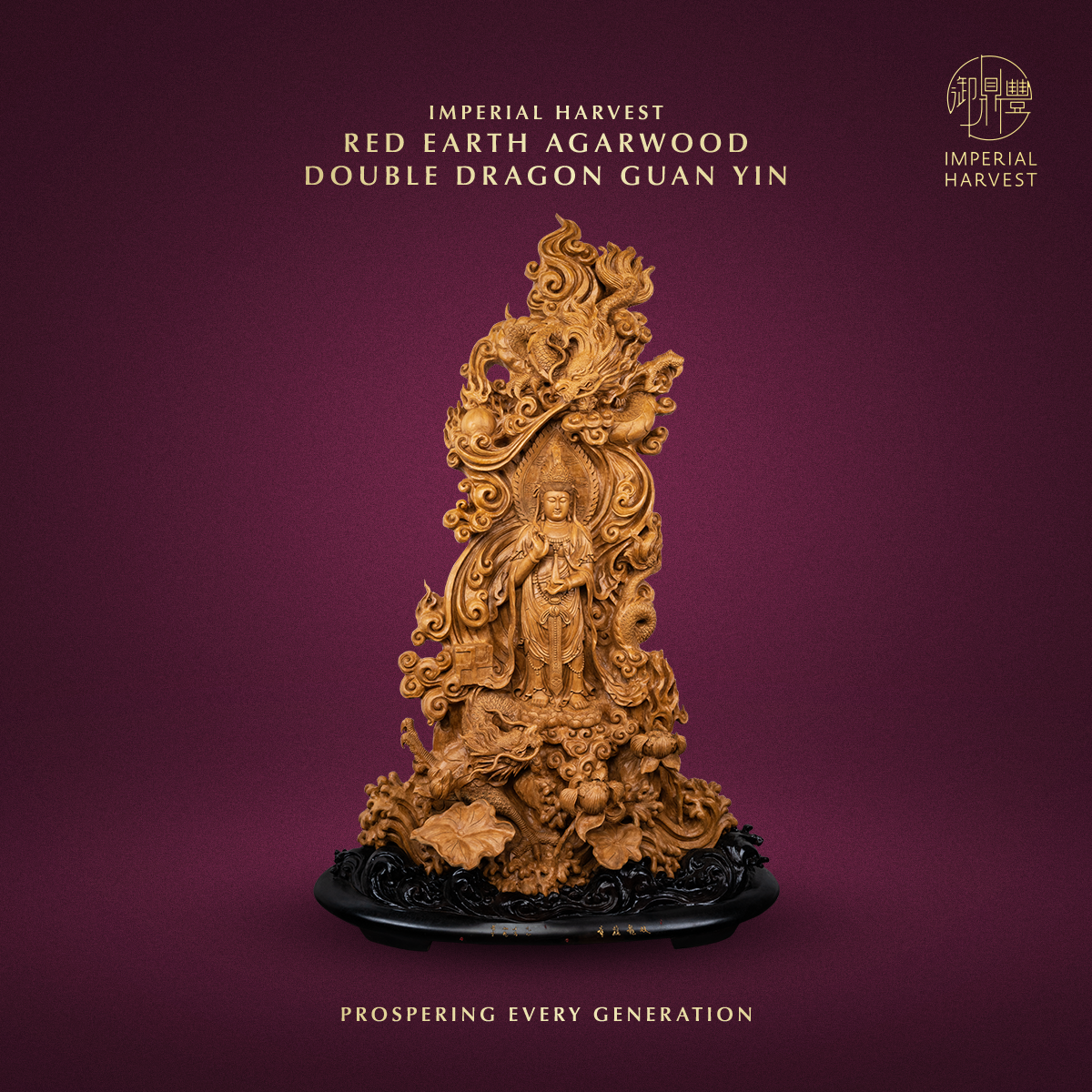
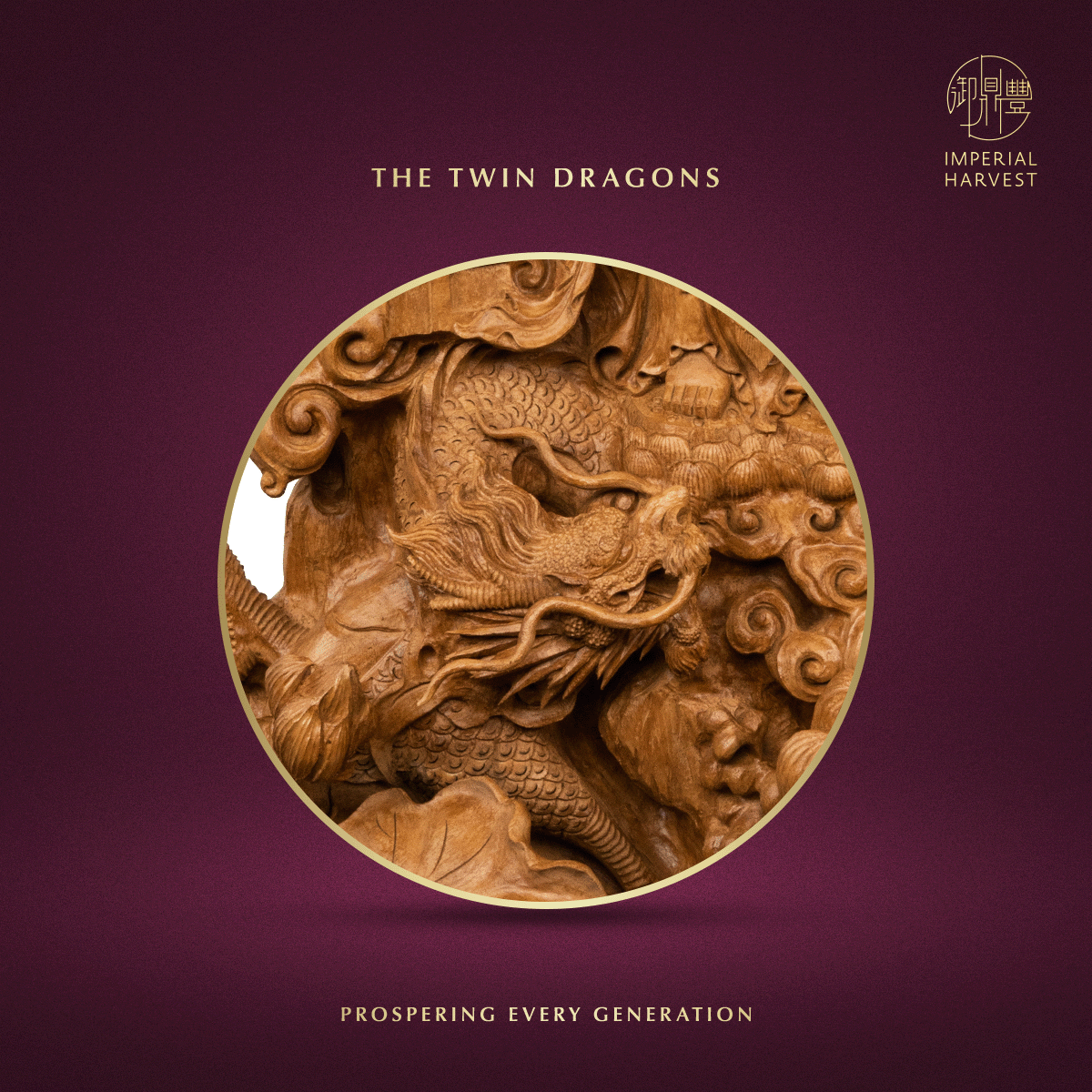
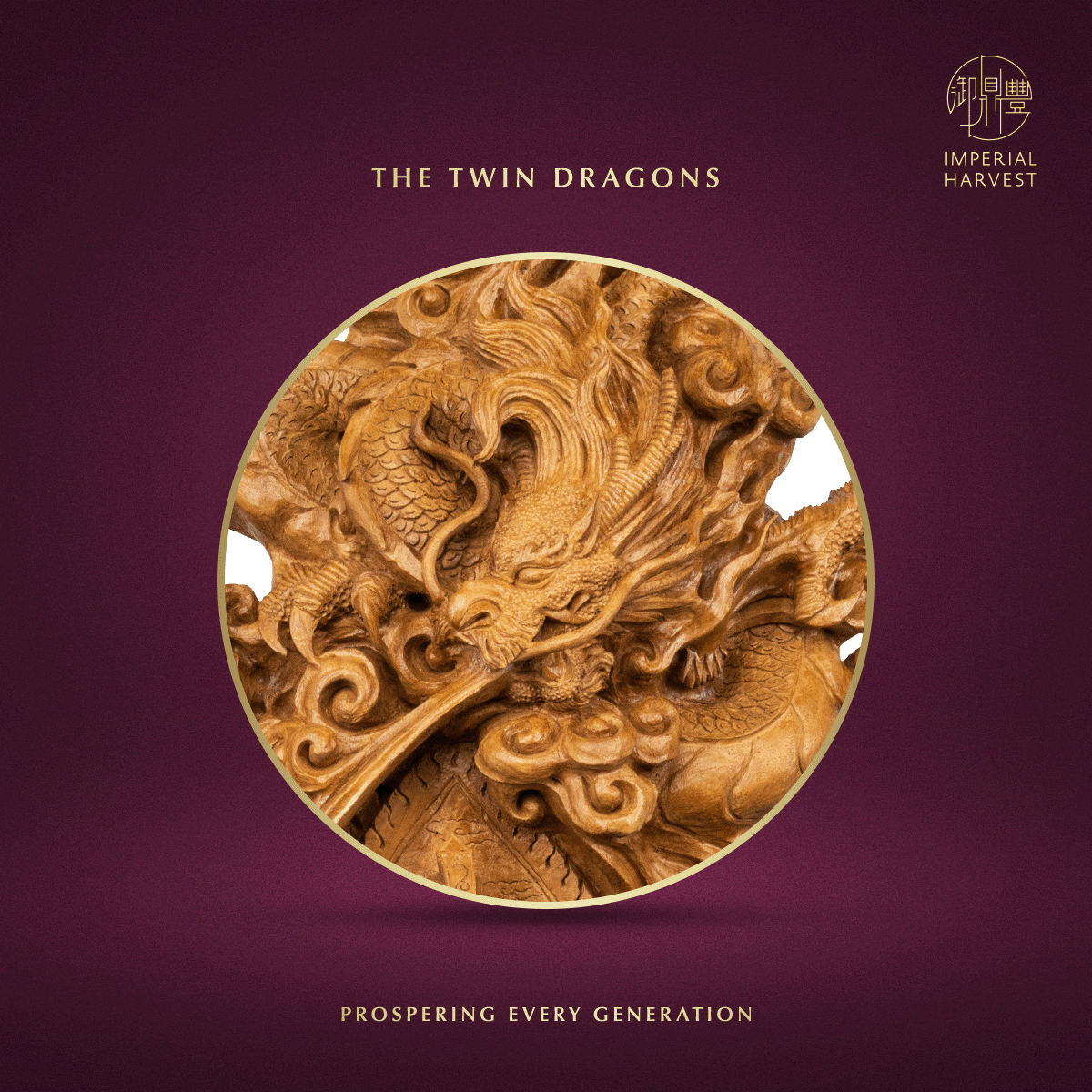
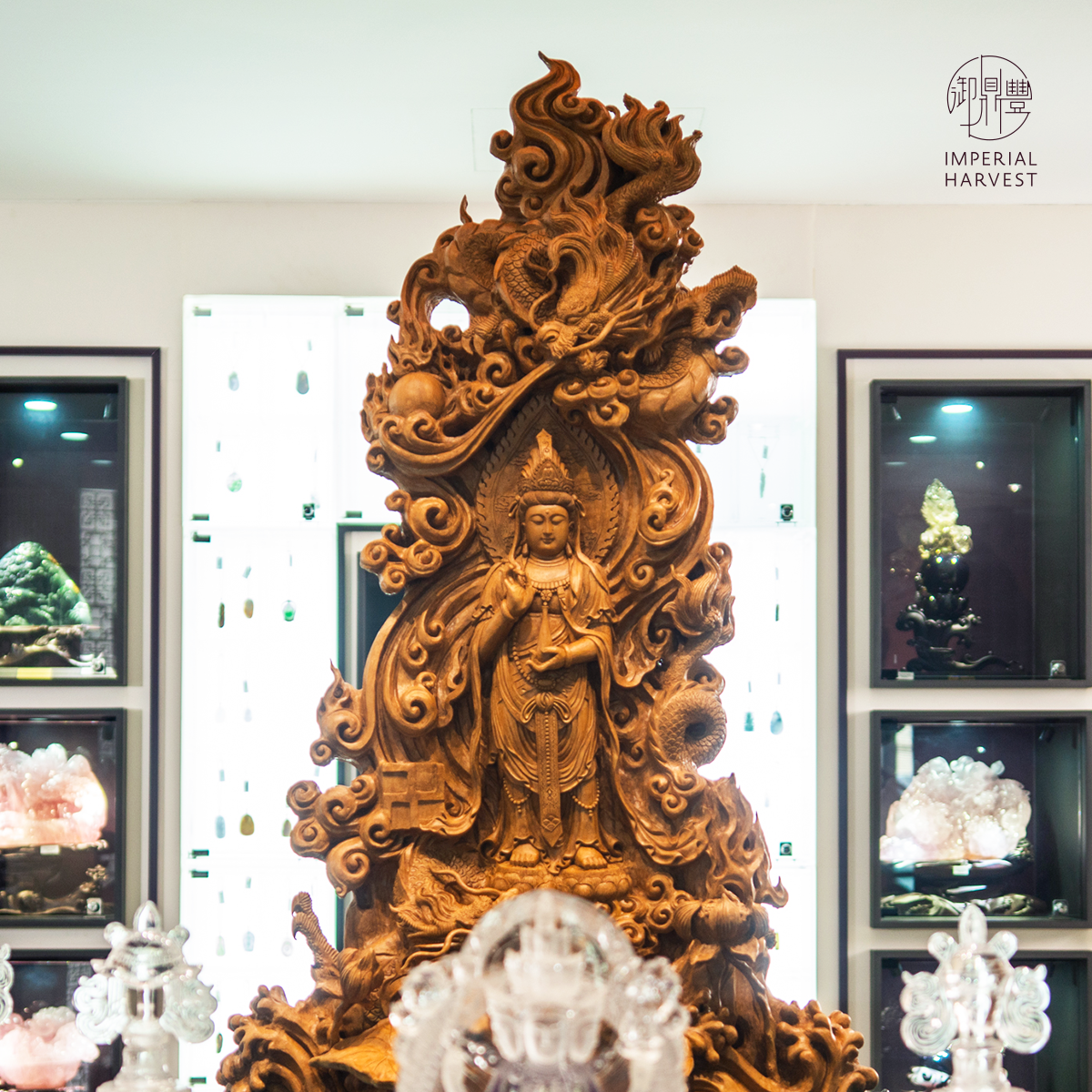
During the Long Tai Tou x Guan Yin’s First Birthday Grand Blessing Ritual, the seasonal anchor is the Imperial Harvest Red Earth Agarwood Double Dragon Guan Yin — Grand Master David’s dedicated seasonal anchor for the ceremonial window that sees 龍抬頭 Long Tai Tou — the Dragon Raising Its Head — and Guan Yin’s First Birthday observed within the same ritual season. A piece that ordinarily resides on Grand Master David Goh’s private altar at home, the Double Dragon Guan Yin is invited to the gallery specifically for the Blessing Rituals conducted during this window. Its iconography is defined entirely by the two occasions it is commissioned to serve: the ascending yang force of Long Tai Tou, and the compassionate celestial authority of Guan Yin’s birthday rite.
The piece is carved in its entirety from Red Earth Agarwood — 红土沉香 — a grade of over five hundred years’ formation, selected for its capacity to carry the particular honey-warm radiance that Imperial Feng Shui associates with Guan Yin’s compassionate transmission. At the sovereign heart of the carving stands Guan Yin herself, rising in serene majesty from a bed of blooming lotus — the classical symbol of purity, spiritual awakening, and inexhaustible grace. Flanking her in dynamic celestial motion are the twin ascending dragons of Long Tai Tou — their sinuous forms coiling through sacred clouds and divine flames as they ascend toward the heavens. The twin dragon formation, in Imperial Feng Shui tradition, represents the supreme convergence of Heaven and Earth’s yang forces — the most potent configuration for the amplification of wealth luck, noble support, authority, and divine protection. Their presence around Guan Yin is not incidental. It is the iconographic expression of the two occasions the anchor is commissioned to serve — the ascending yang force of Long Tai Tou meeting the compassionate celestial authority of Guan Yin’s birthday rite.
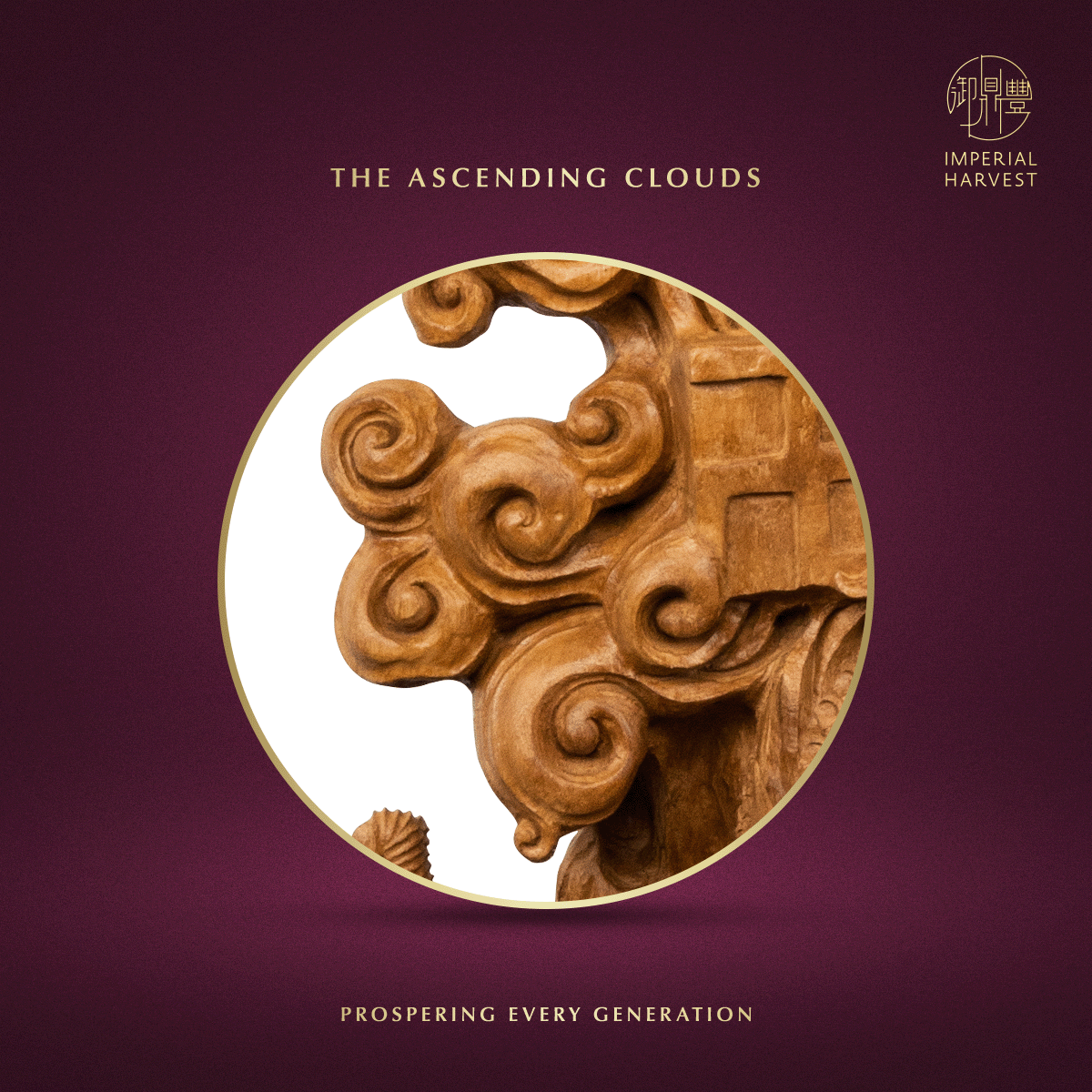
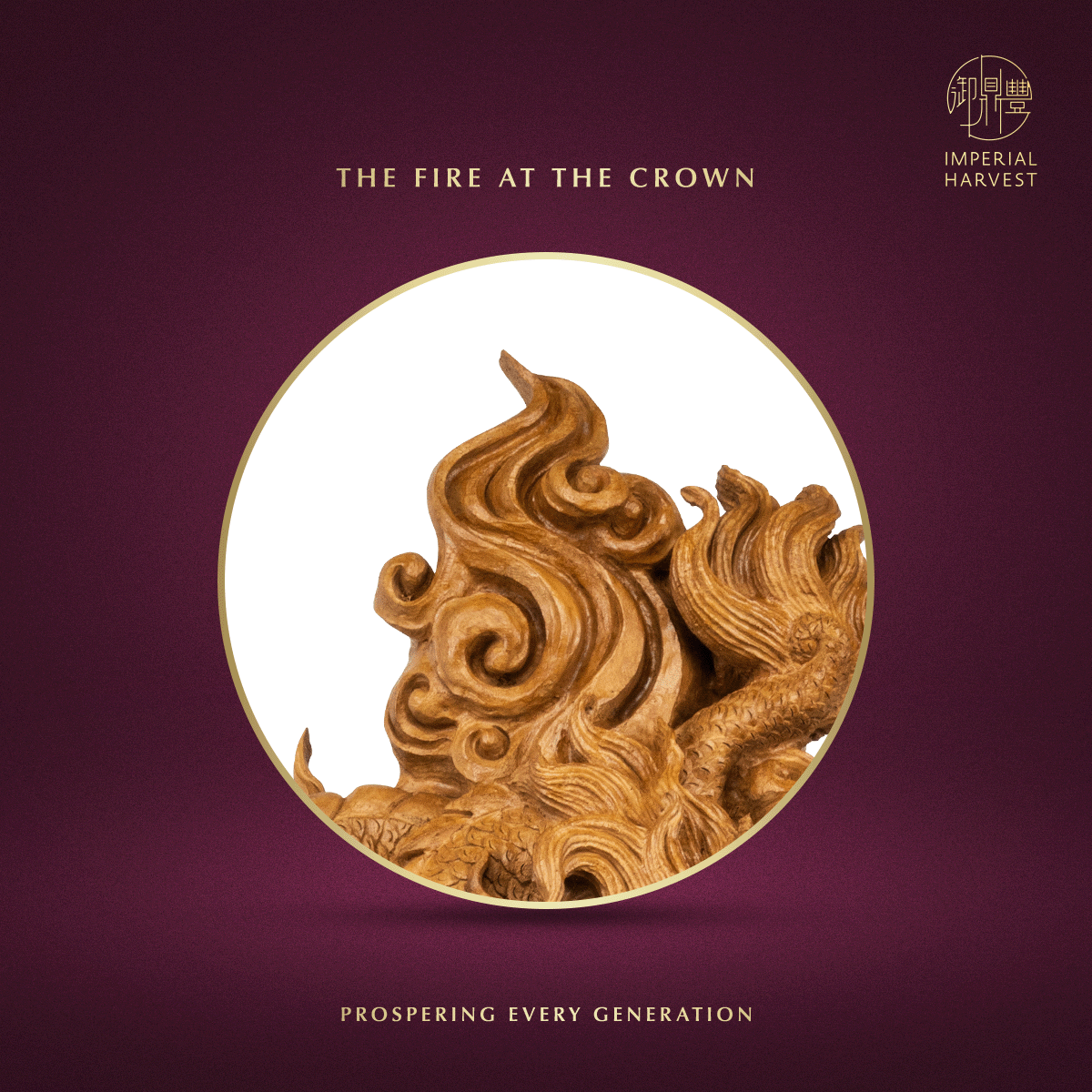
The upper register of the carving erupts into a canopy of sacred cloud formations and celestial fire, from which the twin dragon heads emerge in sovereign convergence — the masterful visual expression of Heaven’s blessings descending in full force upon the devoted. Every cloud curl, dragon scale, flame tendril, and lotus petal has been individually rendered through thousands of hours of master craftsmanship. The entire composition rests upon a hand-carved dark rosewood base of classical imperial form — a grounding counterpoint to the warm, luminous honey radiance of the Red Earth Agarwood above it, mirroring the convergence of earth and heaven the rite itself enacts.
Why the cadence matters more than any single piece
A reader who has followed this essay through the Triumphant Arrival and the Double Dragon Guan Yin may be tempted to read the Ceremonial Anchor as something fixed — a masterpiece commissioned in 2026, and a seasonal piece brought for April’s rituals, together constituting the practice’s consecration infrastructure for the year. This reading is accurate as far as it goes. What it misses is the structure beneath it.
The yearly anchor is not a permanent fixture. It is commissioned fresh for each lunar cycle, purpose-built to the energetic blueprint of the incoming year. The Triumphant Arrival answers 2026. A different anchor — carrying different iconography, drawn from a different material, designed to answer a different signature — will answer 2027. This is the commissioning cadence at the core of Imperial Harvest’s consecration architecture: not a static altar, but one that is rebuilt each year around what the year actually requires.
The seasonal anchor operates differently. It is not commissioned anew for each ritual window. It is Grand Master David Goh’s own anchor — a piece he keeps on his private altar at home — which he invites to the gallery specifically for dedicated Blessing Rituals: celestial authorities’ birthdays, imperial festivals, auspicious alignments. For the Long Tai Tou and Guan Yin Birthday window, that anchor is the Double Dragon Guan Yin.
This is what separates Imperial Harvest’s consecration architecture from any static artefact, however impressive. A single commissioned masterpiece, however extraordinary in its craftsmanship and provenance, addresses only the moment of its creation. By the following year, its iconography is no longer calibrated to the year at hand. By the following decade, the conditions it was designed to hold have passed entirely. A consecration infrastructure built around a single anchor is, in the classical understanding, a diminishing asset — a vessel whose specific relevance erodes each year the cycle turns. A consecration infrastructure built around a commissioning cadence is a different kind of asset altogether. The altar itself is continuously calibrated to the actual conditions the clients are actually operating within.
The infrastructure is not what sits on the altar today. It is the standing commitment that next year, and the year after, and every ritual window the years contain, will receive the artefact the conditions require.
— Grand Master David Goh
This is also why the Ceremonial Anchor cannot be replicated or matched retroactively by another practice. The anchors themselves are not the practice’s moat. The practice’s moat is the unbroken continuity of the commissioning — the yearly anchor renewed on schedule, the seasonal anchor brought from Grand Master David’s own altar for each ritual window — and the lineage authority that allows each year’s anchor to be designed in the first place.
Book A Free Consultation
What a client actually experiences

For a client engaging Imperial Harvest for the first time, the Ceremonial Anchor is visible from the first consultation. It sits on the altar in the gallery — the Triumphant Arrival across the 2026 calendar year, the Double Dragon Guan Yin during the Long Tai Tou x Guan Yin’s First Birthday Grand Blessing Ritual. When the client’s treasure is subsequently consecrated, the treasure passes through the anchor’s presence during the rite. The energies the seven-step protocol draws down are concentrated through the anchor and distributed into the treasure. The anchor does not change the treasure’s design, which is governed by Grand Master David Goh’s reading of the client’s chart. It changes the quality of the activation the treasure receives at the moment of its consecration.
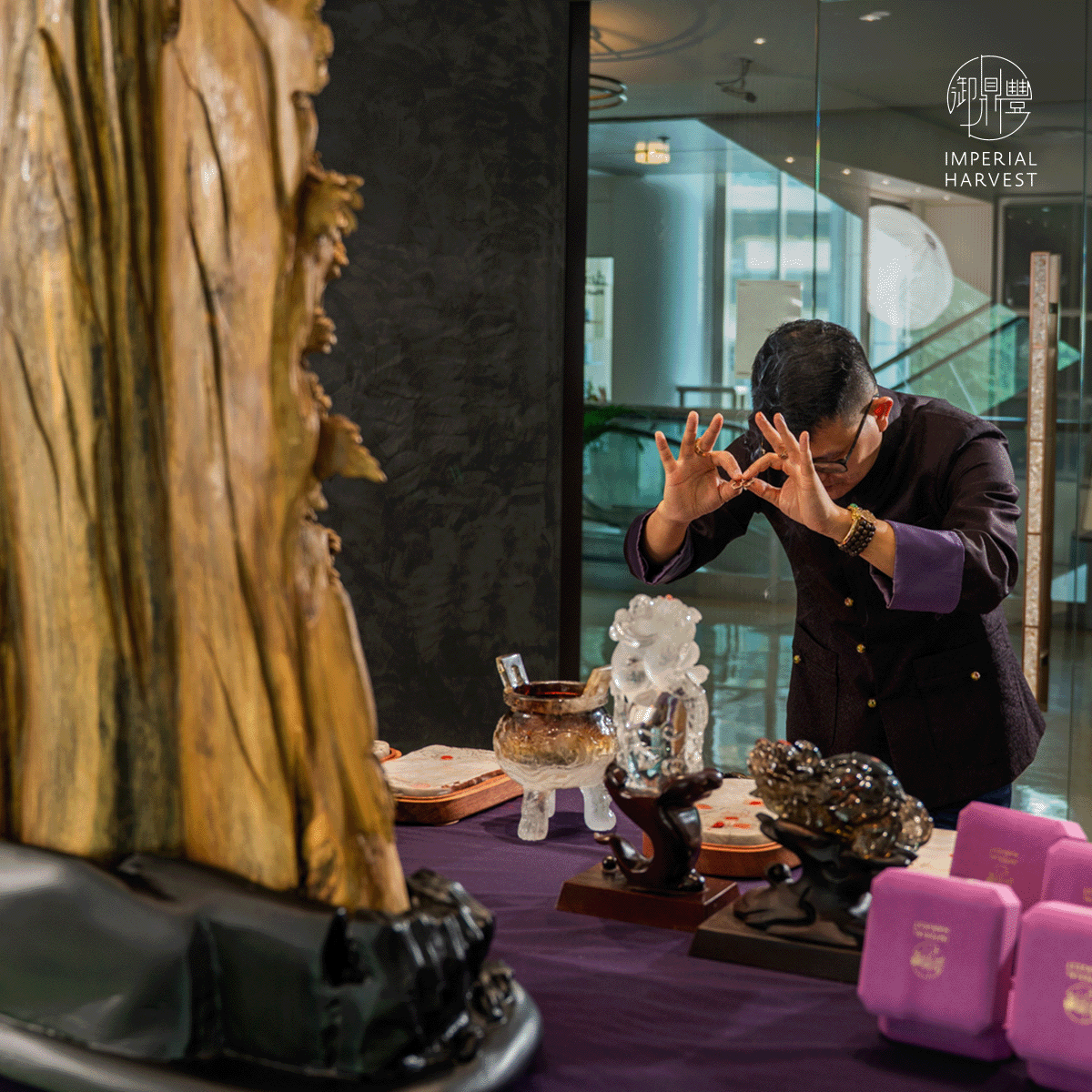
Over a multi-year stewardship, a client’s treasures are consecrated across multiple anchors — each year’s activation calibrated to the altar’s configuration at that specific moment in the cycle. By the time a long-standing client has been through several rounds of prescription and consecration, their collection of Imperial Harvest treasures carries, collectively, the energetic signatures of multiple years and multiple ritual windows. The compounding Imperial Harvest’s documented client trajectories demonstrate is not only a function of the sequenced activation through the Four Quadrants. It is also a function of the anchor cadence through which each activation is conducted. The altar the client engages this year is not the altar they will engage next year. The infrastructure is permanent. The calibration is continuous. The result is the steadily expanding compound record the practice’s documented outcomes reflect.
An anchor, then, is not an object. It is the form a year of the practice takes. It is how a ritual window becomes a physical focal point on an altar. And it is the standing reminder — to the client, to the practitioner, and to the celestial authorities the rite engages — that the practice is continuous, the calibration is current, and the altar through which every blessing passes has been commissioned for the actual conditions of the actual moment. That is what a Ceremonial Anchor is, in the first-class tradition. And it is why Imperial Harvest’s consecration architecture does not resemble anything else the Singapore market offers.
Part One · The Imperial Court Tradition Singapore Kept
Part Two · What Imperial Destiny Engineering Protocol (御用移星換斗法) Actually Means
Part Three · Bazi, Read as Classical Chinese
Part Four · The Four Quadrants of Destiny
Part Five · The Ceremonial Anchor
Part Six · The Stewardship Cycle