TL;DR
The 12 Earthly Branches are the bottom row of every pillar in your Bazi chart. While the Heavenly Stems (top row) are visible and direct, the Earthly Branches carry hidden elements beneath the surface — forces that Grand Master David reads to understand the deeper dynamics of your chart.
Each branch corresponds to a zodiac animal, a season, a two-hour time period, and one or more of the Five Elements. They interact through five types of forces — combinations (合), clashes (沖), harms (害), punishments (刑), and destructions (破) — producing effects that can activate, disrupt, intensify, or quietly erode the elemental forces in your chart.
These interactions are not “good” or “bad” in isolation. A clash can break a stagnant pattern. A combination can redirect energy toward a constrained quadrant. A punishment can be the intensifier that creates breakthrough. The meaning depends entirely on the full chart context — which is why Grand Master David reads every branch interaction in relationship to your Daymaster and favourable element.
The Hidden Layer of Your Bazi Chart
Estimated Reading Time: 8 mins
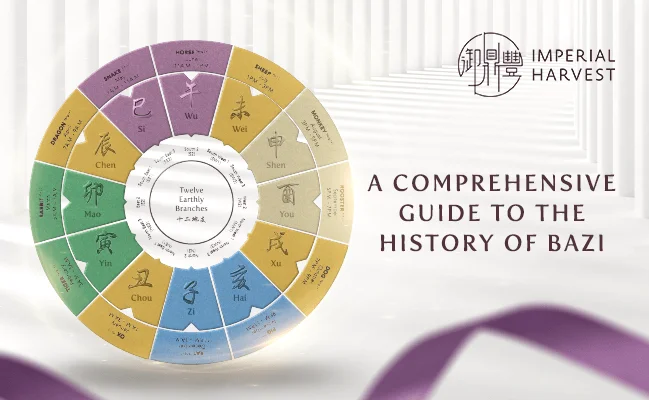
The 12 Earthly Branches, or “十二地支” (shi er di zhi), are a core component of Chinese metaphysics, astrology, and traditional East Asian culture. This ancient system has been widely used for centuries in calendrical practices, astrological readings, and spiritual traditions, reflecting its deep significance in shaping East Asia’s cultural heritage.
What Are the Earthly Branches?
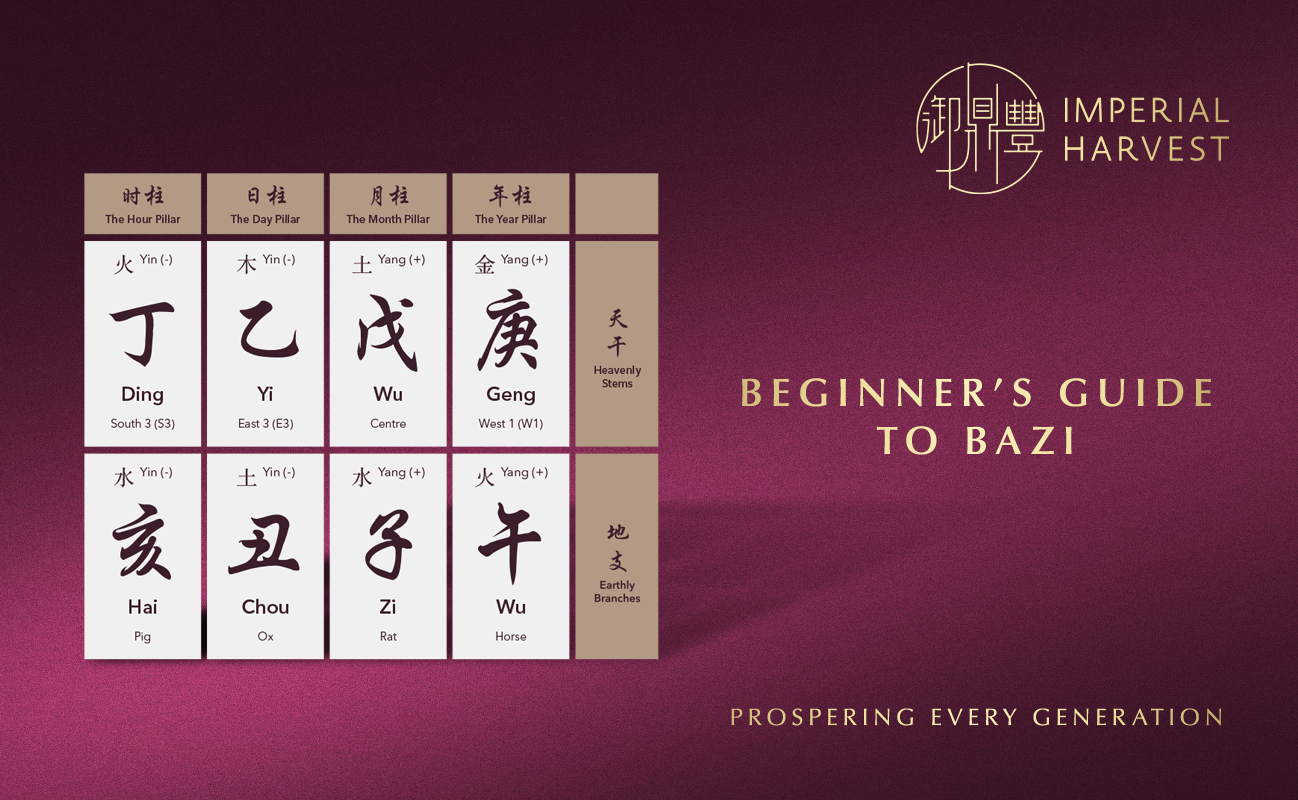
Every pillar in your Bazi chart has two characters: a Heavenly Stem on top and an Earthly Branch on the bottom. While the Heavenly Stems are straightforward — each carrying a single elemental energy — the Earthly Branches are more complex. Each branch contains hidden Heavenly Stems within it, carrying layered elemental forces that are not immediately visible.
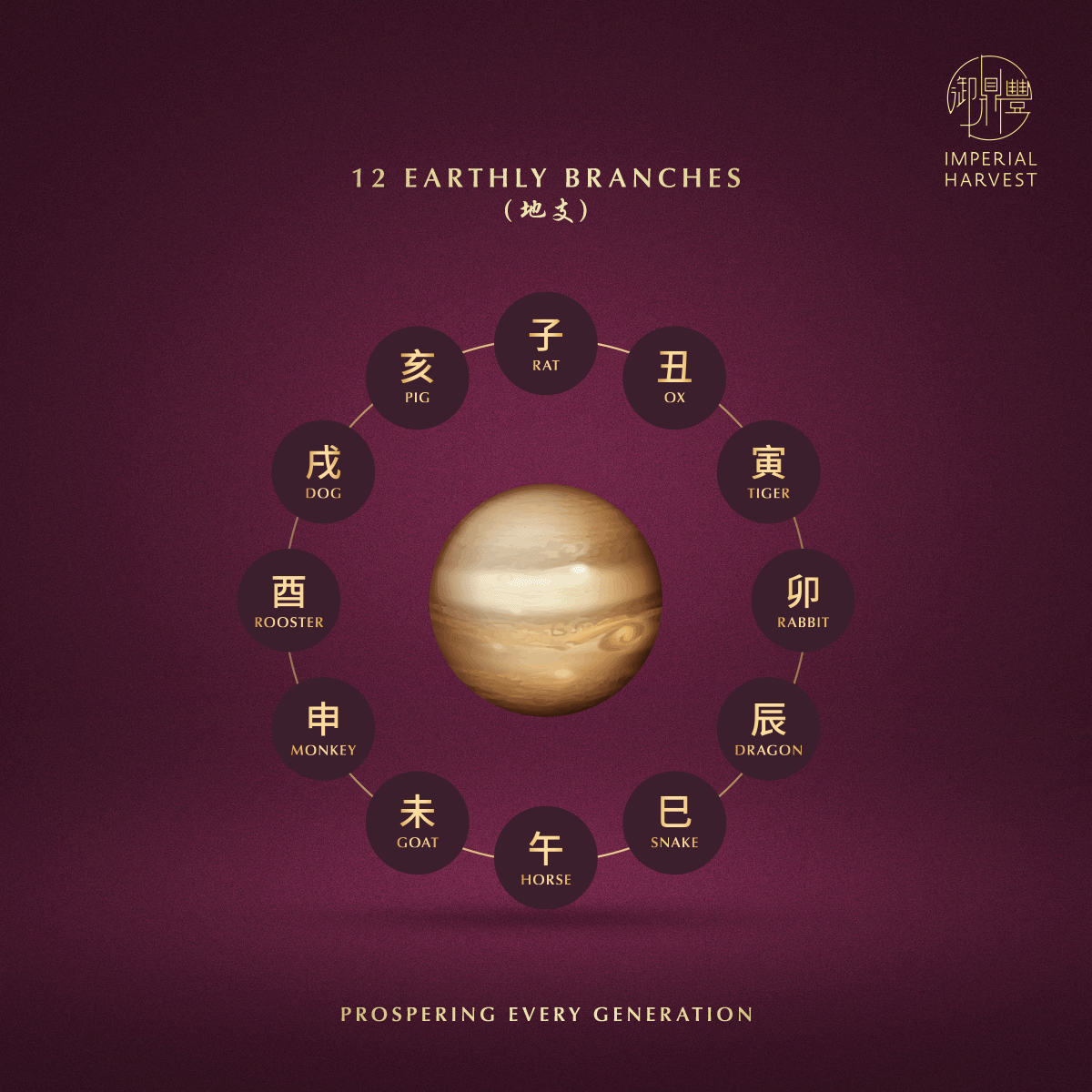
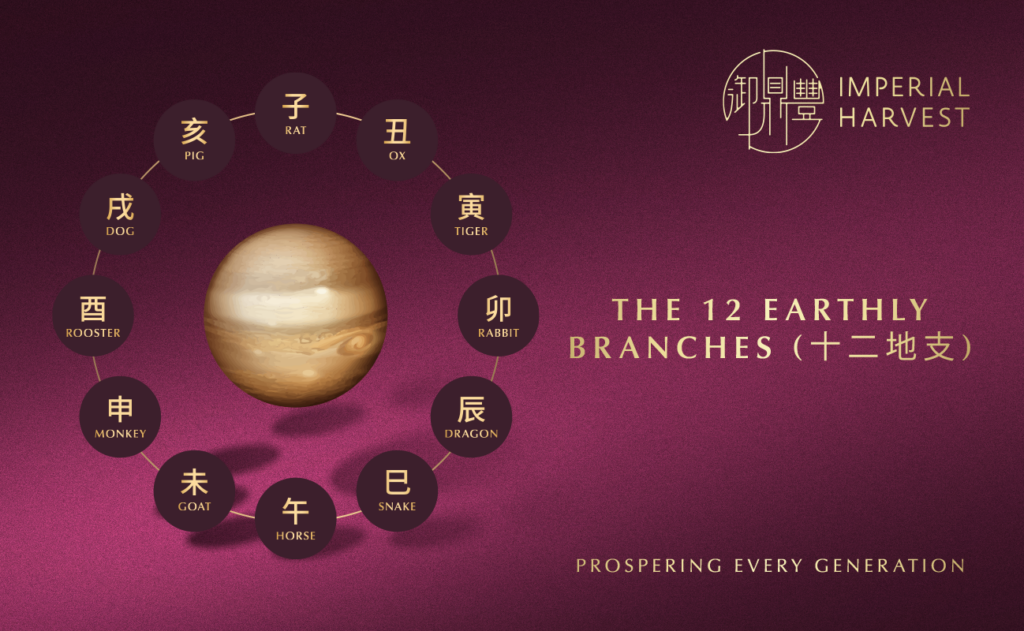
There are 12 Earthly Branches. They form a cycle that maps onto years (the Chinese Zodiac), months (the seasons), and hours (the 12 traditional two-hour time periods of each day). Together with the 10 Heavenly Stems, they create the 60 Jia Zi cycle (六十甲子) — the 60-year sexagenary cycle that has been the backbone of Chinese timekeeping and metaphysics for over three millennia.
To learn more about the 60 Jia Zi cycle, read: The 60 Jia Zi Explained
The Earthly Branches originated in the Shang Dynasty (c. 1600–1046 BCE), rooted in astronomical observations of Jupiter’s approximately 12-year orbit around the Sun. Ancient Chinese astronomers partitioned the celestial circle into 12 segments corresponding to Jupiter’s position — giving rise to both the 12 Branches and the 12 Zodiac animals.
But within a Bazi chart, the Earthly Branches are far more than zodiac labels. They are the hidden layer of elemental complexity that Grand Master David reads to understand forces that surface-level analysis cannot detect.
Book A Free Consultation
The 12 Earthly Branches — Reference Table
Each Earthly Branch carries an associated zodiac animal, a dominant element with polarity, a seasonal period, and a two-hour time block. The branches also correspond to calendar months, making them central to how the Month Pillar — one of the most important pillars in Grand Master David’s diagnostic process — is determined.
| Branch | Zodiac | Element | Polarity | Month | Hour |
|---|---|---|---|---|---|
| 寅 Yín | Tiger | Jia Wood | Yang | 4 Feb – 5 Mar | 3:00 – 4:59am |
| 卯 Mǎo | Rabbit | Yi Wood | Yin | 6 Mar – 4 Apr | 5:00 – 6:59am |
| 辰 Chén | Dragon | Wu Earth | Yang | 5 Apr – 5 May | 7:00 – 8:59am |
| 巳 Sì | Snake | Ding Fire | Yin | 6 May – 5 Jun | 9:00 – 10:59am |
| 午 Wǔ | Horse | Bing Fire | Yang | 6 Jun – 6 Jul | 11:00am – 12:59pm |
| 未 Wèi | Goat | Ji Earth | Yin | 7 Jul – 7 Aug | 1:00 – 2:59pm |
| 申 Shēn | Monkey | Geng Metal | Yang | 8 Aug – 7 Sep | 3:00 – 4:59pm |
| 酉 Yǒu | Rooster | Xin Metal | Yin | 8 Sep – 7 Oct | 5:00 – 6:59pm |
| 戌 Xū | Dog | Wu Earth | Yang | 8 Oct – 6 Nov | 7:00 – 8:59pm |
| 亥 Hài | Pig | Gui Water | Yin | 7 Nov – 6 Dec | 9:00 – 10:59pm |
| 子 Zǐ | Rat | Ren Water | Yang | 7 Dec – 5 Ja | 11:00pm – 12:59am |
| 丑 Chǒu | Ox | Ji Earth | Yin | 6 Jan – 3 Feb | 1:00 – 2:59am |
Note: The “Element” column shows the dominant Heavenly Stem within each branch. Most branches contain additional hidden stems that add elemental complexity. Grand Master David reads these hidden stems as part of the full chart analysis.
Hidden Stems — Why the Branches Are More Complex Than They Appear
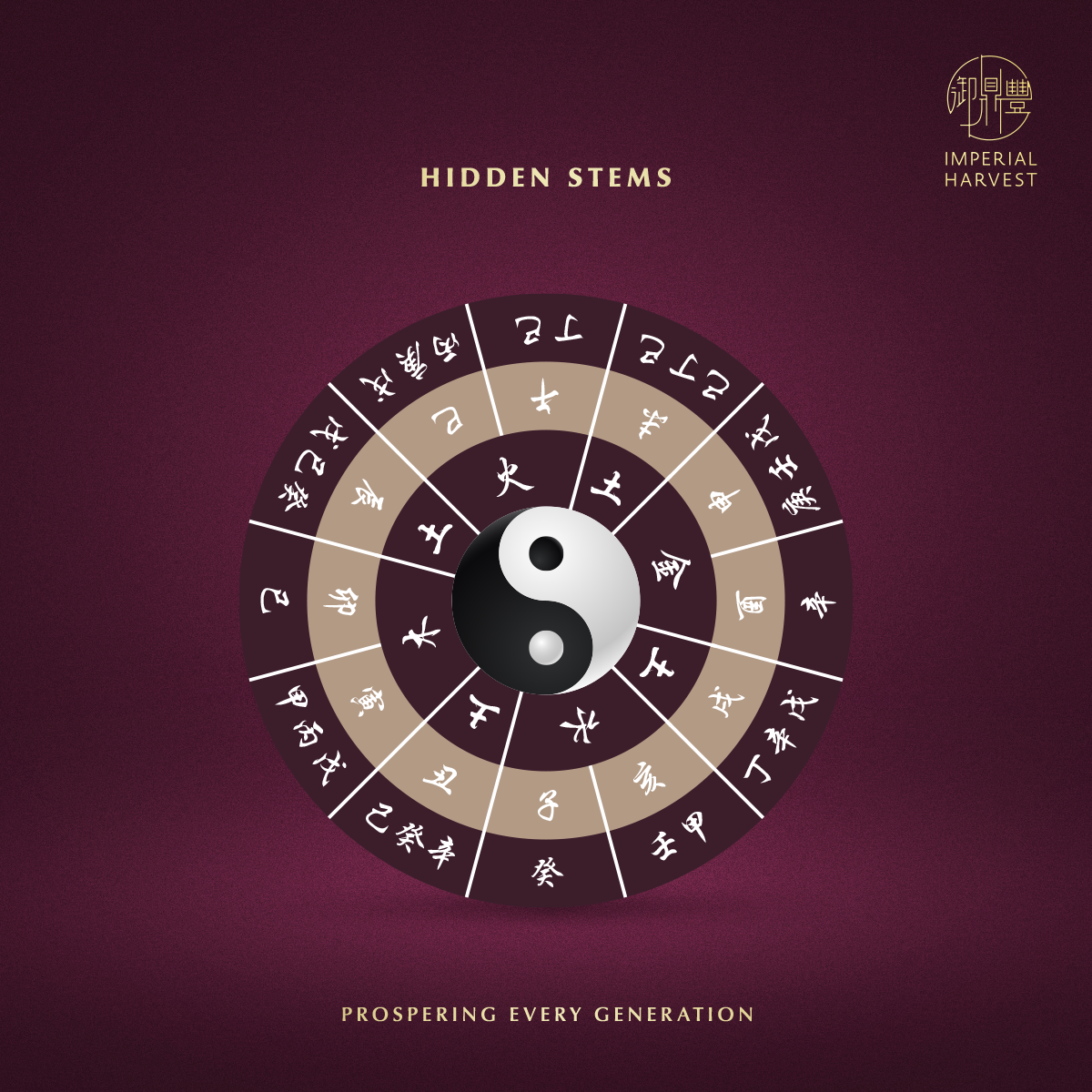
This is the critical distinction between the Heavenly Stems and the Earthly Branches — and the reason the branches carry so much diagnostic weight.
A Heavenly Stem carries a single element. Jia is Wood. Bing is Fire. What you see is what you get.
An Earthly Branch contains hidden Heavenly Stems within it. The branch 寅 (Tiger), for example, is dominated by Jia Wood — but it also contains hidden Bing Fire and Wu Earth. This means a single branch can carry the energy of two or three elements simultaneously, creating layered interactions that are invisible to surface-level reading.
This is why Grand Master David reads the Earthly Branches with such precision. The hidden stems within each branch create elemental dynamics that don’t appear on the surface of the chart. Two charts that look similar at the Heavenly Stem level can be fundamentally different at the Earthly Branch level — because the hidden stems are interacting in ways that only a trained practitioner can detect.
“The Heavenly Stems tell me what is visible. The Earthly Branches tell me what is happening underneath. Most of the chart’s real dynamics are underneath.”
— Grand Master David Goh
Branch Interactions — The Forces Grand Master David Reads
The Earthly Branches do not sit passively in your chart. They interact with each other — and with the branches introduced by the Luck Pillars (大運) and Annual Luck (流年) — through five categories of interaction: combinations (合), clashes (沖), harms (害), punishments (刑), and destructions (破).
These interactions are not inherently positive or negative. Their effect depends entirely on the full context of the chart: which elements are involved, which pillar positions are affected, and how the interaction relates to the Daymaster and the favourable element.
A clash in one chart may be the disruption that breaks a stagnant pattern. The same clash in another chart may destabilise a quadrant that was functioning well. A combination may redirect elemental energy toward a constrained quadrant — or it may lock up an element that was needed elsewhere.
This is why branch interactions cannot be read in isolation. Grand Master David reads every interaction in the context of the full chart, the current Luck Pillar, and this year’s Annual Luck.
Book A Free Consultation
Six Harmony Combinations (六合)
The Six Harmony Combinations are specific pairings of Earthly Branches that, when they appear together in a chart or when one is introduced by a Luck Pillar or Annual Luck, can merge to produce a new elemental energy.
| Pairing | Branches | Element Produced |
|---|---|---|
| Tiger – Pig | 寅 – 亥 | Wood |
| Rabbit – Dog | 卯 – 戌 | Fire |
| Dragon – Rooster | 辰 – 酉 | Metal |
| Snake – Monkey | 巳 – 申 | Water |
| Horse – Goat | 午 – 未 | Fire |
| Rat – Ox | 子 – 丑 | Earth |
When a combination occurs, the two branches may merge to produce the element listed — but whether the combination fully transforms depends on the chart’s overall dynamics. A combination that produces Fire in a chart that needs Fire for balance is activating. The same combination in a chart already overwhelmed by Fire may produce excess.
Grand Master David reads each combination in context: which pillars contain the paired branches, whether the combination is supported or disrupted by surrounding elements, and how the resulting element interacts with the Daymaster and the favourable element.
Six Clashes (六沖)
The Six Clashes represent direct opposition between two Earthly Branches. When branches that clash appear in the same chart — or when a clashing branch is introduced by a Luck Pillar or Annual Luck — the result is disruption of the elemental forces those branches carry.
| Clash | Branches | Nature of Conflict |
|---|---|---|
| Rat – Horse | 子 – 午 | Water vs Fire — opposing elemental forces in direct confrontation. |
| Ox – Goat | 丑 – 未 | Earth vs Earth — two grounding forces competing for dominance. |
| Tiger – Monkey | 寅 – 申 | Wood vs Metal — expansion meeting contraction. |
| Rabbit – Rooster | 卯 – 酉 | Wood vs Metal — growth meeting precision. |
| Dragon – Dog | 辰 – 戌 | Earth vs Earth — structural forces in opposition. |
| Snake – Pig | 巳 – 亥 | Fire vs Water — transformation meeting adaptability. |
A clash does not automatically mean something negative. A clash disrupts — and disruption can be exactly what a stagnant chart needs. When an entrenched pattern is holding back a constrained quadrant, a clash introduced by the incoming Luck Pillar or Annual Luck can break the pattern and create the conditions for a new trajectory.
Equally, a clash can destabilise a quadrant that was functioning well — which is why Grand Master David monitors incoming clashes through the annual review. The question is never “is there a clash?” but “what does this clash do to this specific chart at this specific time?”
Six Harms (六害)
The Six Harms represent a subtler form of friction. They occur when one branch interferes with an existing or potential combination — disrupting the merging process and creating unresolved tension between the elements involved.
| Harm | Branches | Mechanism |
|---|---|---|
| Rat – Goat | 子 – 未 | Disrupts the Horse–Goat combination; unresolved tension between Water and Earth. |
| Ox – Horse | 丑 – 午 | Disrupts the Rat–Ox combination; friction between Earth and Fire. |
| Tiger – Snake | 寅 – 巳 | Disrupts the Tiger–Pig combination; conflict between Wood and Fire. |
| Rabbit – Dragon | 卯 – 辰 | Disrupts the Dragon–Rooster combination; tension between Wood and Earth. |
| Monkey – Pig | 申 – 亥 | Disrupts the Snake–Monkey combination; friction between Metal and Water. |
| Rooster – Dog | 酉 – 戌 | Disrupts the Rabbit–Dog combination; conflict between Metal and Earth. |
The effect of a harm is never fixed. It depends entirely on the chart context — which pillars are involved, what elements are being disrupted, and how the disrupted energy relates to the Daymaster and the favourable element. The same harm in two different charts produces two entirely different outcomes.
Grand Master David reads harms as indicators of unresolved elemental tension — tension that, when identified and addressed through the right prescription, can be resolved.
Three Punishments (三刑)
The Three Punishments are among the most powerful branch interactions. Unlike clashes, which involve two branches in direct opposition, punishments involve specific groupings of two or three branches that, when they converge in a chart or through timing cycles, create intense elemental friction.
There are four categories of punishment:
| Category | Branches | Mechanism |
|---|---|---|
| Punishment of Power (持势之刑) | 寅 – 巳 – 申 | Three branches carrying strong elemental forces (Wood, Fire, Metal) collide. The result is intensified friction between competing energies — amplifying both the productive and destructive potential within the chart. |
| Punishment of Ingratitude (无恩之刑) | 丑 – 戌 – 未 | Three Earth-dominant branches converge. Rather than stabilising, the excess Earth creates rigidity and obstruction — elemental energy that should be flowing becomes locked. |
| Punishment of Incivility (无礼之刑) | 子 – 卯 | Water meets Wood in a dynamic that intensifies the producing cycle beyond balance. What should be nourishment becomes overstimulation. |
| Self-Punishment (自刑) | 辰辰, 午午, 酉酉, 亥亥 | The same branch appearing twice or more in a chart. The element doubles back on itself, creating internal excess without an external outlet. |
Punishments carry intensity. When a punishment configuration is activated — particularly when a Luck Pillar or Annual Luck introduces the missing branch that completes a three-branch punishment — the elemental forces in the chart can shift dramatically. This is why Grand Master David monitors incoming branches with particular attention to punishment formations.
But like every branch interaction, the effect is chart-specific. A punishment that activates the favourable element may produce the disruptive force needed to break through a structural ceiling. A punishment that compounds an existing excess may create pressure that requires immediate recalibration.
Punishments are not inherently negative, and their names — rooted in classical Chinese terminology — are not moral judgments. They are elemental dynamics. Grand Master David reads them as intensifiers: forces that amplify whatever dynamics already exist in the chart.
Six Destructions (六破)
The Six Destructions are the subtlest of the five branch interactions. Where clashes are direct confrontations and punishments are intense convergences, destructions operate through quiet erosion — a gradual weakening of the elemental forces involved.
| Destruction | Branches | Mechanism |
|---|---|---|
| Rat – Rooster | 子 – 酉 | Water erodes Metal — the supporting element is gradually depleted. |
| Ox – Dragon | 丑 – 辰 | Earth meets Earth — but instead of consolidating, the interaction fragments stability. |
| Tiger – Pig | 寅 – 亥 | Water over-nourishes Wood — what appears supportive becomes excessive. |
| Rabbit – Horse | 卯 – 午 | Wood feeds Fire beyond balance — the producing cycle overextends. |
| Snake – Monkey | 巳 – 申 | Fire and Metal interact destructively beneath a surface-level combination. |
| Goat – Dog | 未 – 戌 | Earth conflicts with Earth — competing grounding forces create friction rather than stability. |
Destructions are often overlooked because their effects are gradual rather than sudden. A clash is immediately felt. A destruction may take months or years to manifest — a slow drain on the elemental forces that support a particular quadrant.
This is precisely why they require expert reading. The individual may not notice the erosion until the effects have accumulated — a gradual decline in a quadrant that was previously stable, or a slow deterioration of the conditions that were supporting momentum. Grand Master David identifies destructions early, particularly when an incoming Luck Pillar or Annual Luck introduces a branch that forms a destruction with one already in the chart.
The five categories of branch interaction — combinations (合), clashes (沖), harms (害), punishments (刑), and destructions (破) — form the complete set of forces that Grand Master David reads within the Earthly Branches. Each operates differently. Together, they reveal the full picture of what is happening beneath the surface of your chart.
Why Branch Interactions Matter for Your Consultation

When Grand Master David reads your chart, the Earthly Branches are where much of the diagnostic complexity lives.
The Heavenly Stems show the visible elemental forces. The Earthly Branches reveal the hidden ones — the layered elements within each branch, the combinations that merge or redirect energy, the clashes that disrupt existing patterns, the harms that create unresolved tension, the punishments that amplify dynamics, and the destructions that quietly erode.
When a new Luck Pillar begins or a new year arrives, the incoming Earthly Branch interacts with every branch already in your chart. These interactions can activate dormant combinations, trigger clashes that break stagnant patterns, or introduce harms that create new tension. Grand Master David reads these dynamics to determine:
Which quadrant is being activated or pressured by the incoming branch’s interaction with your natal chart.
Whether the current prescription still matches the elemental forces now in play — or whether a recalibration is needed.
When to act — because the timing of combinations, clashes, harms, punishments, and destructions determines when windows open and when they close.
This is why the annual review matters. Your natal branches are fixed. But every year, a new Annual Luck branch enters the picture — and the interactions it creates with your chart are different from last year’s.
Book A Free Consultation
The Month Branch — The Most Diagnostic Branch in Your Chart
Of the four Earthly Branches in your chart, the Month Branch holds particular diagnostic weight. It determines the seasonal energy of the chart — the “temperature” and “humidity” that Grand Master David reads using the Seasonal Adjustment technique (調候).
A Daymaster born in winter (Water-dominant months) has fundamentally different elemental dynamics than the same Daymaster born in summer (Fire-dominant months). The Month Branch is the reason why. It sets the environmental context in which every other element in the chart operates.
This is one of Grand Master David’s four diagnostic techniques — and it begins with reading the Month Branch. The seasonal energy it carries is often the factor that determines which element your chart needs most.
To learn more about the four diagnostic techniques, read: Beginner’s Guide to Bazi
Your Branches Are Already in Play. The Question Is What They’re Doing.
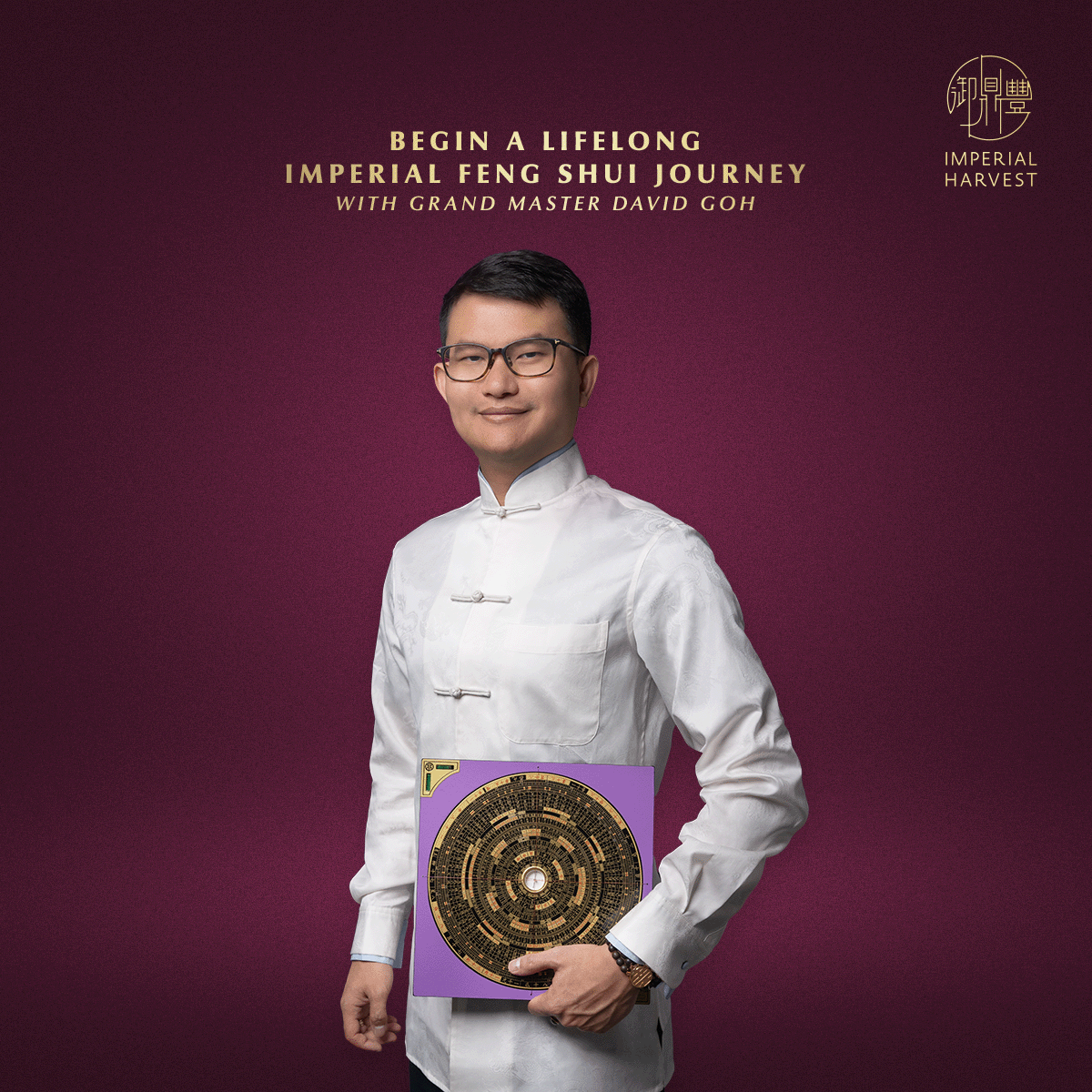
The Earthly Branches in your chart have been fixed since birth. But the branches entering through the Luck Pillars and Annual Luck change every year — creating new combinations, new clashes, new punishments, new dynamics. These interactions are happening right now, whether you are aware of them or not.
What to Expect
Grand Master David reads your chart personally. He will plot your chart using real solar time, read every pillar (including the hidden stems within each Earthly Branch), assess the branch interactions with your current Luck Pillar and this year’s Annual Luck, identify your favourable element, and — if a prescription is warranted — recommend the specific treasure and consecration your chart requires.
What to Prepare
Your date of birth, time of birth (as accurate as possible), and place of birth. If you have a specific focus — career, business, investments, or a decision you’re navigating — bring that to the consultation.
No Obligation
The consultation is complimentary. There is no pressure, no commitment, and no obligation.
Book A Free Consultation
Continue Your Understanding
This article is part of Imperial Harvest’s educational series on BaZi and Imperial Feng Shui. To deepen your understanding:
Beginner’s Guide to Bazi — what Bazi is, what the consultation reveals, and how Grand Master David’s four diagnostic techniques work.
Understanding Your Daymaster (日主) — the centre of your chart and the reference point from which every branch interaction is interpreted.
The Five Elements (五行) — the elemental system that governs how branches interact through the producing and controlling cycles.
The 60 Jia Zi Explained — how the 12 Earthly Branches combine with the 10 Heavenly Stems to form the 60-year cycle.
Frequently Asked Questions
What’s the difference between Heavenly Stems and Earthly Branches?
Heavenly Stems are the top row of each pillar — each carrying a single, visible element. Earthly Branches are the bottom row — each containing hidden Heavenly Stems that carry layered elemental forces. The branches add a layer of complexity that the stems alone do not reveal. Grand Master David reads both together.
Is my zodiac animal the same as my Earthly Branch?
Your Chinese Zodiac animal corresponds to the Earthly Branch of your Year Pillar. But your chart contains four Earthly Branches — one in each pillar — each carrying different elemental energies and interacting with the others. The Year Branch (zodiac animal) is one piece of a much larger picture.
Are clashes always bad?
No. A clash is a disruption — but whether that disruption is beneficial or harmful depends entirely on the chart context. A clash can break a stagnant pattern that has been holding back a constrained quadrant, creating the conditions for a new trajectory. It can also destabilise something that was working. The meaning is always chart-specific.
Can I read my own branch interactions?
You can identify which branches are in your chart using online tools. But interpreting what their interactions mean — whether a combination is activating or redirecting, whether a clash is breaking stagnation or causing instability — requires reading the full chart in context. The hidden stems, the pillar positions, the Luck Pillar, and the Annual Luck all affect the interpretation. This is Grand Master David’s domain.
Do branch interactions determine personality traits?
No. The effect of any branch interaction depends on the full chart context: which elements are involved, which pillar positions are affected, which quadrant is influenced, and what the Daymaster needs. A harm or punishment in one chart may produce entirely different effects than the same interaction in another. Grand Master David reads branch interactions as elemental dynamics, not fixed character traits.