
Posted by Imperial Harvest on 07 January 2026
How people, events, and opportunities shape success long before hard work begins.
There is a strange asymmetry in how success appears in the world.
Some people seem to encounter opportunities wherever they go.
They meet mentors by coincidence.
They are introduced at the right moment.
They find themselves in rooms where decisions are made.
Others, equally capable, rarely do.
They work harder.
They prepare more.
They chase opportunities relentlessly.
Yet doors remain closed.
We usually explain this difference with a single word: luck.
But we use the word vaguely, almost dismissively — like a shrug at reality.
“Some people are lucky.”
“I just don’t have good luck.”
“That was a lucky break.”
What we rarely ask is whether luck is actually random at all.
Because if it were, it would not repeat so reliably.
The Comforting Myth of Randomness
Most modern cultures treat luck as a kind of cosmic lottery.
You either win it or you don’t.
It falls from the sky or it doesn’t.
And because it feels uncontrollable, we stop questioning it.
This belief is comforting.
If luck is random, then:
• Success doesn’t demand explanation
• Failure doesn’t demand responsibility
• Inequality feels unavoidable
But comfort is not the same as truth.
When we examine real lives — not stories, not anecdotes, but patterns — luck behaves far too consistently to be random.
The same people keep encountering opportunities.
The same individuals keep being recommended, referred, or remembered.
The same names keep circulating.
Randomness does not behave like this.
Systems do.
What We Call “Luck” Is Usually External Alignment
Let’s start with a simple observation.
Most major opportunities are not created by effort alone.
You do not “work hard” to meet the right person.
You do not “grind” your way into perfect timing.
You do not “hustle” your way into being noticed by the right decision-maker.
These things arrive.
They arrive through:
• introductions
• environments
• networks
• timing
• chance encounters
But “chance” is misleading.
Because chance itself has structure.
The Three Ingredients of What We Call Luck
When people describe themselves as lucky, they are usually describing a pattern involving three elements:
1. People
• mentors
• clients
• partners
• sponsors
• benefactors
2. Events
• meetings
• crises
• openings
• market shifts
• turning points
3. Opportunities
• roles
• deals
• investments
• invitations
• access
Luck is not the outcome.
Luck is the arrival of these elements before effort begins.
This matters more than we admit.
Because effort is powerless without something to act on.
Why Effort Alone Cannot Create Luck
We live in an era that glorifies effort.
Hard work is framed as the ultimate moral virtue.
If something fails, we are told to push harder.
If progress stalls, we are told to be more persistent.
But effort has a critical limitation.
Effort operates inside the system.
Luck determines whether you are even inside the right system.
You can be the hardest-working person in the wrong environment and still go nowhere.
Consider this:
• You cannot force someone to notice you
• You cannot demand perfect timing
• You cannot manufacture trust instantly
• You cannot will yourself into the right room
Effort works after access is granted, not before.
This is why many capable people feel as if they are running endlessly without moving forward.
They are exerting force where leverage is required.
The Environmental Multiplier Effect
One of the most overlooked factors in success is the environment.
The same individual, placed in different environments, will experience entirely different outcomes.
A talented professional in a stagnant organisation struggles to be seen.
The same professional in a high-flow environment is suddenly “promising.”
Nothing internal changed.
The environment did.
Some environments:
• amplify visibility
• accelerate trust
• compress time-to-opportunity
Others:
• dilute effort
• suppress recognition
• delay outcomes
Luck is often nothing more than being embedded in an environment that multiplies effort.
This is not mystical.
It is structural.
Why the Same People Keep Getting Chances
If luck were random, opportunity would distribute evenly.
It doesn’t.
Instead, opportunity clusters.
The same people:
• receive repeated referrals
• are introduced to new circles
• are remembered when openings appear
This creates a compounding effect.
Once someone is inside a high-opportunity loop, future opportunities arrive more easily.
This is why early access matters so much.
And this is why blaming individuals for lacking “confidence” or “drive” often misses the point.
Confidence usually follows access, not the other way around.
The Silent Role of Timing
Even when opportunity appears, it does not always arrive at the right moment.
Some people encounter opportunities when they are:
• ready
• resourced
• supported
Others encounter them when:
• they are overwhelmed
• unprepared
• distracted
Timing determines whether opportunity becomes progress or pressure.
This is why two people can receive the same chance and experience opposite outcomes.
Timing is not controlled by effort.
It emerges from alignment.
The Illusion of Control in Modern Advice
Most modern success advice begins too late.
It assumes:
• opportunity is already present
• timing is already correct
• access is already granted
From there, it teaches optimisation:
• productivity
• mindset
• strategy
• execution
These tools matter, but only after the foundational conditions exist.
Teaching someone to optimise effort without addressing luck is like teaching someone to swim without putting them in water.
Rethinking Inequality Without Moral Judgement
Conversations about luck are uncomfortable because they threaten the idea of meritocracy.
If luck matters, then:
• success is not purely deserved
• failure is not purely earned
But acknowledging luck does not eliminate agency.
It reframes it.
Agency does not disappear when structure exists.
It becomes strategic.
Once you understand that luck governs access, the question changes from:
“How do I work harder?”
to:
“How do I position myself where opportunity flows?”
This is a more difficult question, but a far more powerful one.
The Mistake of Treating Luck as Personality
One of the most damaging beliefs is that luck is a personality trait.
We label people as:
• lucky
• unlucky
• blessed
• cursed
This turns luck into identity instead of mechanism.
But luck is not who you are.
It is what surrounds you.
And surroundings can change.
Not through wishing.
But through alignment.
When Luck Is Absent, Effort Becomes Punishing
There is a reason some people burn out faster than others.
It is not because they lack resilience.
It is because effort is being applied in an environment that does not respond.
When effort repeatedly fails to convert into progress, the body registers this as futility.
Motivation erodes.
Confidence weakens.
Hope quietly dissolves.
This is not a psychological weakness.
It is the nervous system responding accurately to structural resistance.
The First Structural Question Everyone Should Ask
Before asking:
“What should I do next?”
A more foundational question exists:
“What kind of opportunities am I currently exposed to?”
Not hypothetically.
Not ideally.
But realistically.
• Who introduces you?
• Who recommends you?
• Who remembers you when openings appear?
• Which environments amplify you?
These questions reveal far more than any personality test.
They reveal the state of your external flow.
Why Understanding Luck Is Not Superstition
Modern culture often associates any discussion of luck with irrationality.
But this is a mistake.
Understanding luck is not about believing in magic.
It is about understanding how external forces shape internal outcomes.
Economists study opportunity structures.
Sociologists study networks.
Anthropologists study social capital.
These are all secular ways of studying luck.
They simply use different languages.
The underlying reality remains the same:
access precedes effort.
The Danger of Ignoring Luck Entirely
When luck is ignored, people over-invest in effort.
They:
• work longer hours
• chase diminishing returns
• blame themselves excessively
This creates a culture where exhaustion is mistaken for virtue.
But exhaustion is often a signal, not of commitment, but of misalignment.
The First Step Is Not Control — It Is Awareness
You cannot force luck.
But you can:
• recognise when it is absent
• notice where it flows
• understand what attracts it
• stop blaming yourself for structural gaps
Awareness does not solve the problem.
But it stops you from fighting the wrong battle.
What Luck Really Asks of You
Luck does not ask you to work harder.
It asks you to:
• place yourself differently
• recognise timing
• respond when opportunity appears
• stop mistaking effort for leverage
This requires a different kind of intelligence.
Not analytical intelligence.
Not emotional intelligence.
But structural intelligence.
A Quiet Reframe
If luck governs what enters your life, then understanding it is not superstition.
It is a strategy.
And if strategy exists, then destiny is not a sentence.
It is a system.
What Comes Next
Luck determines what appears.
But appearance alone is not enough.
Some people encounter opportunity and hesitate.
Others encounter it and act instinctively.
This difference has little to do with intelligence, and everything to do with timing.
In the next article, we will explore why timing and intuition decide whether opportunity is seized or missed, and why the mind often knows long before logic catches up:
Why Timing Beats Intelligence, and Why You Often “Know” Before You Can Explain?
Until then, consider this:
Perhaps your struggle is not a lack of effort.
Perhaps it is a lack of exposure to the right people, events, and opportunities.
And that is not a personal flaw.
It is a structural condition, one that can be understood.
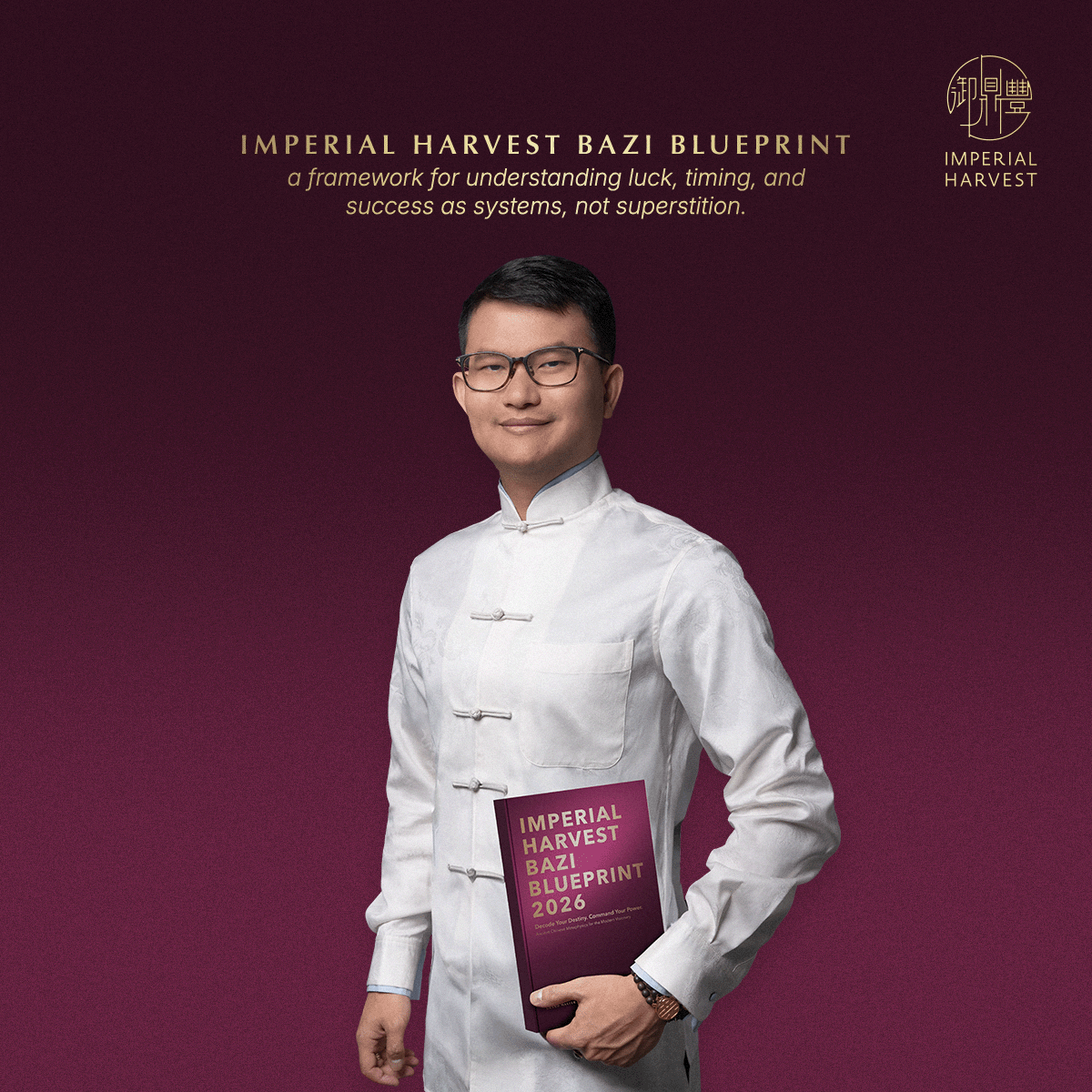
This article is part of the Imperial Harvest Bazi Blueprint — a framework for understanding luck, timing, and success as systems, not superstition.
Imperial Harvest’s expert consultants are always on hand to guide you on your journey and provide you with insights to help you realise your fullest potential. Book a complimentary consultation today or contact us at +65 91221826.
We are located at
For prospective clients: Imperial Harvest402 Orchard Road
Delfi Orchard #02-07/08
Singapore 238876 For existing clients: Imperial Harvest Prestige
402 Orchard Road
Delfi Orchard #03-24/25
Singapore 238876
Most Read Articles
Get to read our life changing articles and get inspired.
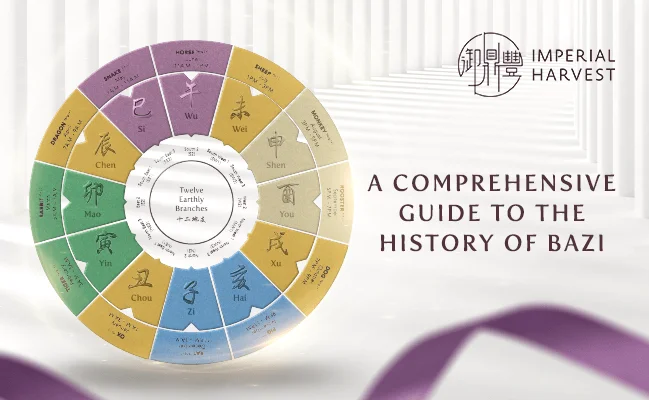
A Comprehensive Guide to the History of Bazi (八字)
Estimated Reading Time: 5 mins Bazi (八字) is often mistakenly assumed as the Chinese counterpart of western Astrology. The similarities between both systems lie in their utilisation of birth dates and time in their calculations, and the ability to be read from a tabulated chart. Where Astrology may take into account the positions of different […]

Beginner’s Guide to Bazi Reading
Estimated Reading Time: 5 mins Bazi (八字), or the Four Pillars of Destiny, is a multidisciplinary study in Imperial Feng Shui. It encompasses a well-developed set of metaphysical principles based on planetary influences, the duality of Yin and Yang, and the Five Elements. What is a Bazi Reading? Bazi is an intricate discipline within Imperial […]
Chinese New Year 2026: Auspicious Dates and Calendar
Imperial Feng Shui Date Selection by Grand Master David Goh In Chinese metaphysics, success is not determined by effort alone — timing is equally decisive. 2026 marks the Year of the Crimson Horse, a year characterised by strong Fire energy, speed, visibility, and decisive movement. It is a year that rewards bold action and leadership, […]