
Posted by Imperial Harvest on 07 January 2026
How intuition, not logic, decides the moments that shape your life.
There is a familiar regret most people carry quietly.
The investment they almost made.
The role they hesitated to accept.
The conversation they delayed.
The opportunity that felt right, until it was gone.
When we look back, the pattern is painfully clear.
“I knew it. I just didn’t act.”
This sentence appears across careers, businesses, relationships, and wealth decisions.
And yet, despite how common it is, we rarely ask the obvious question:
If intelligence and analysis are so important, why do so many decisive moments depend on timing instead?
The Intelligence Paradox
Modern society worships intelligence.
We measure it.
We test it.
We reward it.
From school onward, we are trained to believe that good decisions come from:
• careful analysis
• sufficient information
• logical certainty
But the most important decisions in life rarely arrive with certainty.
They arrive:
• incomplete
• ambiguous
• emotionally quiet
• time-sensitive
And they do not wait for perfect information.
This creates a paradox.
The more intelligent a person is, the more they are trained to wait.
The more they wait, the more often timing passes.
Why the Best Opportunities Feel Quiet
When people imagine opportunity, they imagine excitement.
A dramatic breakthrough.
A loud signal.
A clear “yes.”
But real opportunities rarely announce themselves.
They often feel:
• subtle
• understated
• oddly calm
• almost too ordinary
This is why so many people dismiss them.
The mind looks for proof.
The body feels ready.
And the two do not always agree.
The Myth of Rational Decision-Making
We like to believe that decisions are made consciously.
That we weigh options.
Compare outcomes.
Then choose.
In reality, neuroscience tells a different story.
Most decisions are made subconsciously first, and justified consciously later.
Your body senses:
• coherence
• alignment
• danger
• opportunity
Long before your mind constructs an argument.
This process is not mystical.
It is pattern recognition.
Intuition Is Not Emotion
One of the biggest misunderstandings about intuition is that it is emotional.
It is not.
Emotion is reactive.
Intuition is recognitional.
Emotion says:
• “I’m excited.”
• “I’m afraid.”
Intuition says:
• “This matters.”
• “This window is closing.”
It is quieter than emotion, and far more precise.
This is why people often ignore it.
Timing Is a Window, Not a Moment
Timing is often misunderstood as a single instant.
In reality, it behaves more like a window.
A period when:
• conditions align
• resistance lowers
• effort converts efficiently
Outside this window, the same action requires more force — or fails entirely.
You cannot analyse a window into staying open.
You either step through it or you don’t.
Why Hesitation Feels “Responsible”
Hesitation is socially rewarded.
Waiting feels mature.
Caution feels intelligent.
Delay feels safe.
But many delays are not caused by caution.
They are caused by over-identification with logic.
When the mind demands certainty that the situation cannot provide, it freezes.
Meanwhile, time continues moving.
The Cost of Being “Almost Ready”
Many capable people live in a state of perpetual preparation.
They are:
• one more course away
• one more confirmation away
• one more year away
This state feels productive.
But it is often a defence against uncertainty.
Opportunity does not wait for readiness.
It waits for alignment.
Why Timing Failures Hurt More Than Mistakes
People regret mistimed decisions more than wrong ones.
A wrong decision teaches.
A missed decision lingers.
This is because:
• mistakes involve action
• missed timing involves self-betrayal
You felt it.
You sensed it.
And you didn’t move.
This erodes trust — not in the world, but in yourself.
The Quiet Erosion of Self-Trust
Each ignored intuitive signal leaves a trace.
Over time:
• hesitation becomes habit
• doubt replaces clarity
• confidence weakens
Eventually, people stop listening altogether.
They say:
“I don’t trust my instincts.”
But instincts were never the problem.
The problem was repeated override.
Why Groups Miss Timing More Than Individuals
Groups are terrible at timing.
Consensus slows decisions.
Risk is diluted.
Responsibility diffuses.
This is why:
• committees miss opportunities
• corporations move late
• innovation comes from the edges
Timing requires decisiveness, not agreement.
The Difference Between Speed and Precision
Acting quickly is not the same as acting precisely.
Reactivity is fast but sloppy.
Intuition is fast and accurate.
Precision timing feels:
• calm
• unforced
• inevitable
There is no rush, just clarity.
Why Data Often Arrives Too Late
Data is backward-looking.
It confirms what has already happened.
Timing decisions, however, are forward-facing.
They require sensing momentum before it becomes obvious.
This is why those who wait for proof often arrive after the advantage is gone.
The Role of the Subconscious
Your subconscious processes:
• patterns
• inconsistencies
• shifts
It notices:
• subtle changes in tone
• emerging gaps
• unspoken signals
By the time your conscious mind “figures it out,” the opportunity may already be decaying.
This is not failure of intelligence.
It is misuse of it.
Why Timing Feels Risky (and Why It Isn’t)
Acting on intuition feels risky because:
• it lacks justification
• it cannot be explained easily
• it exposes you to judgment
But waiting carries its own risk, one that is rarely acknowledged.
The risk of irrelevance.
The Pattern of Those Who “Always Seem Early”
Some people consistently:
• enter markets early
• pivot before decline
• move ahead of the crowd
They are not reckless.
They are attuned.
They listen to internal signals instead of external noise.
Timing Is Not Talent — It Is a Condition
Here is the most important reframe:
Timing is not a personality trait.
It is not courage.
It is not intelligence.
It is a condition of alignment.
When internal clarity is strong, timing sharpens.
When clarity is blocked, hesitation dominates.
This explains why the same person can be decisive in one phase of life and indecisive in another.
Why “Thinking It Through” Often Fails
Thinking is excellent for optimisation.
It is terrible for initiation.
Beginnings require commitment before certainty.
That is why:
• starting matters more than perfect planning
• movement reveals information
• clarity often follows action
The Question That Reveals Timing Readiness
Instead of asking:
“Am I sure?”
A better question is:
“Is my hesitation coming from lack of information, or lack of trust?”
These feel similar, but they are not.
One requires research.
The other requires alignment.
Timing as a Form of Intelligence
Intuition is not anti-intellectual.
It is pre-intellectual.
It integrates:
• experience
• pattern
• context
Faster than conscious reasoning can.
In this sense, intuition is not irrational.
It is compressed intelligence.
What Comes Next
Luck determines what appears.
Timing determines whether you act.
But action alone is not enough.
Some people act, and still cannot sustain results.
Their breakthroughs collapse.
Their gains reset.
This is not a timing problem.
It is a capacity problem.
In the next article, we will explore why income breaks through — then resets, and why effort without structure cannot hold success:
Until then, consider this:
Perhaps the problem was never that you didn’t know enough.
Perhaps you simply didn’t trust what you already knew.
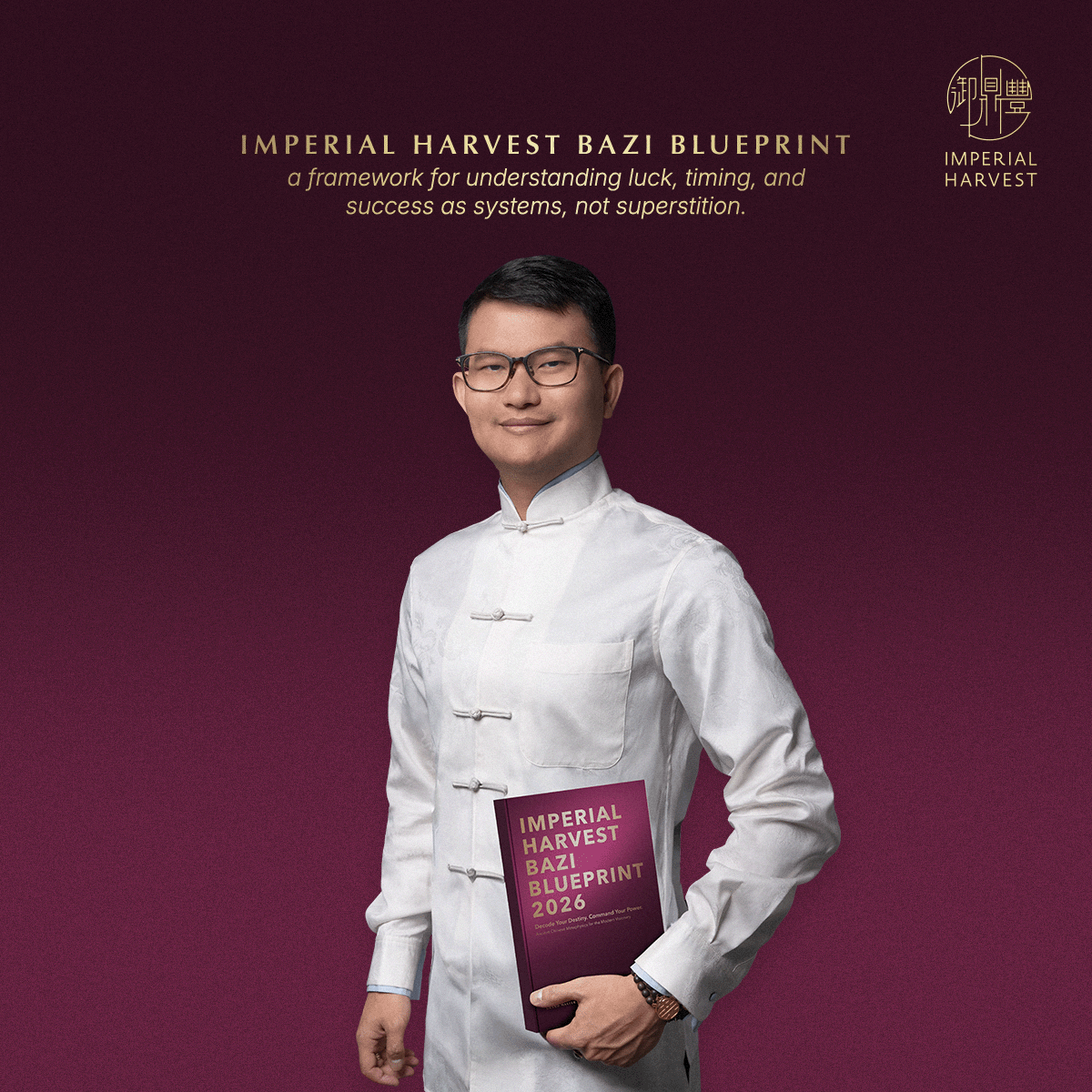
This article is part of the Imperial Harvest Bazi Blueprint — a framework for understanding luck, timing, income, and wealth as systems, not traits.
Imperial Harvest’s expert consultants are always on hand to guide you on your journey and provide you with insights to help you realise your fullest potential. Book a complimentary consultation today or contact us at +65 91221826.
We are located at
For prospective clients: Imperial Harvest402 Orchard Road
Delfi Orchard #02-07/08
Singapore 238876 For existing clients: Imperial Harvest Prestige
402 Orchard Road
Delfi Orchard #03-24/25
Singapore 238876
Most Read Articles
Get to read our life changing articles and get inspired.
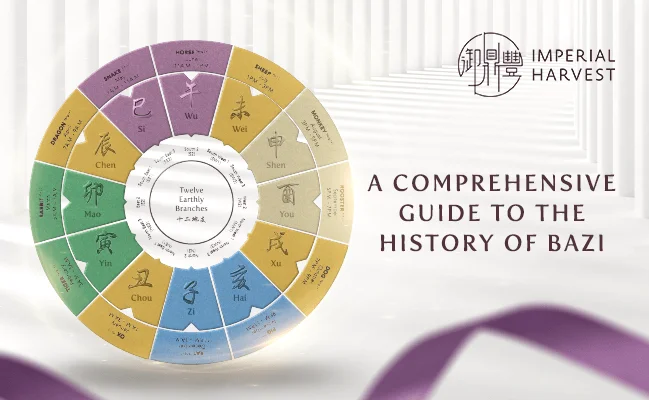
A Comprehensive Guide to the History of Bazi (八字)
Estimated Reading Time: 5 mins Bazi (八字) is often mistakenly assumed as the Chinese counterpart of western Astrology. The similarities between both systems lie in their utilisation of birth dates and time in their calculations, and the ability to be read from a tabulated chart. Where Astrology may take into account the positions of different […]
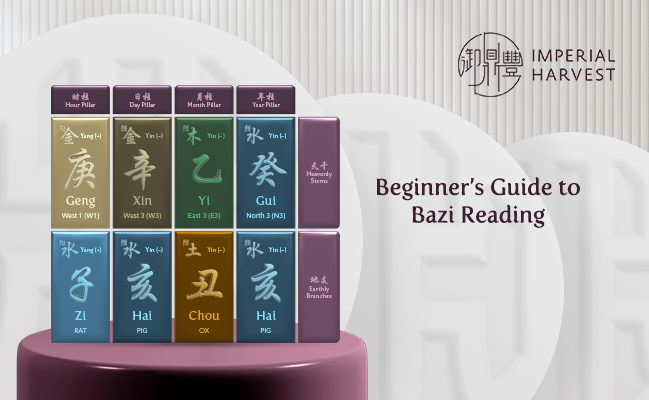
Beginner’s Guide to Bazi Reading
Estimated Reading Time: 5 mins Bazi (八字), or the Four Pillars of Destiny, is a multidisciplinary study in Imperial Feng Shui. It encompasses a well-developed set of metaphysical principles based on planetary influences, the duality of Yin and Yang, and the Five Elements. What is a Bazi Reading? Bazi is an intricate discipline within Imperial […]
Chinese New Year 2026: Auspicious Dates and Calendar
Imperial Feng Shui Date Selection by Grand Master David Goh In Chinese metaphysics, success is not determined by effort alone — timing is equally decisive. 2026 marks the Year of the Crimson Horse, a year characterised by strong Fire energy, speed, visibility, and decisive movement. It is a year that rewards bold action and leadership, […]