Fortifying the Dragon Veins of China • The Architecture of Legacy
The Great Wall of China is often explained in a single, convenient sentence: it was built to defend against invasion.
That layman explanation is not wrong — but it is incomplete.
Empires do not invest across generations for a single, simple purpose. What makes the Great Wall truly extraordinary is not merely what it resisted, but what it was designed to protect long enough to endure: stability, continuity, and the conditions for prosperity to compound.
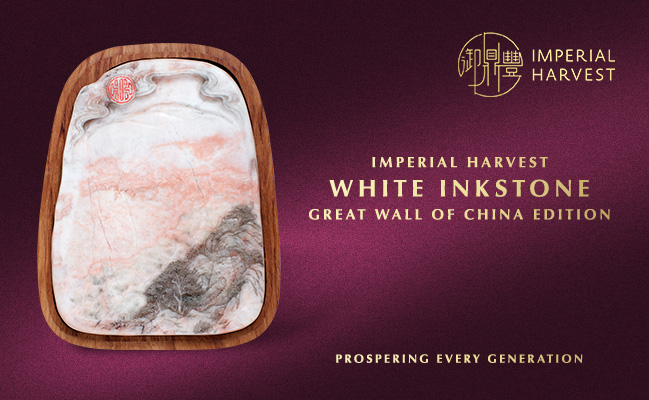
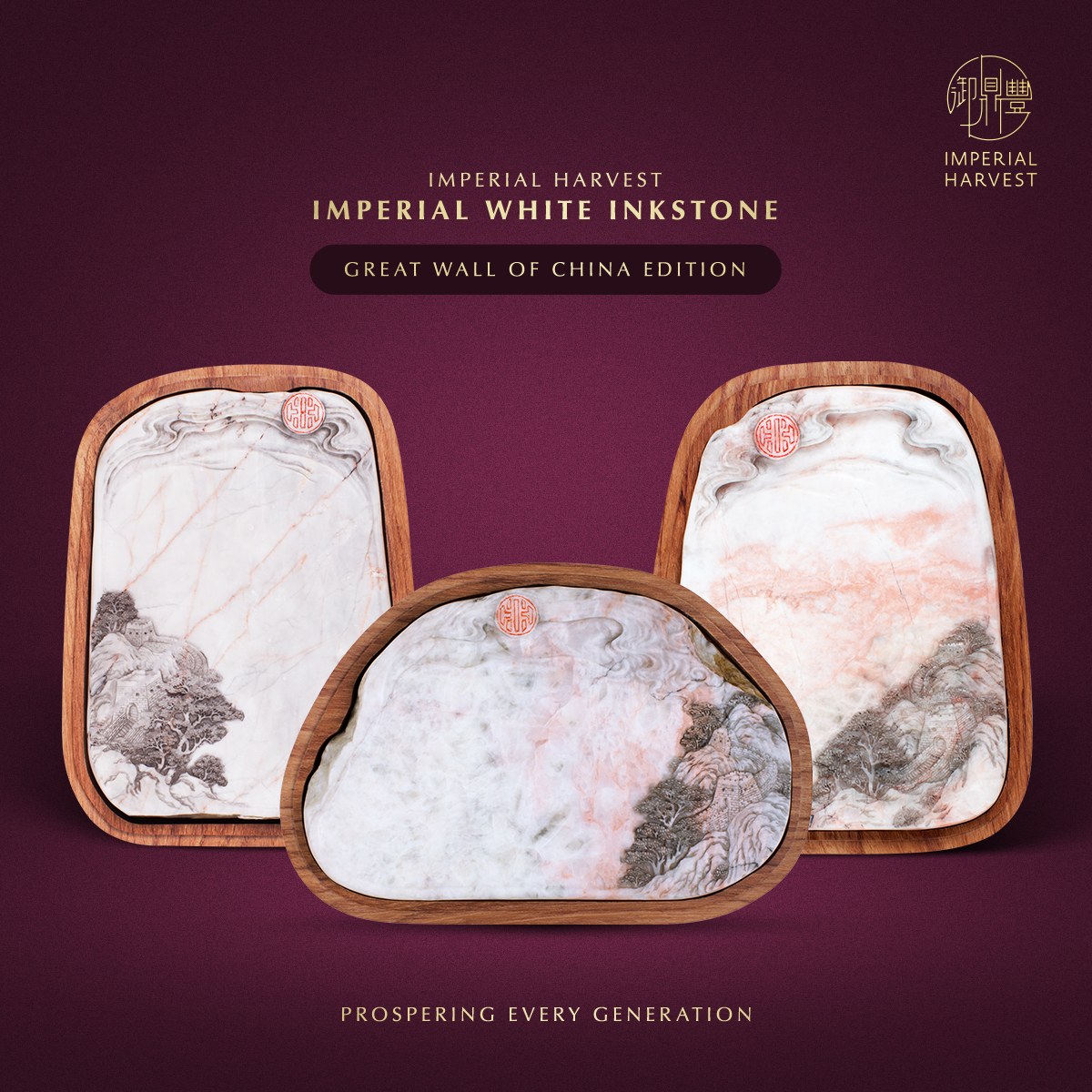
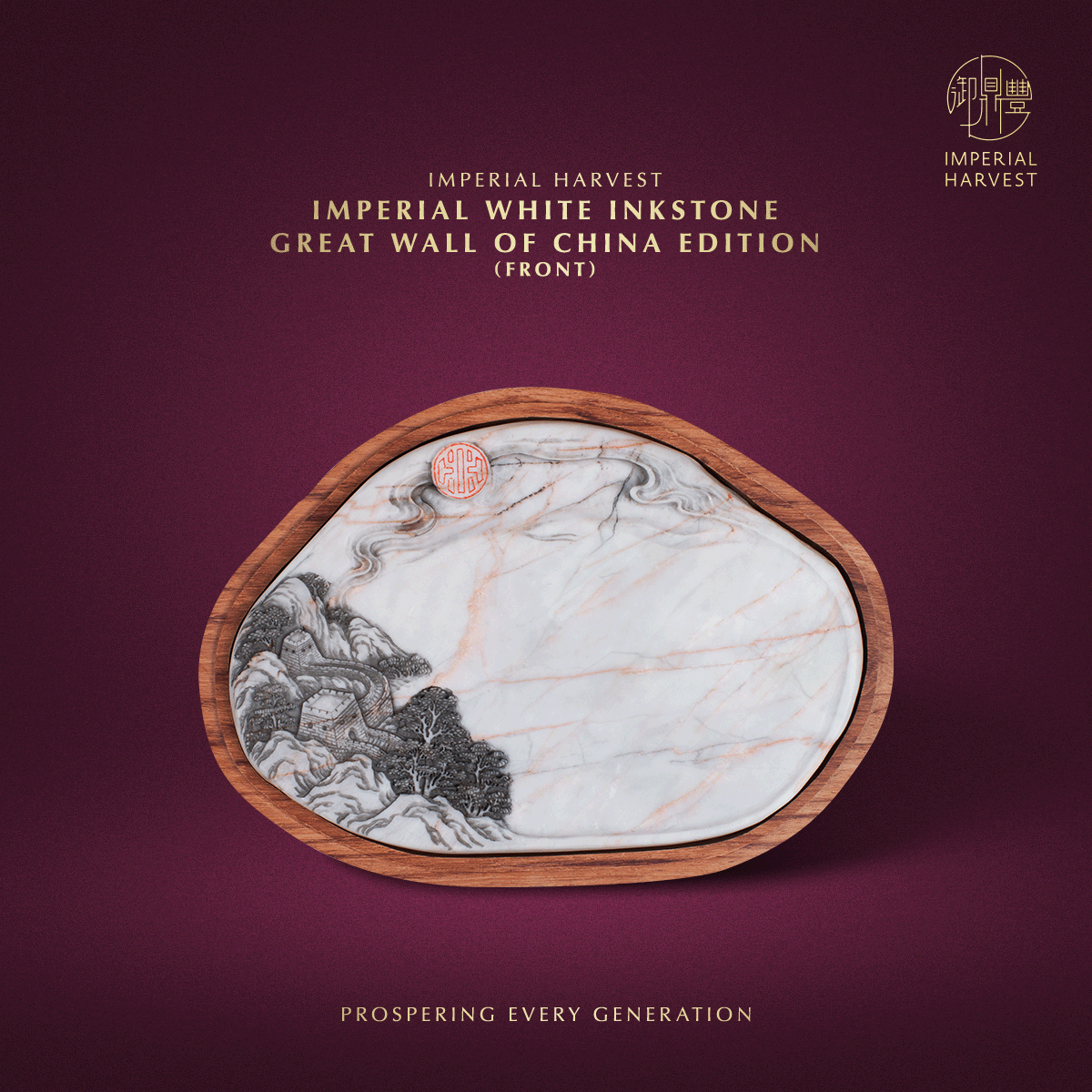
This is the spirit behind the Imperial Harvest White Inkstone — Great Wall of China Edition.
It is not simply an inkstone with a famous monument carved onto it. It is a deliberate imperial statement: legacy is built through protection, and protection is not an event — it is a long-term discipline maintained across time.
Beyond the Layman Story
The Great Wall as a Multi-Generational Vision of Continuity
If the Great Wall were only a reaction to immediate threats, it would have been built once, finished once, and forgotten once.
But history remembers the Great Wall because it was initiated and continued. Reinforced, repaired, extended, and re-fortified — not merely under one ruler, but through successive reigns, across eras. This generational commitment reveals the deeper logic of empire-building:
- A realm becomes prosperous when it remains stable long enough.
- A dynasty lasts when its boundaries, standards, and continuity are maintained.
The Great Wall represents that imperial maturity: the willingness to build something that protects the realm beyond the builder’s own lifetime.
That is why, in the Imperial Feng Shui lens, the Great Wall becomes more than a defense structure.
It becomes sovereign infrastructure.
Imperial Feng Shui
The Great Wall as Fortification of China’s 龙脉 (Dragon Veins)
In Imperial Feng Shui, the land is read as a living structure. Mountain ranges and ridgelines are described as 龙脉 (dragon veins) — the great pathways through which the realm’s qi and vitality are believed to move.
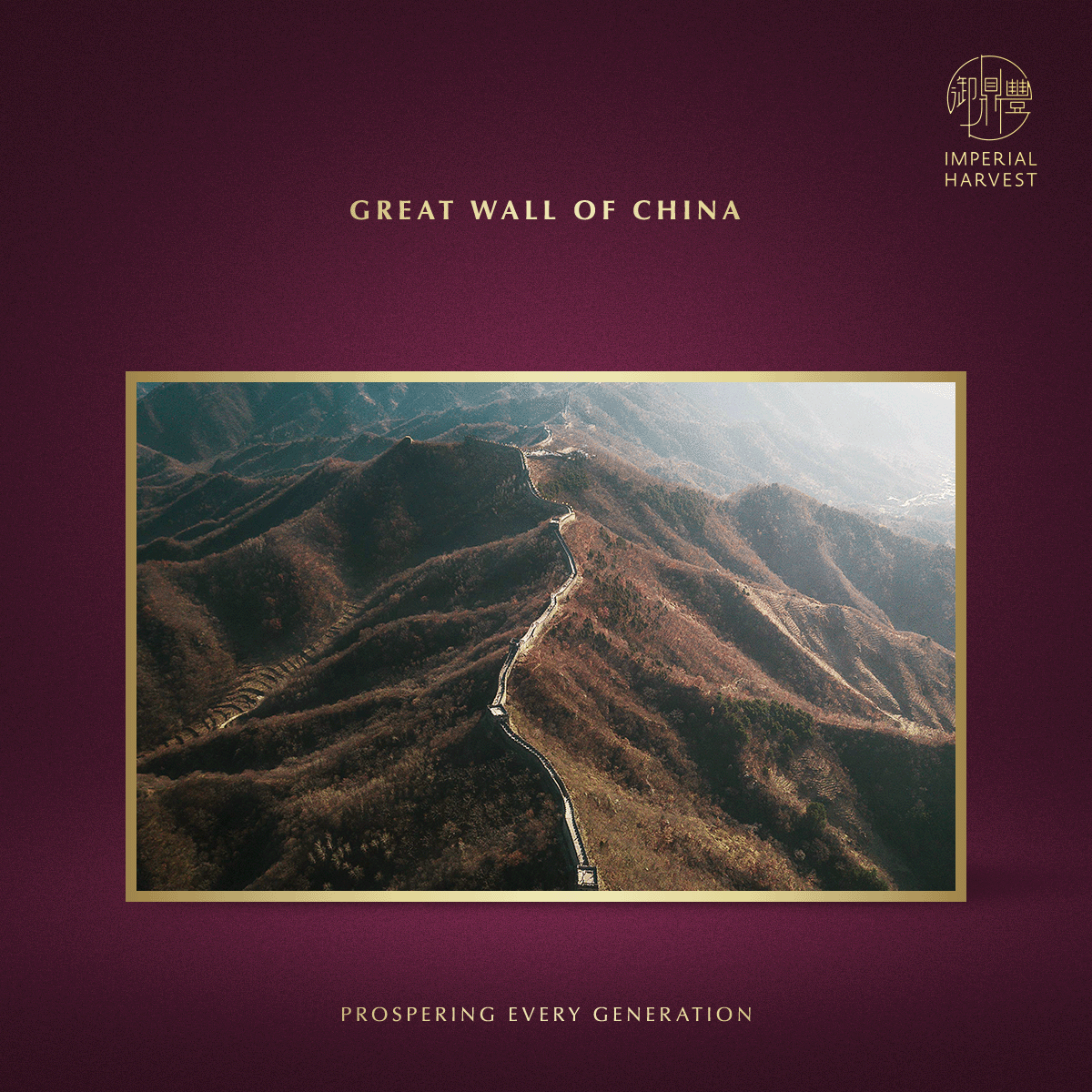
From this perspective, 龙脉 is not only spiritual geography. It is the imperial language for the realm’s backbone — the underlying structure that supports order, governance, and endurance.
And more importantly:
龙脉 signifies the economic pulse and prosperity of the nation.
Prosperity is not merely “created.” It is allowed to accumulate when the conditions for compounding are protected:
- trade routes remain secure and functional
- agricultural regions and population centres are not repeatedly destabilised
- institutions can mature without constant disruption
- governance can hold continuity
- culture, wealth, and lineage can persist beyond one era
In Imperial Feng Shui terms, when the dragon veins are steady and supported, the realm’s “pulse” remains strong — stability holds, and prosperity has the conditions to grow.
This is why the Great Wall, through an Imperial Feng Shui lens, can be positioned as a visionary act of statecraft:
a long-term, multi-generational fortification of China’s 龙脉.
Not only keeping threats out, but strengthening the realm’s backbone so that what lies within can endure.
Strengthening Support for the Son of Heaven
Fortifying 龙脉 to Sustain Benefactor Luck and Backing
For the Son of Heaven, protection is not paranoia. It is governance.
Imperial Feng Shui places immense emphasis on support (靠山) — the stabilising force behind leadership. A throne does not remain stable by force alone. It remains stable when the realm itself sustains the conditions for support to gather:
- capable ministers
- loyal generals
- functional systems
- reliable networks
- steady resources
- public confidence and continuity
Within this worldview, fortifying 龙脉 is not merely an “outer wall.” It is an inner stability mechanism: strengthening the realm’s backbone so support can hold, and the conditions for benefactor backing can remain consistent.
So the Great Wall becomes a symbol of this imperial equation:
Protect the dragon veins → stabilise the realm → sustain support for the Son of Heaven → allow prosperity to compound into legacy.
That is the imperial logic this edition carries.
The Great Wall of China Edition
A Tribute to Imperial Protection as Legacy-Building
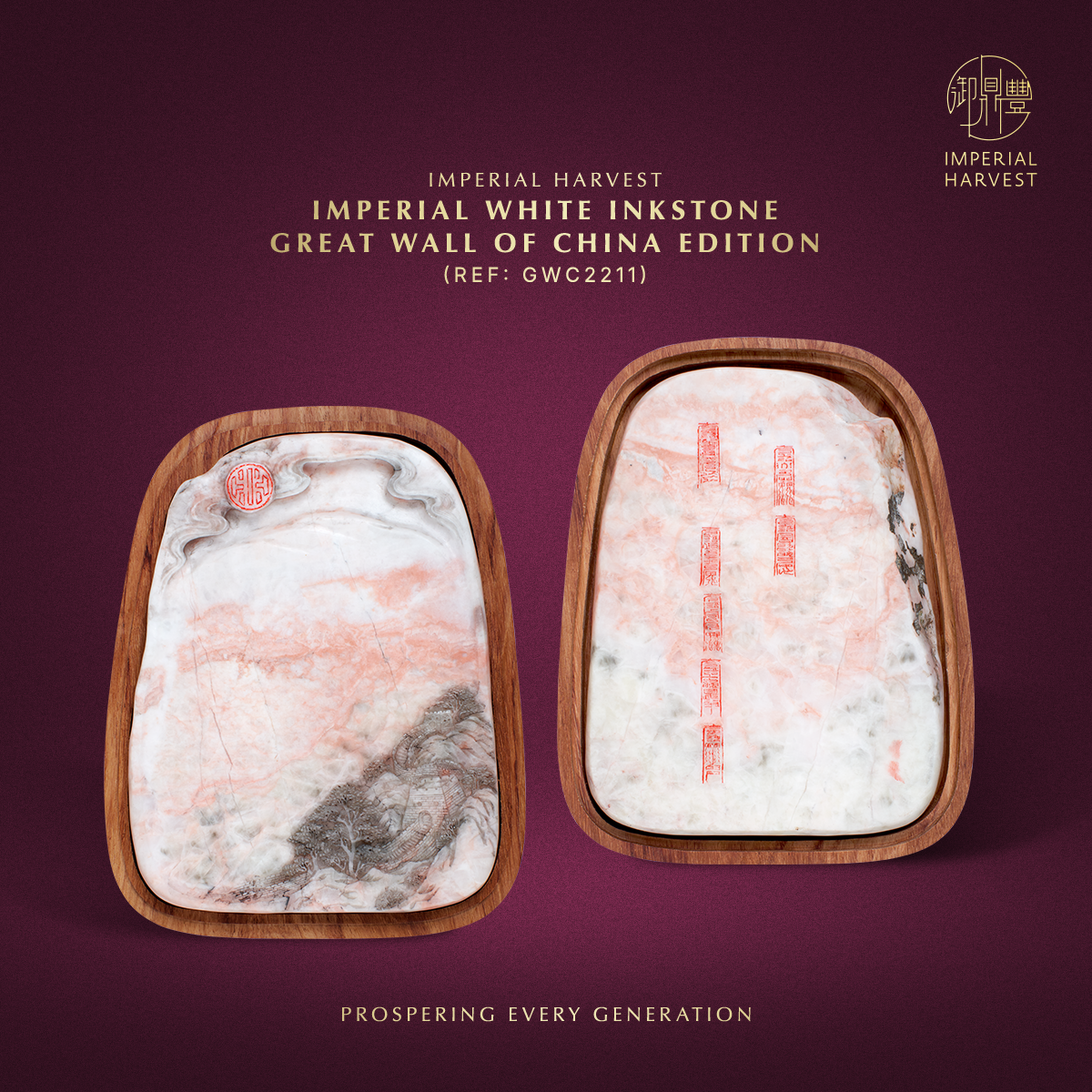
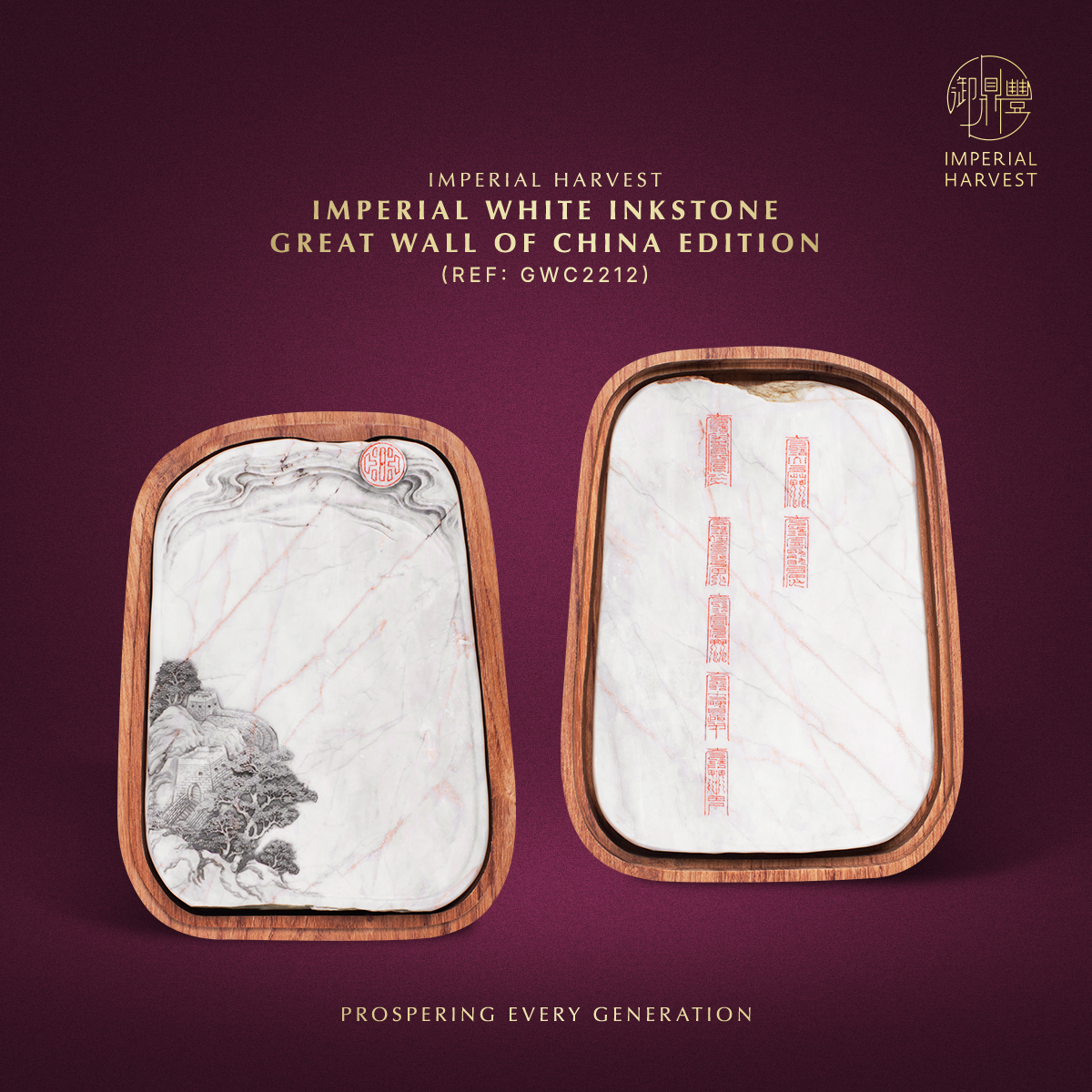
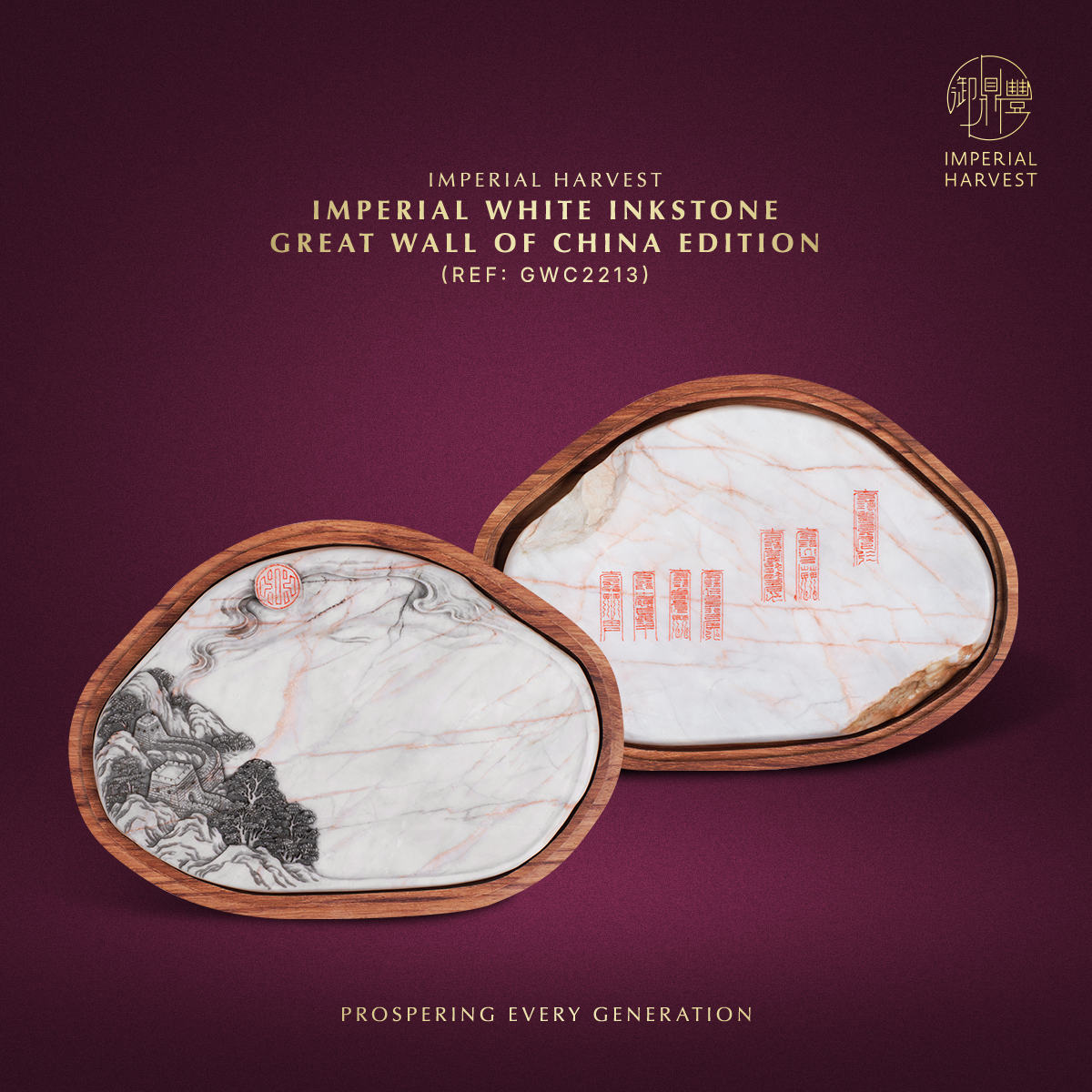
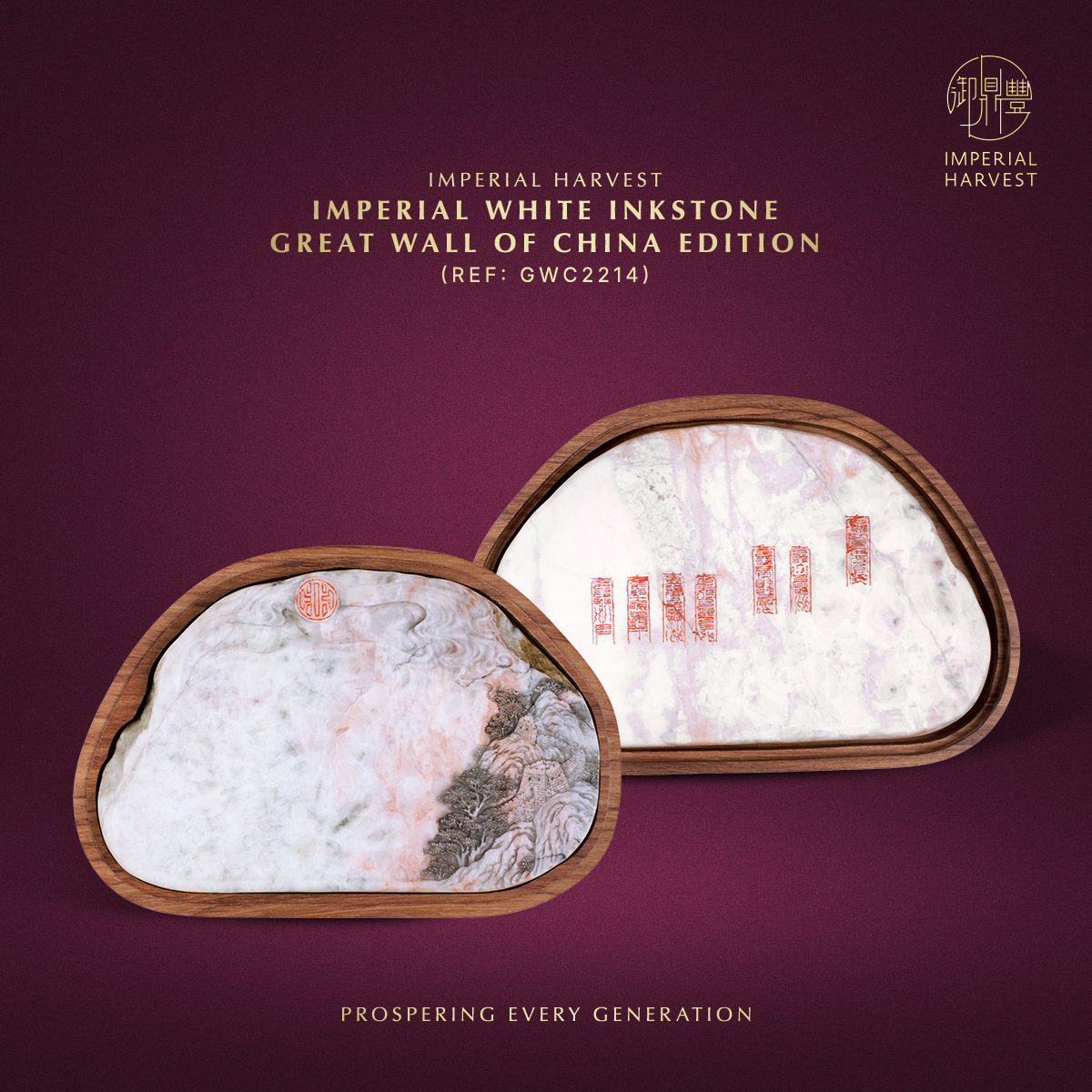
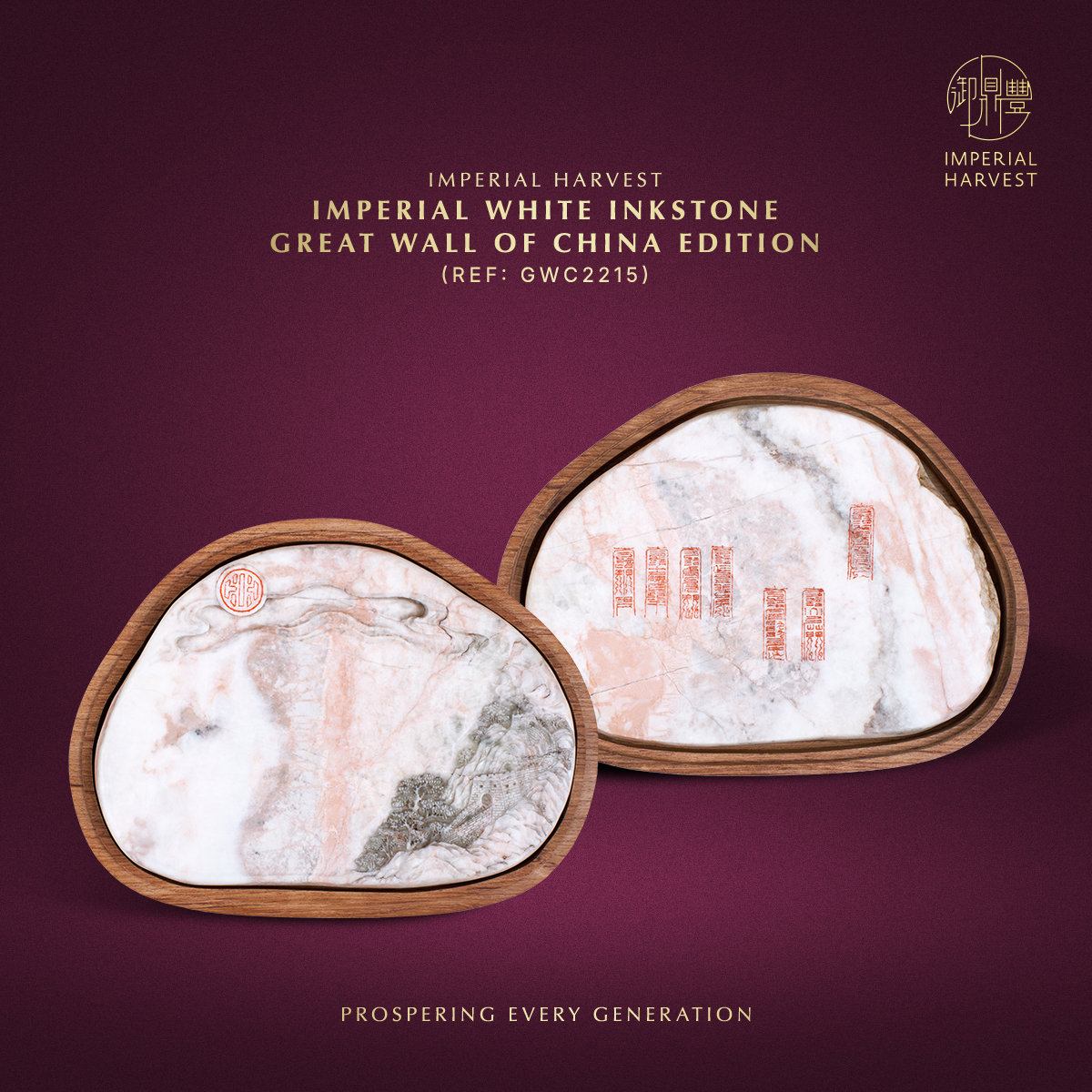
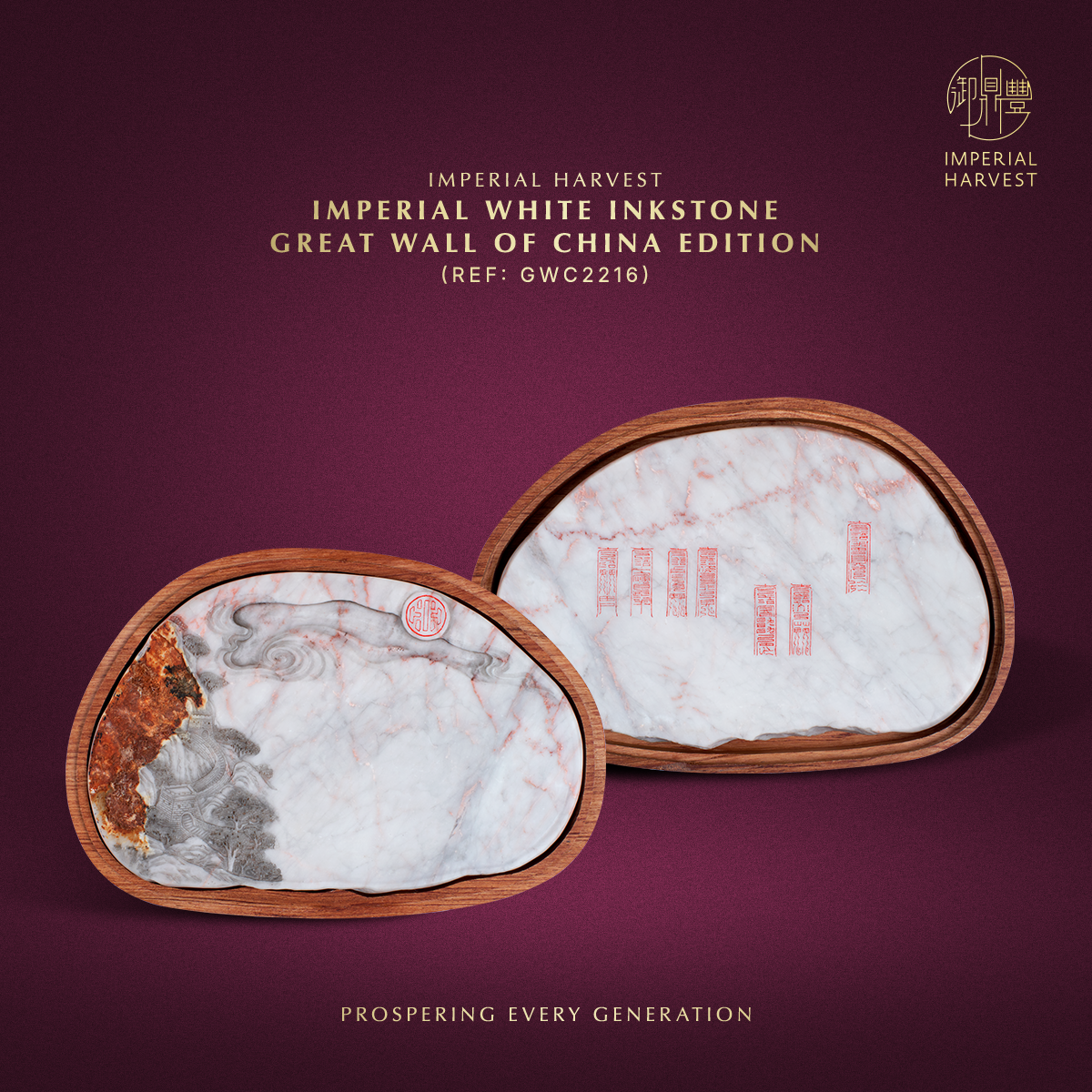
The Great Wall of China Edition is created as a material homage to that legacy principle.
It is not designed to feel like a tourist image. It is designed to feel like imperial architecture — engineered, deliberate, and enduring.
Where other objects focus on aspiration, this one focuses on something more demanding: stewardship.
The kind that lasts beyond one season. The kind that lasts beyond one reign.
Craftsmanship
How the Great Wall Is Carved into the Imperial White Inkstone
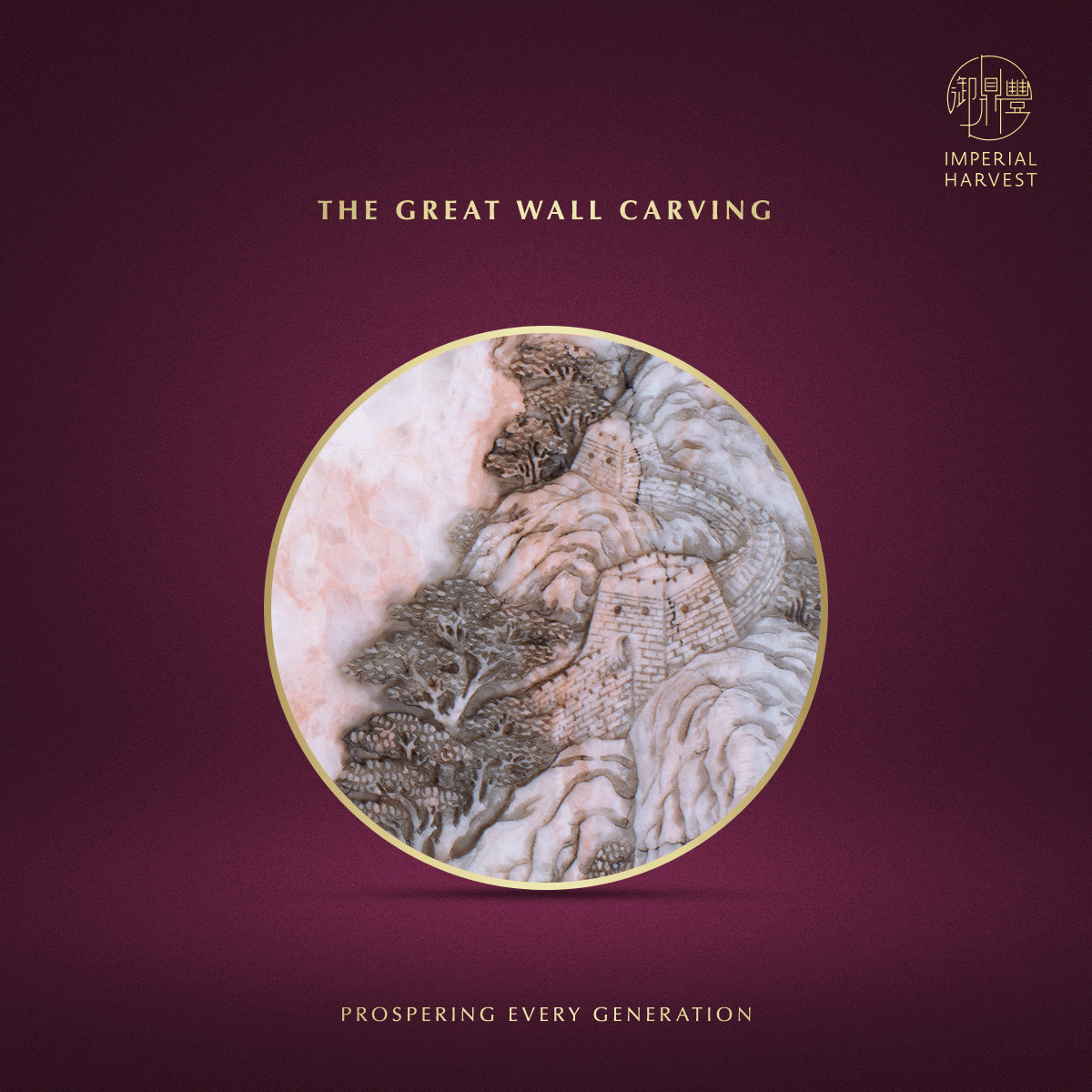
To honour the Great Wall properly, the carving must do something very difficult:
It must translate a structure of vast scale into a piece that fits in the palm — without losing the Wall’s most important qualities: terrain logic, architectural identity, and imperial restraint.
This edition achieves that through a disciplined carving approach that prioritises architecture over ornament.
1) The Wall as a Route, Not a Decoration
The Great Wall is carved as a journey across terrain — a continuous fortification that follows the rhythm of the landscape rather than sitting on it like a symbol.
The artisans shape the wall’s path so it reads like a real defensive route:
- rising along ridgelines
- bending around natural turns
- tightening at strategic points
- widening where the terrain allows
This is crucial because the Great Wall was never “straight.”
Its power came from how it worked with the land.
In miniature form, this edition preserves that same logic.
2) Architectural Fidelity in Miniature
The carving focuses on details that make the Great Wall unmistakably the Great Wall — not merely “a wall,” but the Wall:
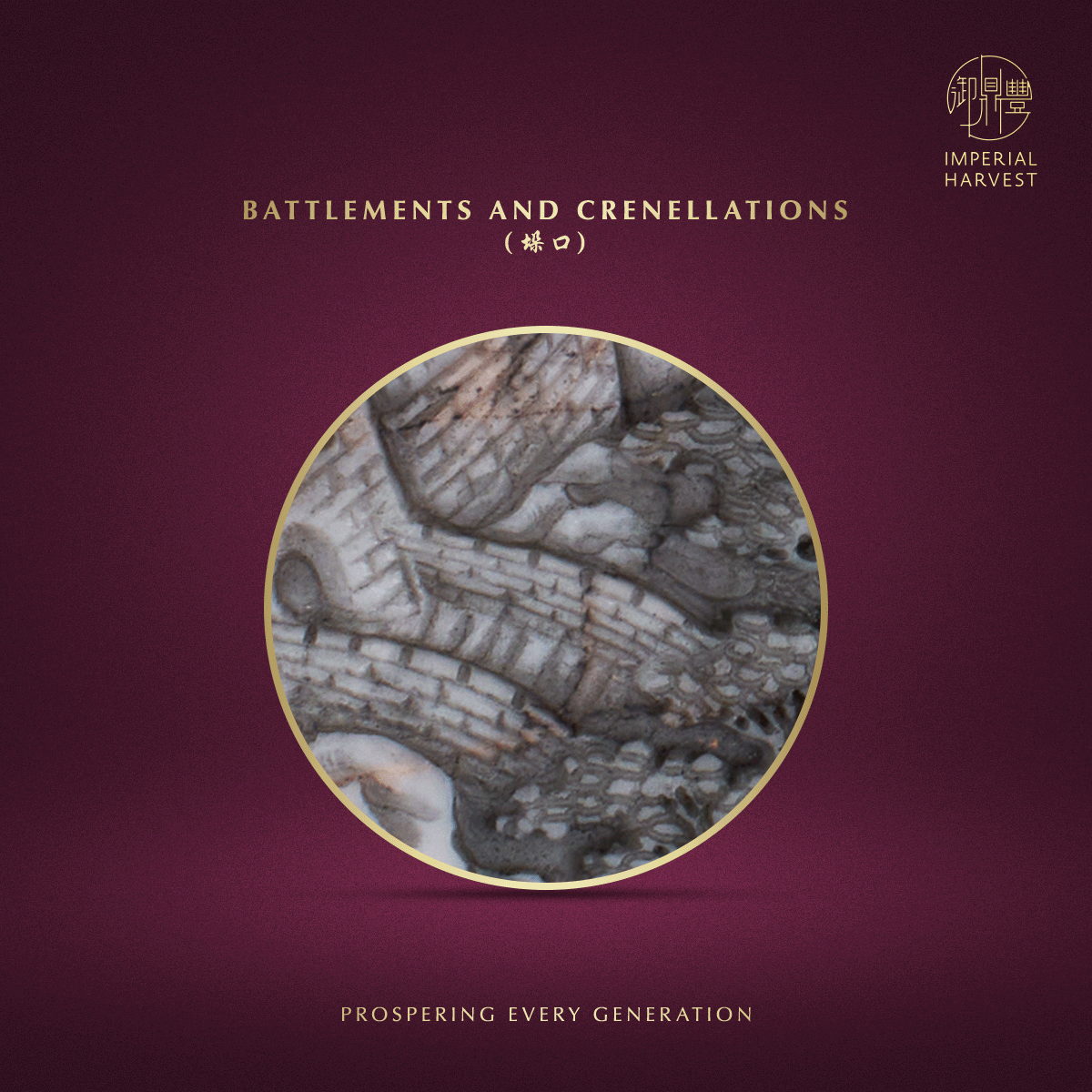
- Battlements and crenellations (垛口) are rendered in clean rhythm, giving the structure its recognizable silhouette.
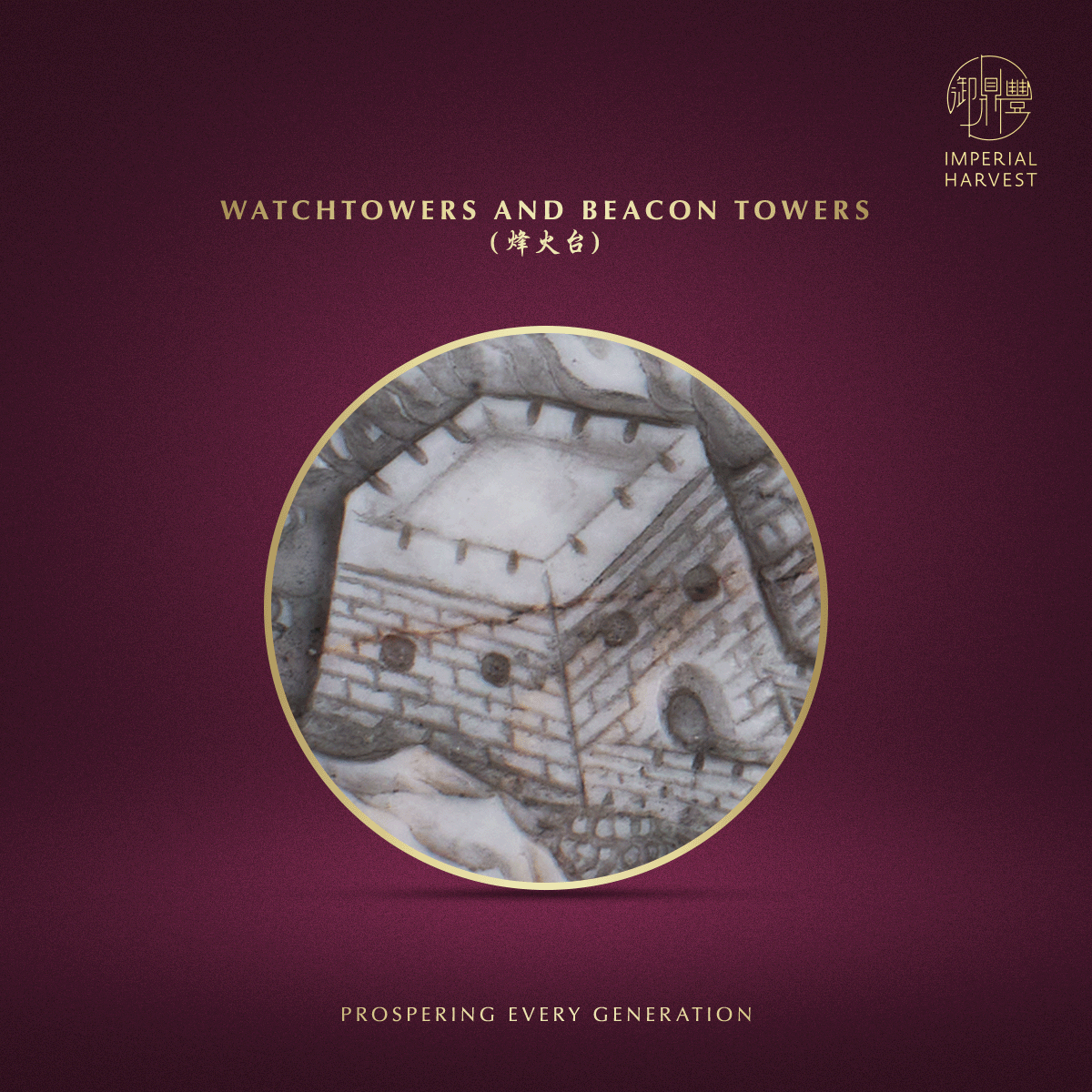
- Watchtowers and beacon towers (烽火台) appear as deliberate anchor points along the route — not random buildings, but strategic punctuation.
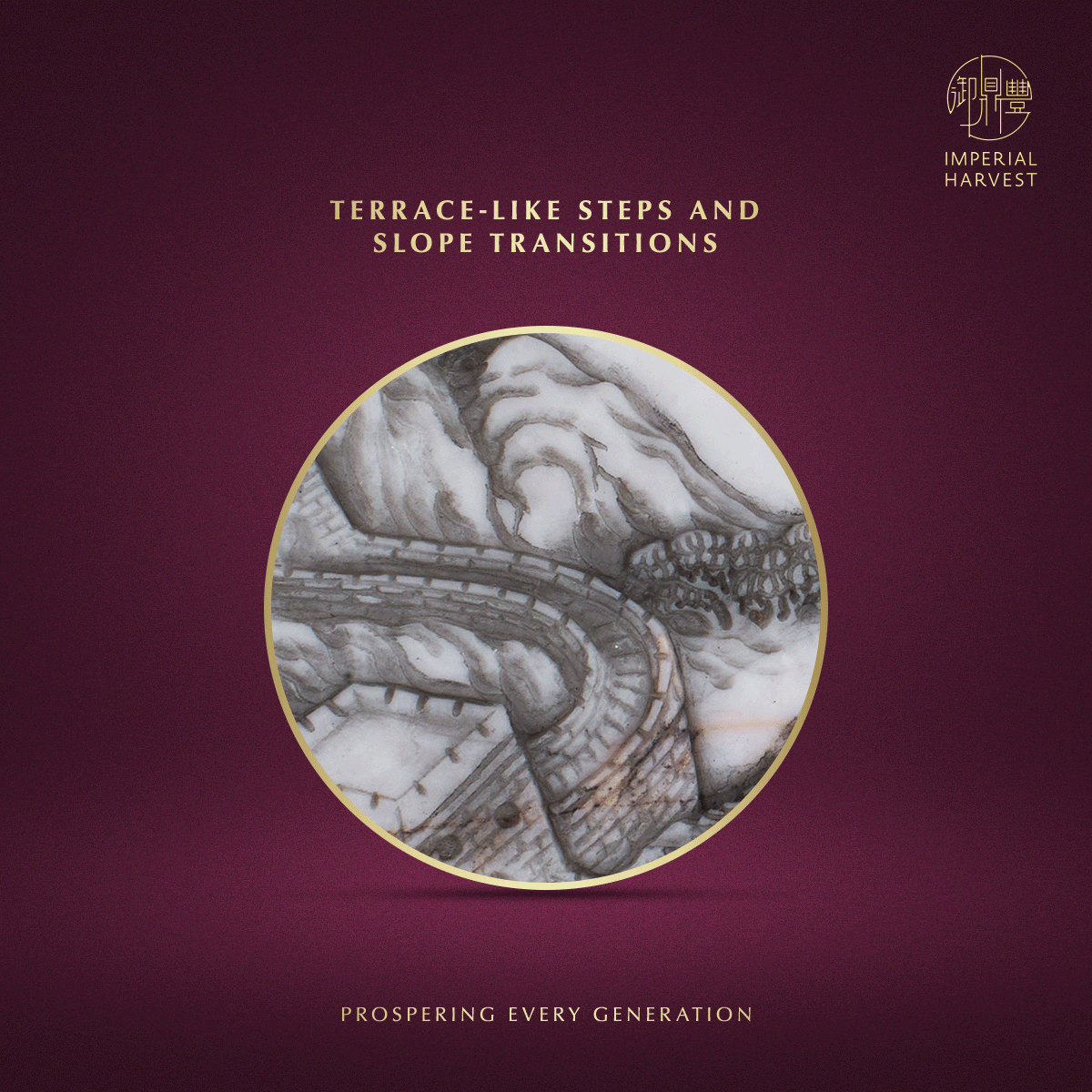
- Terrace-like steps and slope transitions suggest elevation changes, allowing the wall to feel engineered through mountain gradients rather than pasted onto a flat surface.
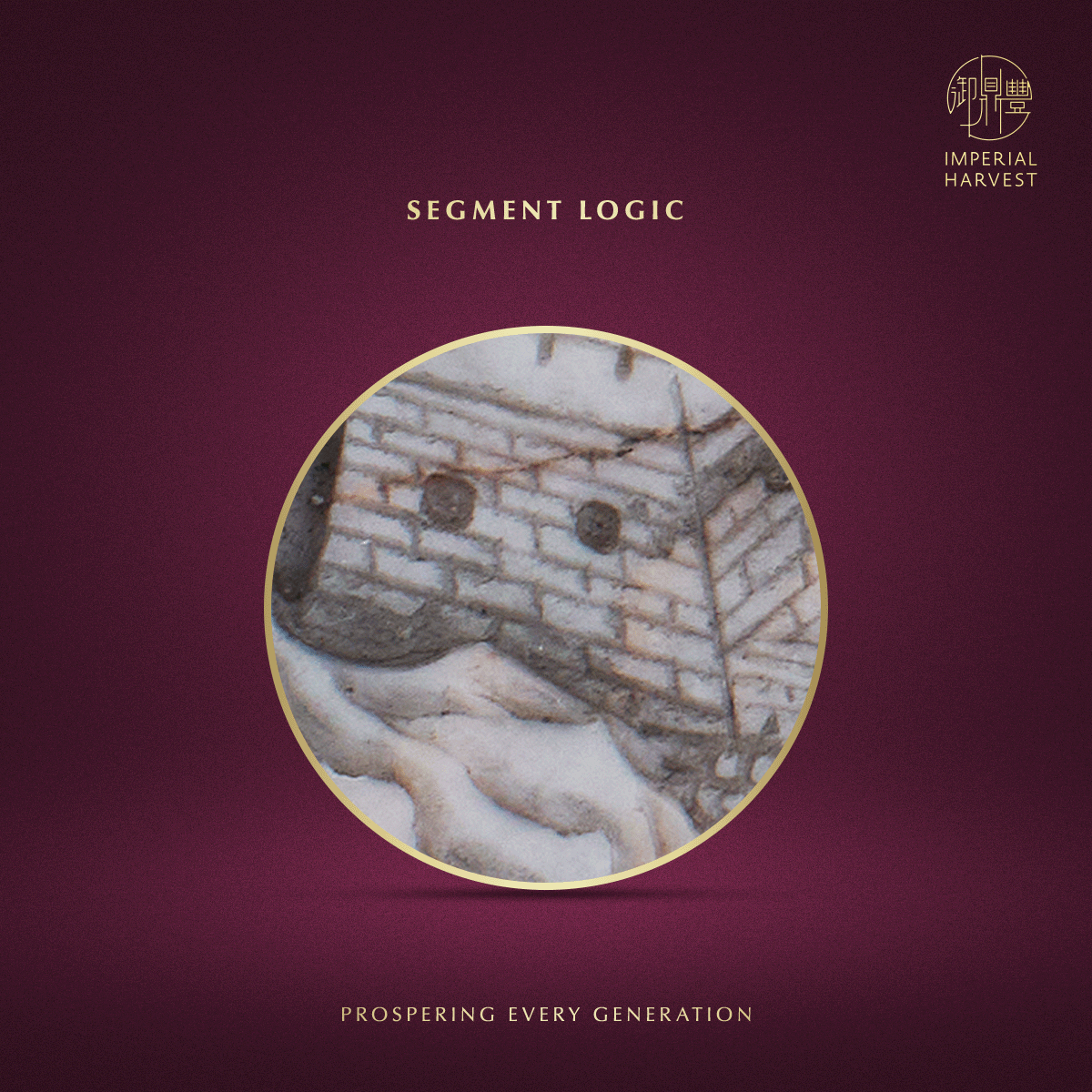
- Segment logic is preserved — the wall reads as constructed in sections, echoing how great infrastructure is built: modular, reinforced, maintained.
The result is a carving that feels architectural, not decorative.
3) Relief, Depth, and the Use of Negative Space
The artisans do not rely on excessive carving to create impact. Instead, they use three imperial techniques: depth, restraint, and negative space.
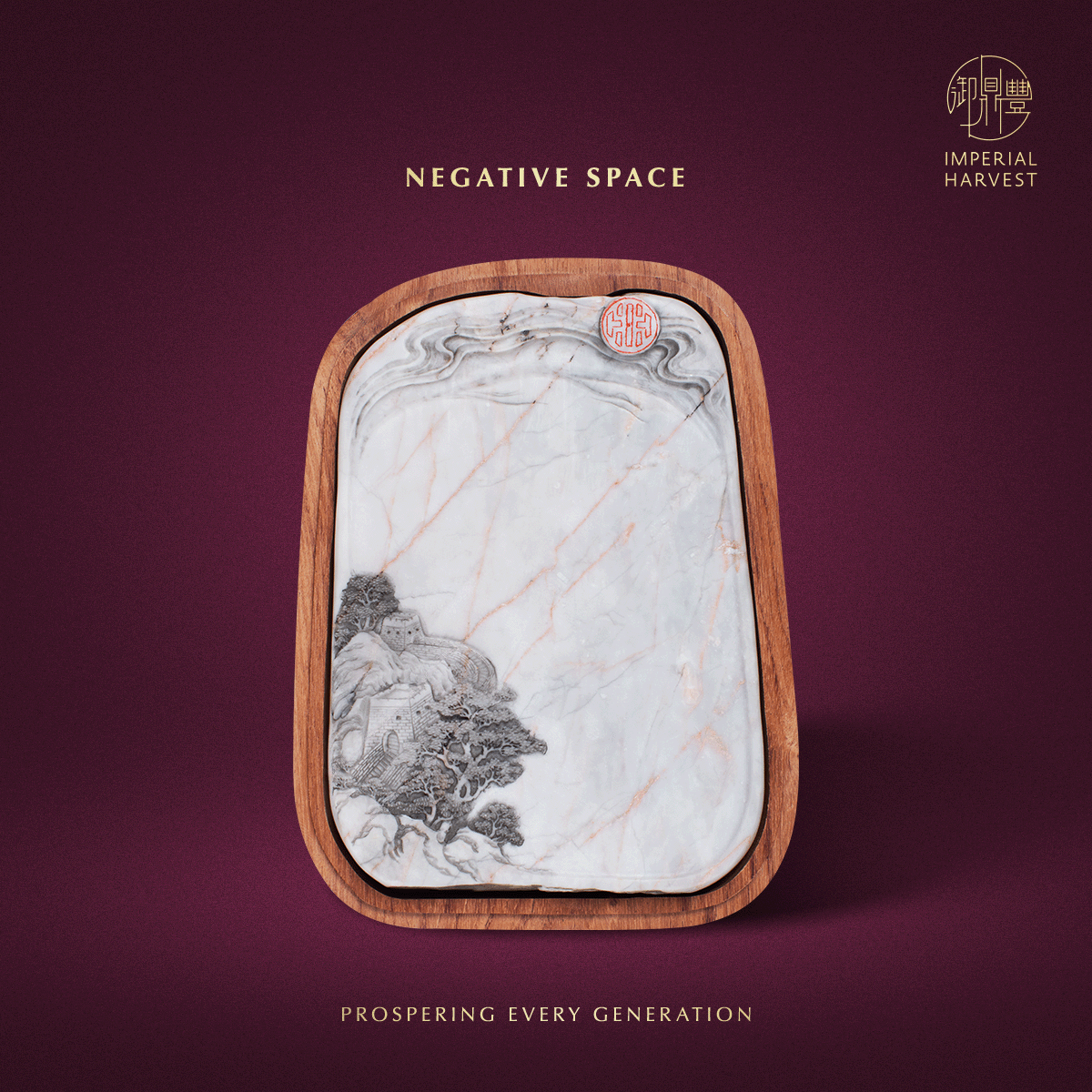
- The wall carries crisp edges and precise contours — it is “built.”
- The mountains are shaped with slower transitions — they are “terrain.”
- The mist and cloud space is intentionally left open — not empty, but controlled — so the wall appears to emerge from distance, like a fortification spanning a realm.
This contrast between crisp architecture and soft landscape is what creates scale. It allows a small artefact to feel vast.
4) The Imperial Standard: Precision Without Noise
True imperial craftsmanship is not about carving everything. It is about carving the right things.
This edition avoids clutter. It preserves hierarchy:
- the wall remains the protagonist
- the landscape remains the stage
- the towers remain strategic accents
- the mist remains the breath that gives the scene depth
That restraint is what makes the piece feel dignified — not theatrical.
In this way, the Great Wall carving becomes more than imagery. It becomes an embodied reminder:
legacy is engineered, reinforced, and maintained — not wished into existence.
鼎纹 (Imperial Cauldron Seal)
The Seal of Authenticity
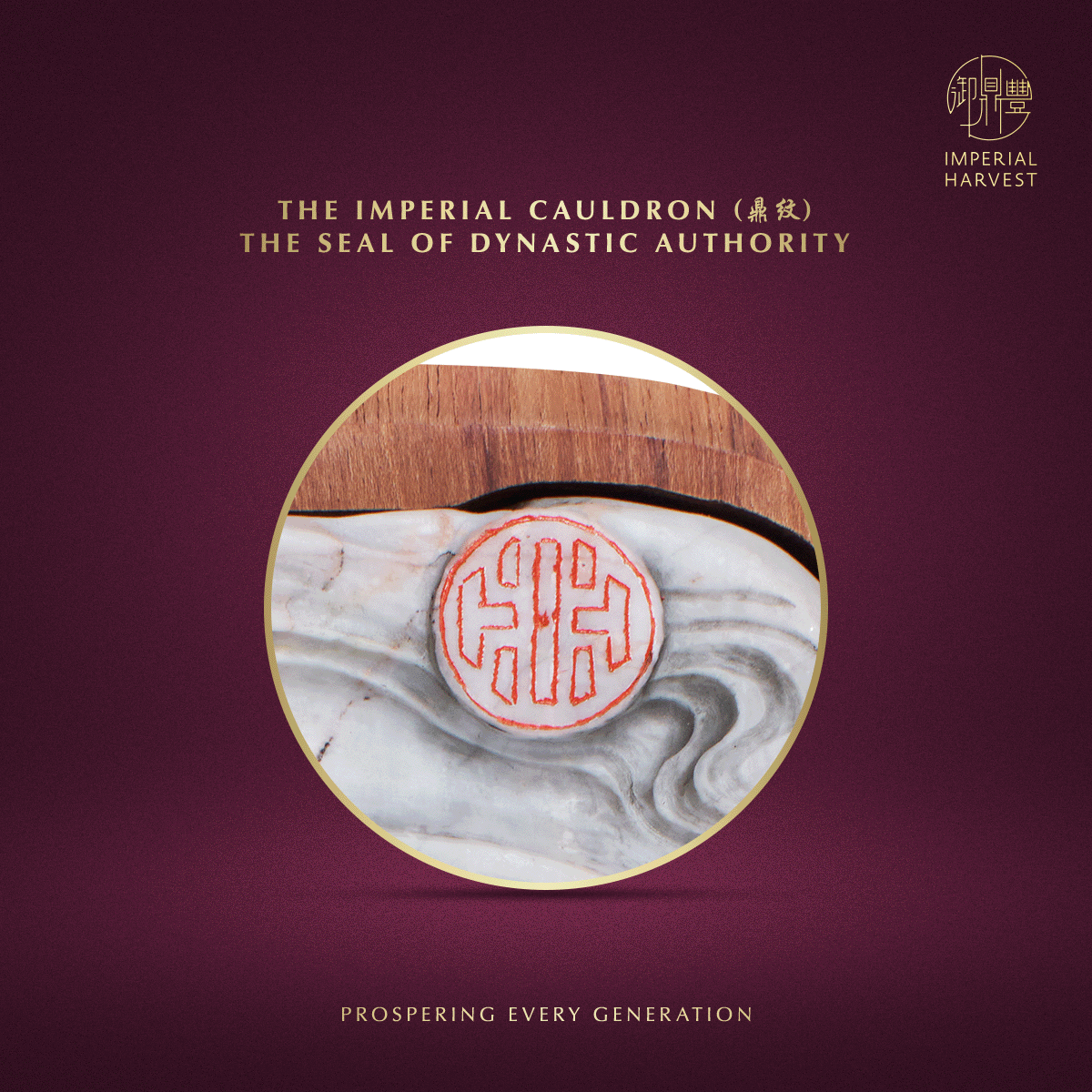
Each Great Wall of China Edition bears the 鼎纹 — the Imperial Cauldron seal.
Historically, the 鼎 is associated with authority, continuity, and stewardship. In this edition, its function is simple and precise:
it serves as a seal of authenticity.
Not as decoration. Not as excess symbolism. But as a concluding mark — a sign that this inkstone belongs to the Imperial Harvest lineage, and that the artefact’s system is complete.
Like a final stamp on an imperial decree, the 鼎纹 is the quiet signature that confirms provenance.
The Back of the Inkstone
Big Dipper Inscription as a Seven-Month Consecration Cycle
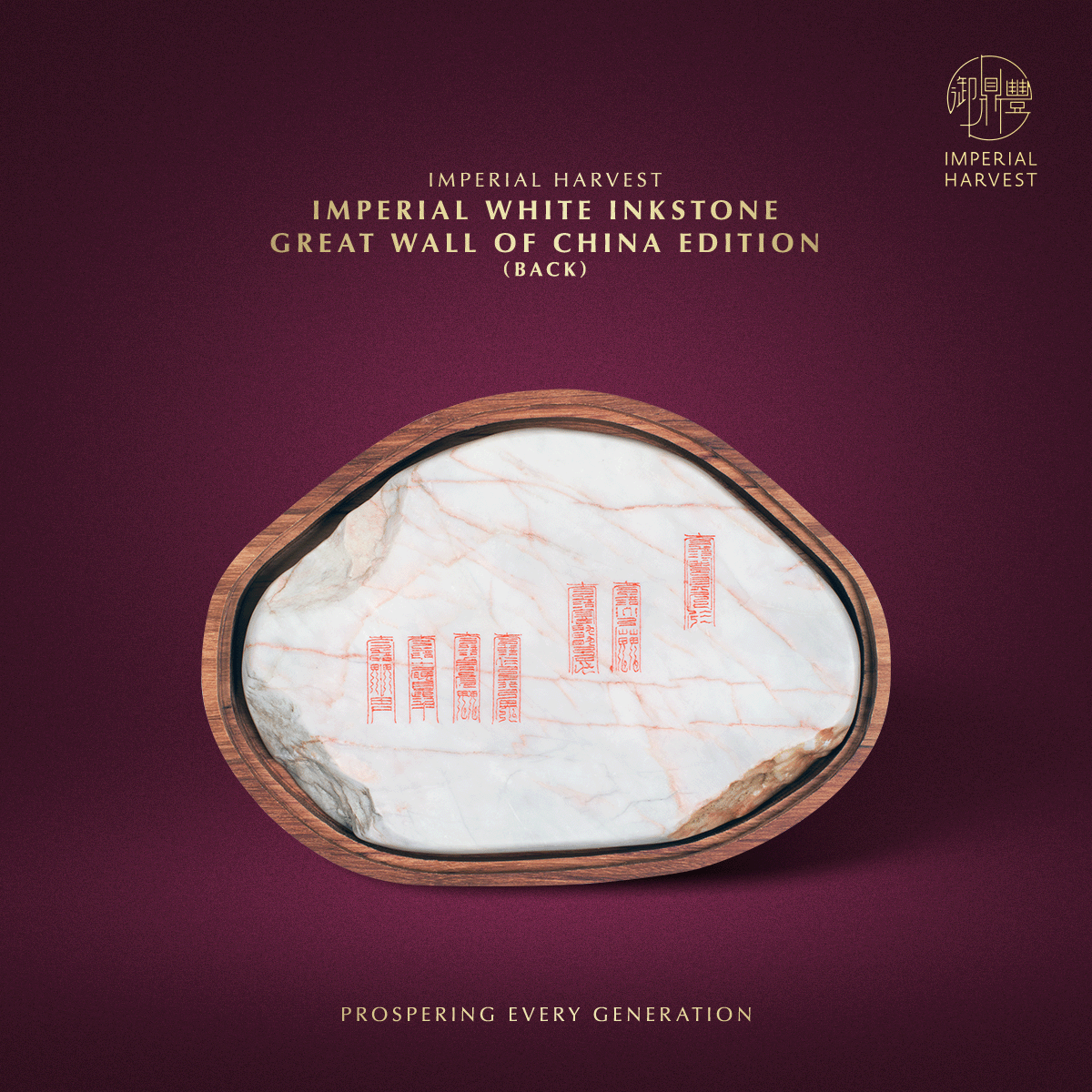
Where the front of the inkstone presents the Great Wall through craftsmanship, the back completes the artefact through tradition.
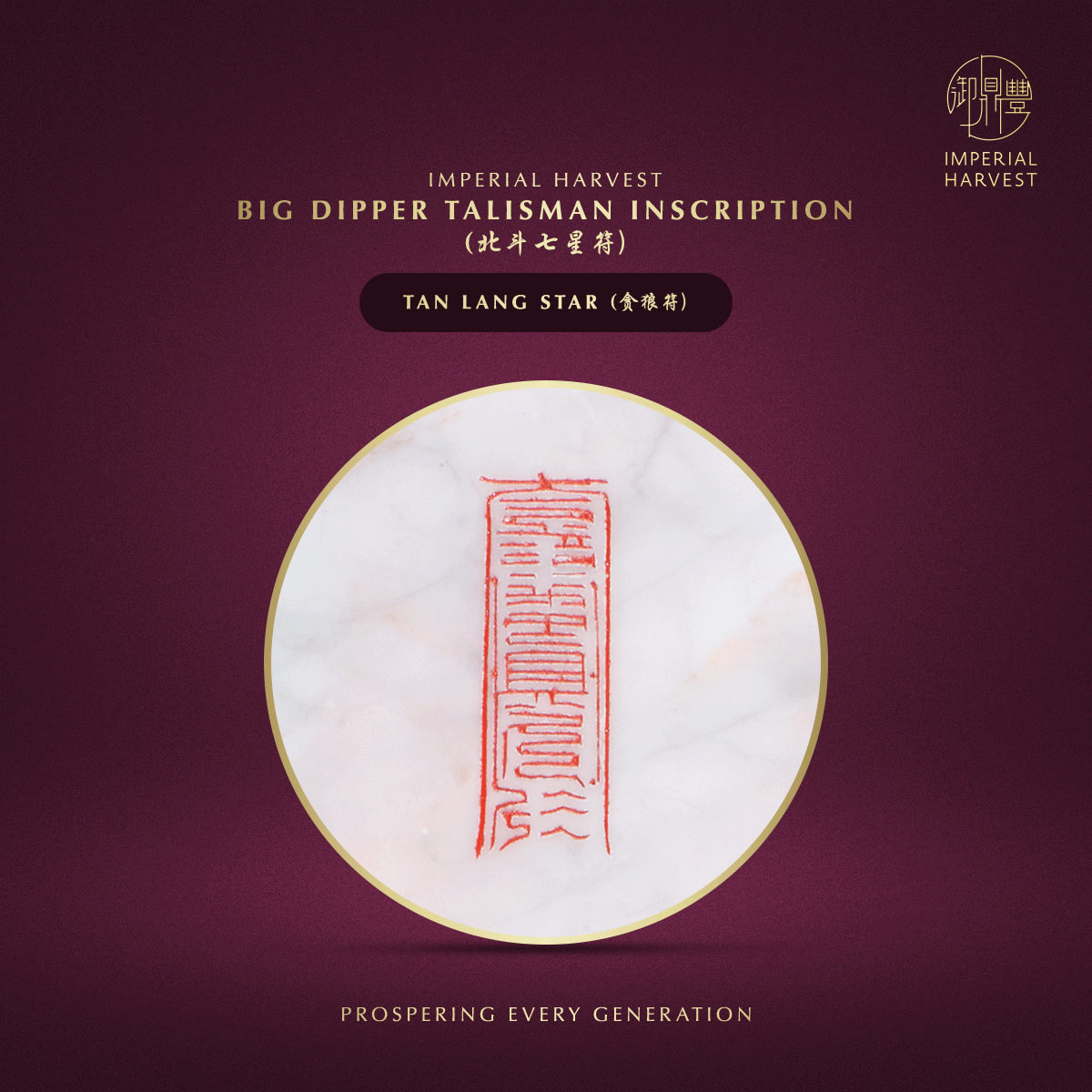
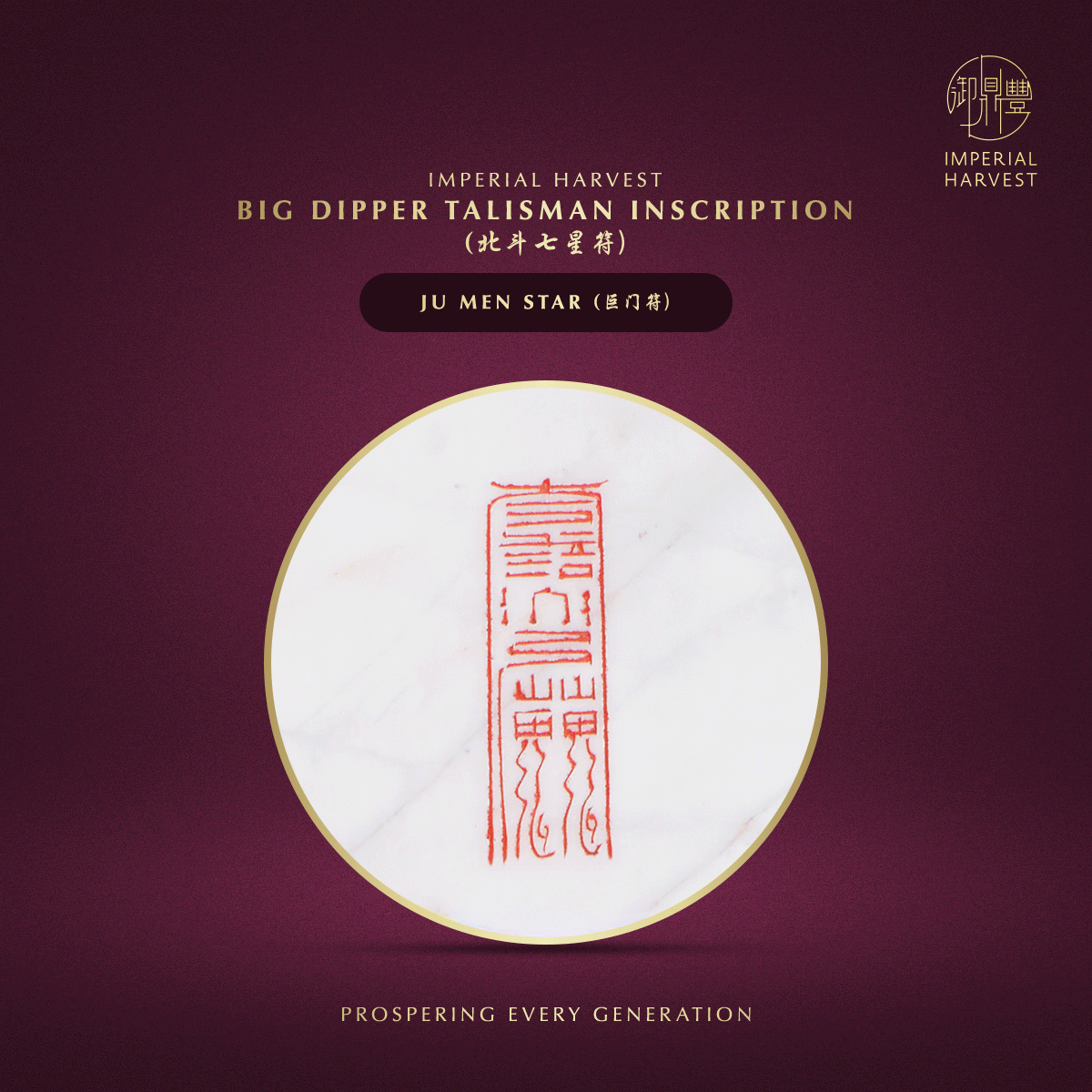
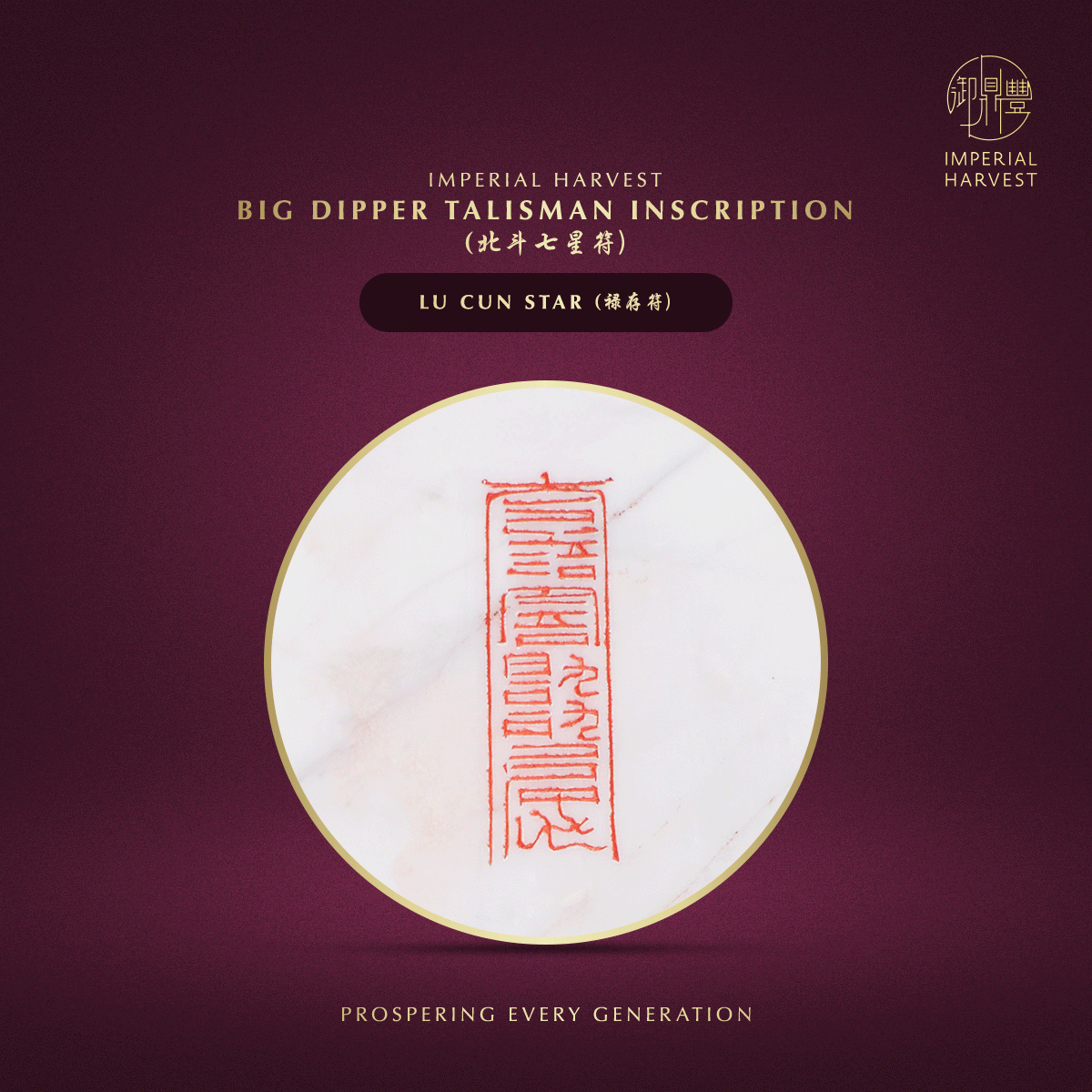
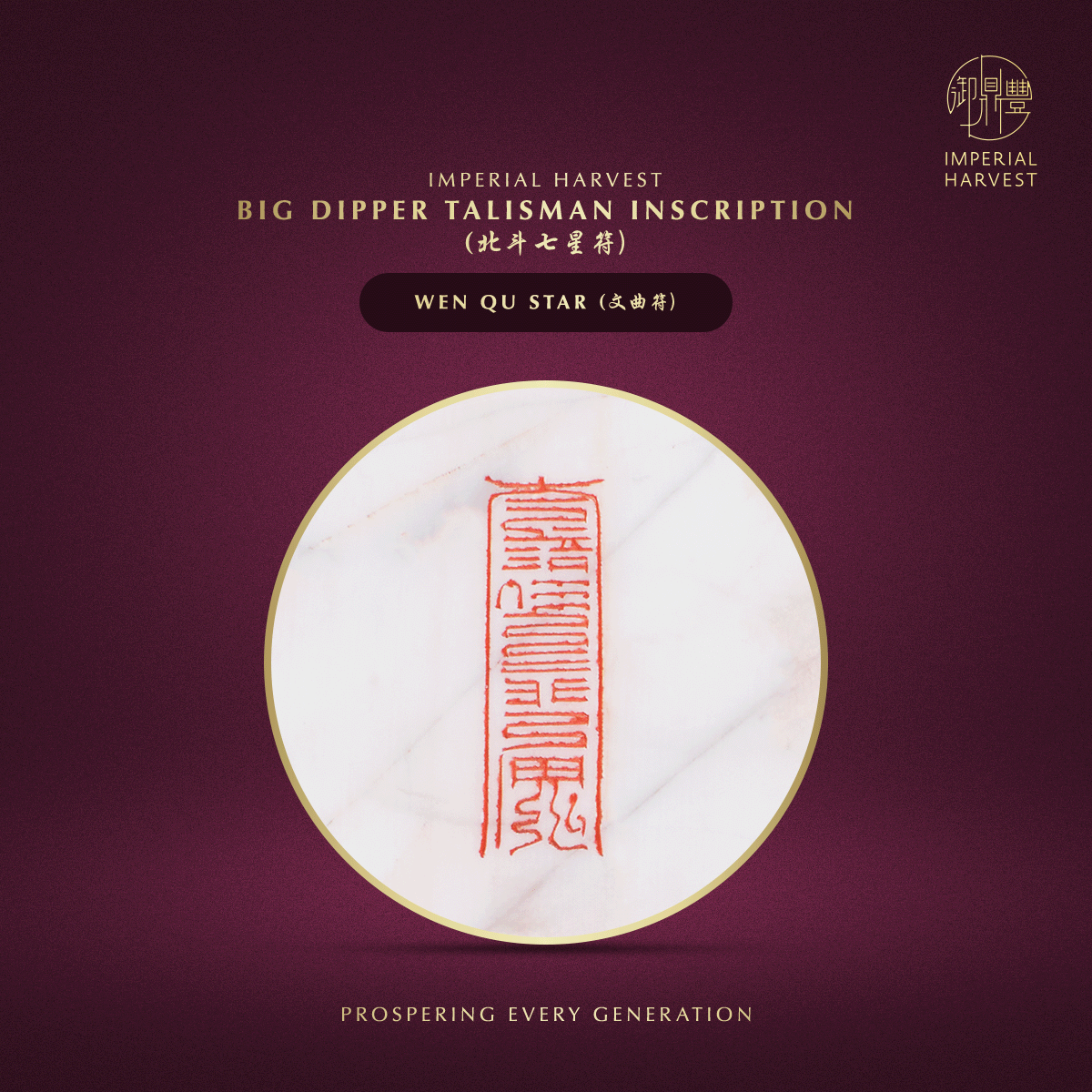
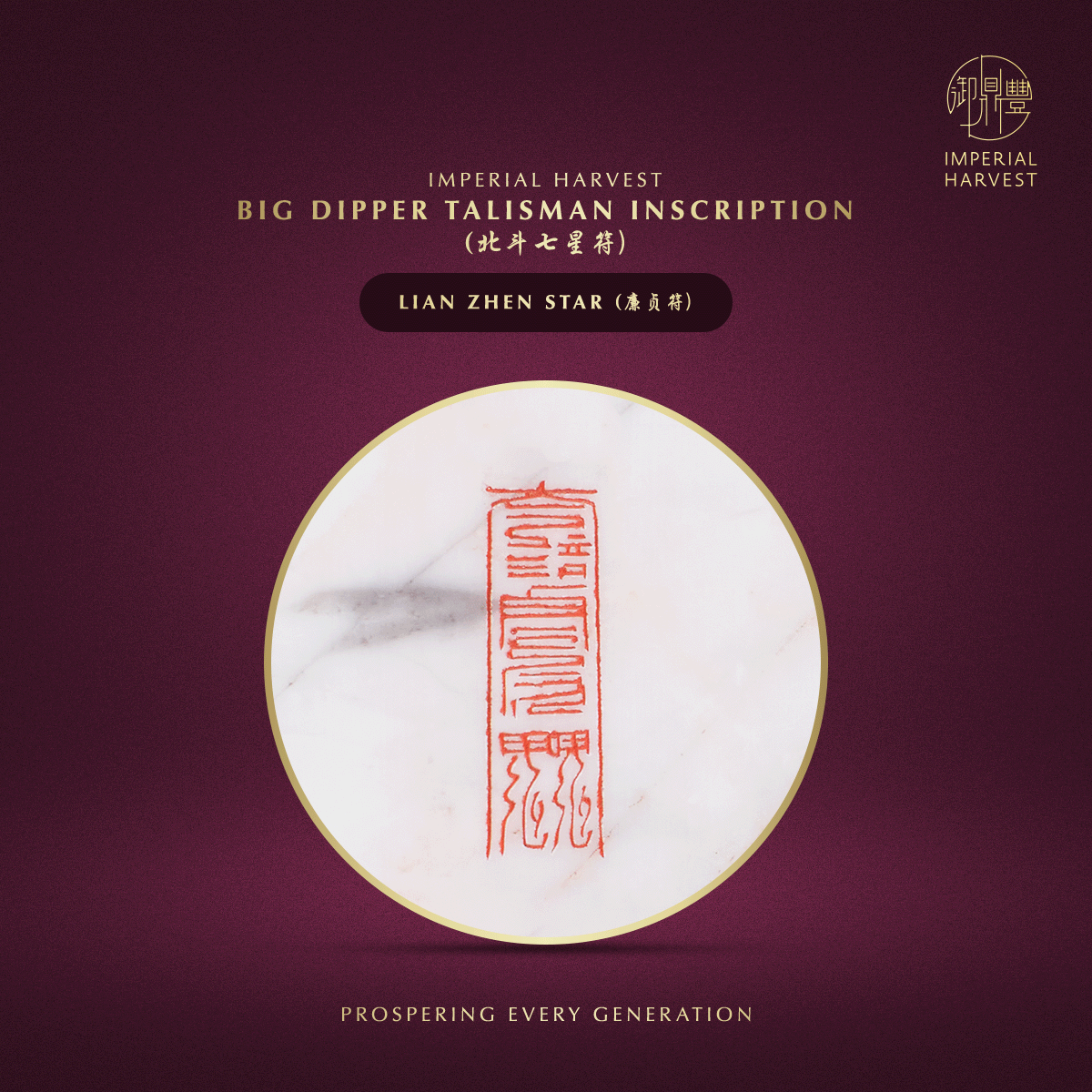
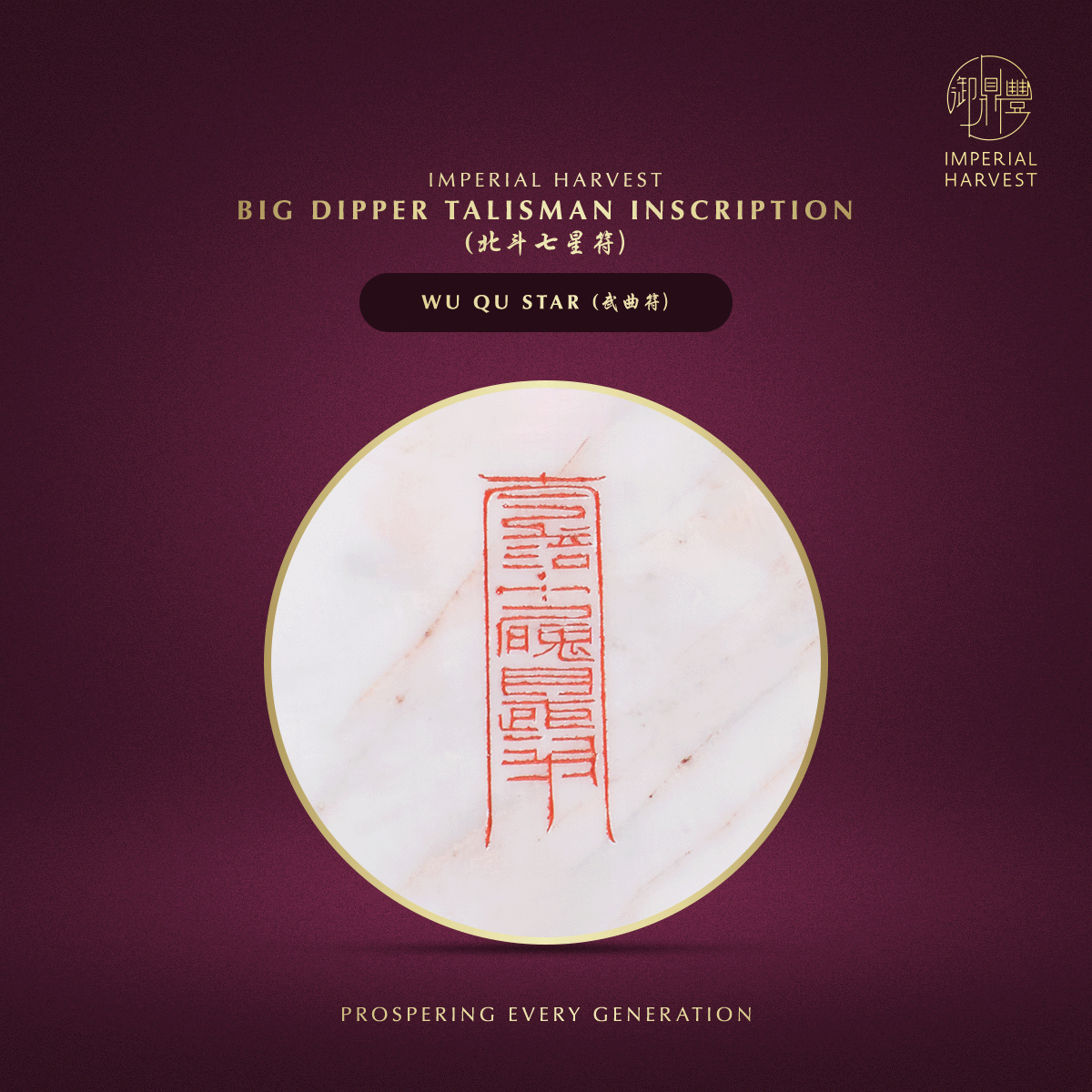
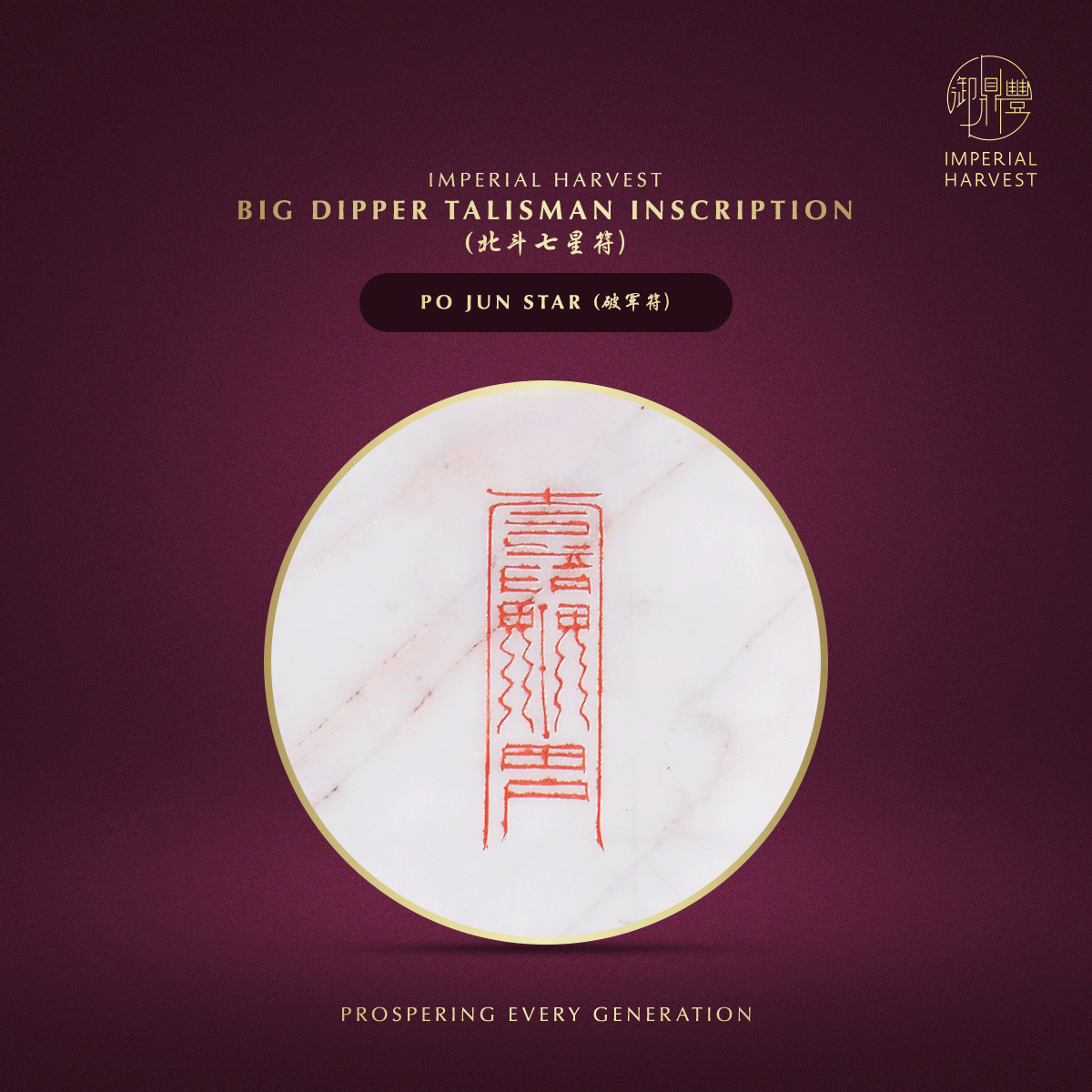
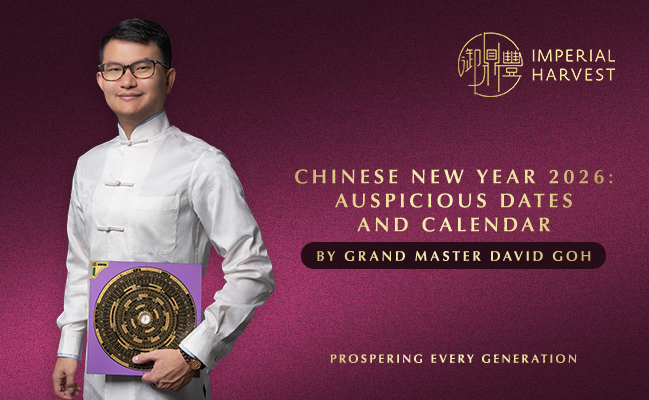
Each Great Wall of China Edition is inscribed with the Big Dipper talisman system (北斗七星符) by Grand Master David Goh — not in a single rushed sitting, but through a deliberate seven-month sequence:
One Talisman a Month • Over Seven Months
Grand Master David selects auspicious dates and times to inscribe one talisman each month, continuing this process over seven months until the full set is completed.
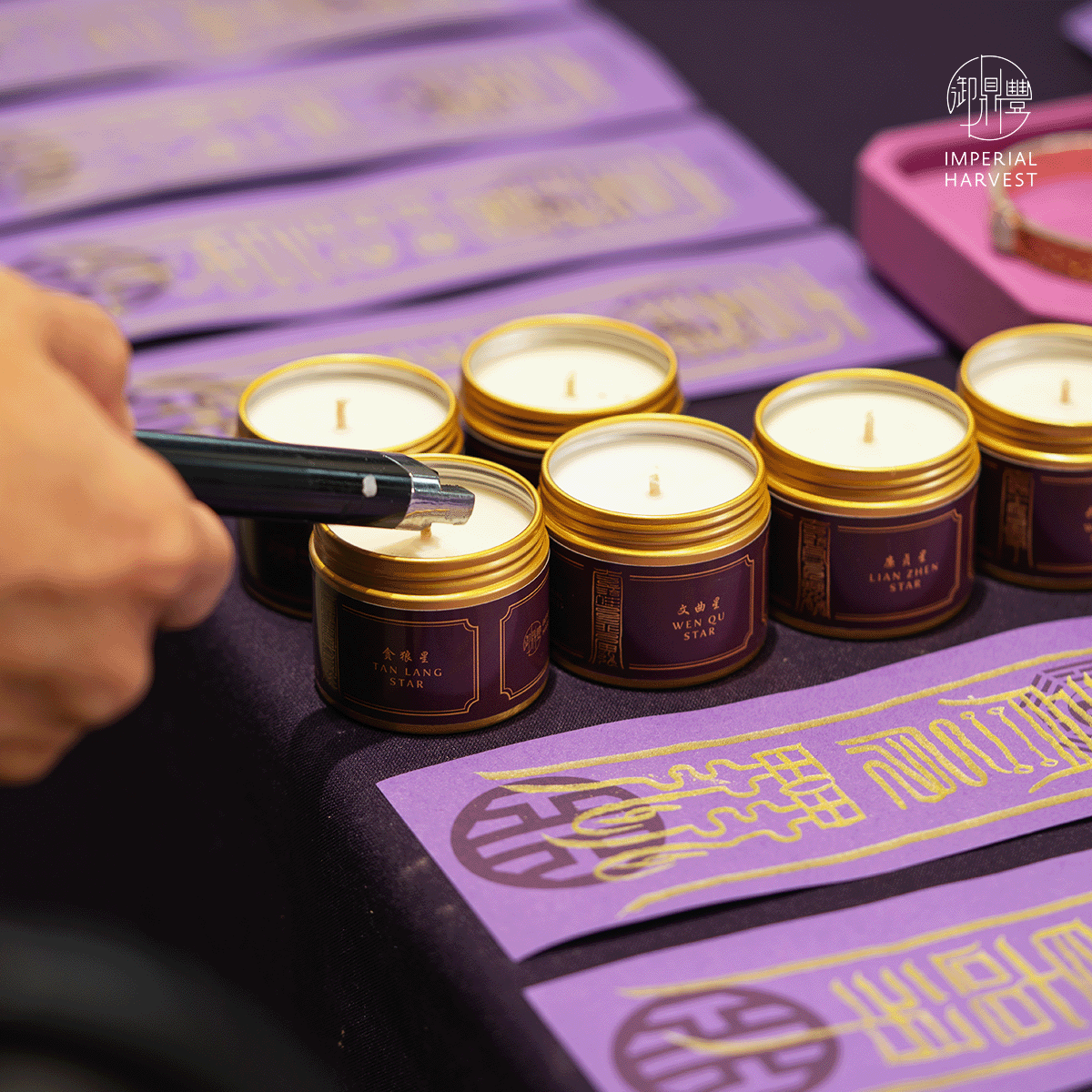
This pacing matters. It turns the inscription into a discipline rather than an output. It mirrors the Great Wall itself: not built in a single burst, but strengthened through time.
For collectors and custodians, this seven-month cycle becomes part of the artefact’s character:
- it reflects patience and method
- it signals that the work is not mass-produced
- it establishes a clear provenance of human inscription and time investment
- it aligns the completion of the piece with a long-horizon legacy theme
Whether one approaches the inscription as spiritual tradition, imperial symbolism, or ritualised intent, the standard remains the same:
this is a completion process measured in months, not minutes.
The Meaning of This Edition
Protection as the Highest Form of Vision
If the Great Wall teaches anything, it is this:
A dynasty does not last because it keeps expanding. A dynasty lasts because it keeps protecting the conditions that allow prosperity to endure.
In the Imperial Feng Shui frame, the Great Wall stands as a monument to the long-term fortification of 龙脉 — the backbone and economic pulse of the realm — maintained across generations so stability could hold and prosperity could compound.
That is the significance of the Great Wall of China Edition.
It is not simply an object of display. It is an imperial reminder on the custodian’s desk:
Legacy is built the way the Great Wall was built — through continuity, reinforcement, and protection across time.
Consultation & Viewing

Imperial Harvest’s consultants are available to guide you through the Great Wall of China Edition and its craftsmanship in person. Book a complimentary consultation or contact us directly.