For those who have done the work, and are waiting for the doors to open.
Most ambition does not fail for lack of effort. It stalls at the threshold: the promotion that goes to someone else, the offer that never quite arrives, the deal that sits unsigned for one more quarter. The preparation is complete. What is missing is the moment when circumstance finally cooperates.
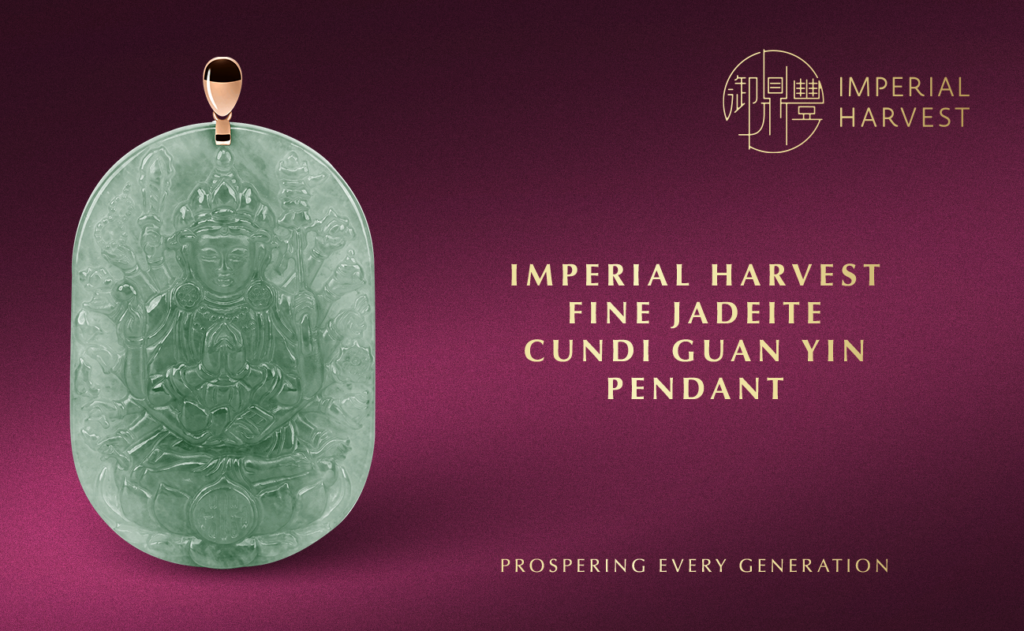
This pendant is carved for that threshold. It carries the manifestation of Guan Yin who answers wishes, opens what has been closed, and turns sincere effort into its rightful result.
Cundi Guan Yin (准提观音): Mother of Seven Koti Buddhas
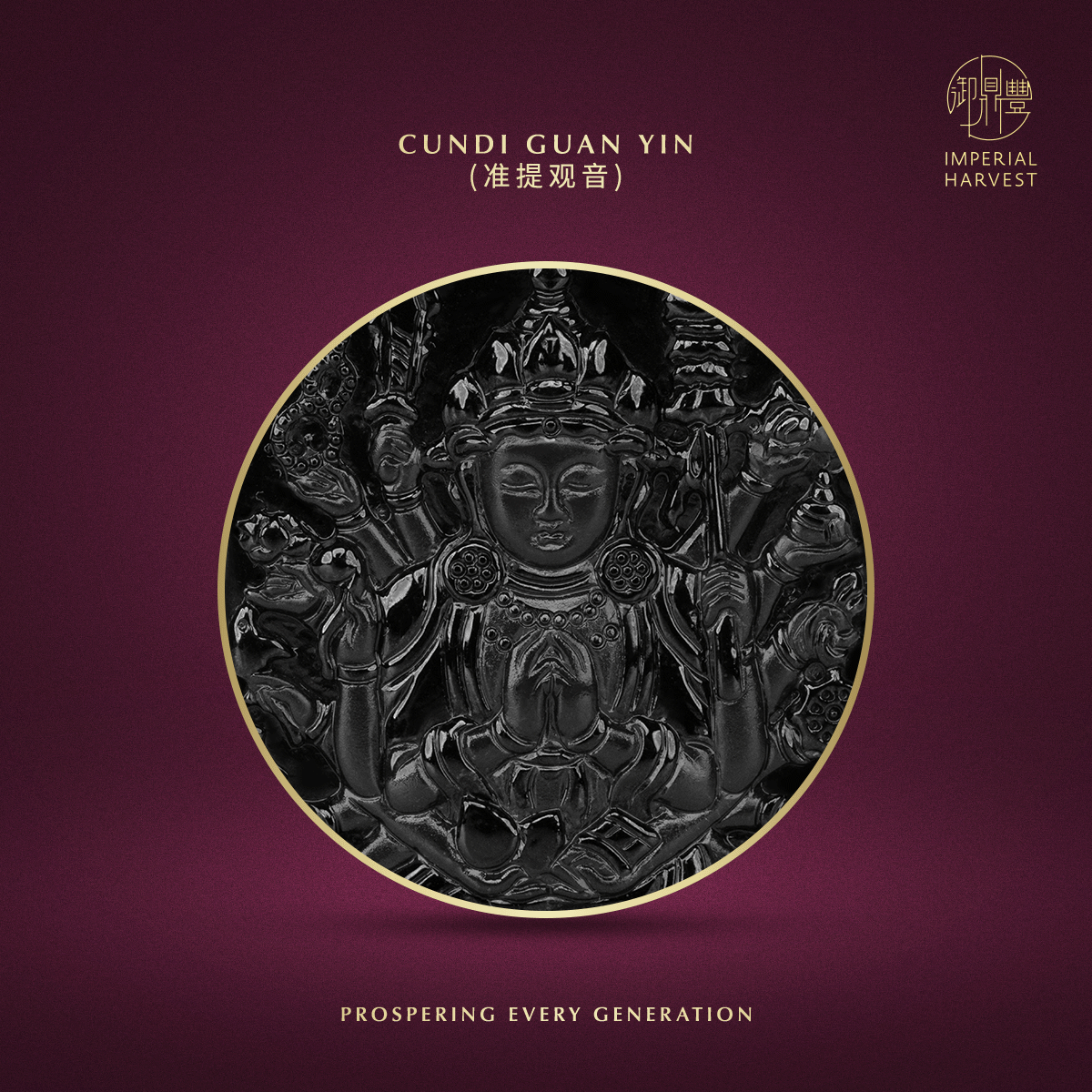
Cundi Guan Yin (准提观音) is revered as one of the most powerful manifestations of Guan Yin, and her title explains why. She is honoured as Cundi Buddha Mother (准提佛母), the Mother of Seven Koti Buddhas (七俱胝佛母): the source from which countless enlightened beings draw their awakening. She does not stand among the Buddhas. She stands behind them.
Scripture describes her with three eyes and eighteen arms (三目十八臂). The three eyes see across past, present and future. The eighteen arms each carry a sacred instrument or form a sacred gesture, so that no request brought before her lacks a means of answer. Her dharani, the Cundi
Mantra (准提咒), has been recited for over a thousand years by those seeking wishes fulfilled and obstacles dissolved:
「南无飒哆喃,三藐三菩陀,俱胝喃,怛侄他,唵,折隶主隶准提娑婆诃。」
Homage to the seven koti of fully enlightened Buddhas. Thus: Om, Cale Cule Cundi, Svaha.
142 Years at the Heart of Singapore
Since 1884, Cundi Guan Yin has been the principal deity of the Kwan Im Thong Hood Cho Temple (观音堂佛祖庙) on Waterloo Street, one of the most visited temples in Singapore. For 142 years, generations of Singaporeans have brought their careers, families and hopes before her, and the steady return of devotees year after year is its own testimony to her response.
The Imperial Harvest Fine Jadeite Cundi Guan Yin Pendant carries that heritage into wearable form: the same Cundi Guan Yin, carved to accompany a single life.
Why Grand Master David Goh Created This Pendant
For 142 years, Singaporeans have travelled to Waterloo Street to bring their wishes before Cundi Guan Yin. The blessing has always been sought at the temple, and then carried home in memory.
Grand Master David Goh created the Fine Jadeite Cundi Guan Yin Pendant to close that distance. The Imperial Harvest Sandalwood Cundi Guan Yin first brought her eighteen arms into wearable form. This pendant renders the same design in fine jadeite, so that her blessing reaches the wearer through the Major Yin: not by force of effort, but through the quiet cooperation of circumstance.
Each pendant is personally consecrated by Grand Master David Goh before it reaches its destined owner.
Design and Symbolism
Cundi Guan Yin is depicted with eighteen arms, and on the pendant every hand carries meaning: two sacred mudras and fifteen sacred artefacts. Each arm and each artefact is rendered in detail, reflecting the many dimensions of her compassion and power.
These artefacts are not decoration. They are ritual instruments, each with its own purpose: to support career promotions, prestigious job offers, the closing of important business deals, the granting of wishes and the dispelling of obstacles. Read together, they address the specific conditions of an ambitious life.
The Muladhara Mudra (海底轮手印): Foundation
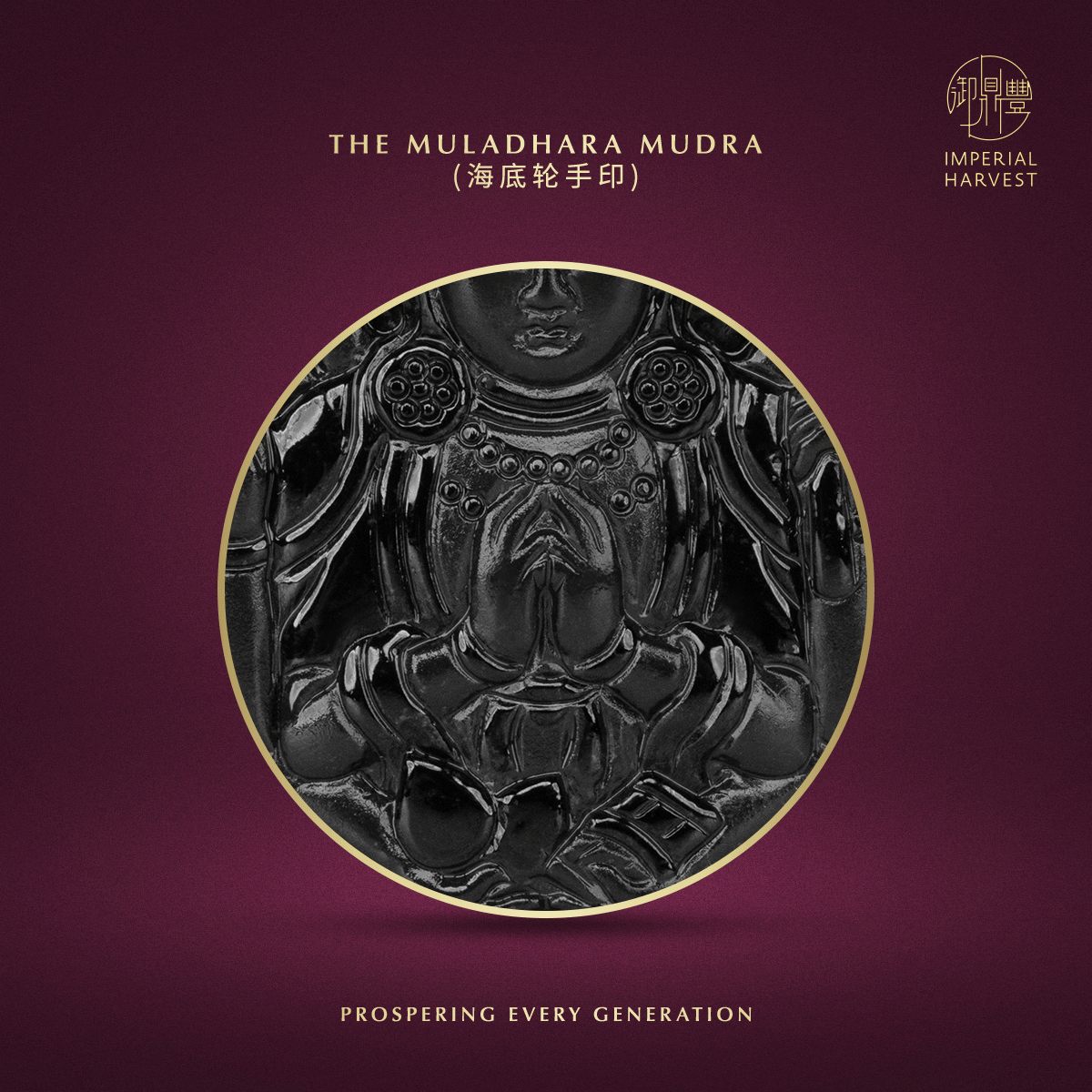
A mudra is a sacred hand gesture. In the study of mudras, the position of the hands is held to influence the energy of the physical, emotional and spiritual body, and close to 399 mudras are recorded across Hindu and Buddhist practice, meditation and ritual.
Seated in the lotus position, Cundi Guan Yin’s foremost pair of hands forms the Muladhara mudra (海底轮手印), from the Sanskrit for “foundation”. It is the root gesture of the composition, the base from which every other blessing on the pendant grows.
Growth that lasts is always built on ground that holds. The Muladhara mudra governs that ground: a career that rests on a steady base, so that each advance becomes the footing for the next rather than a peak to be defended. For the wearer, it is the foundation for continuous growth and enduring success.
The Abhaya Mudra (施无畏印): A Fearless Heart
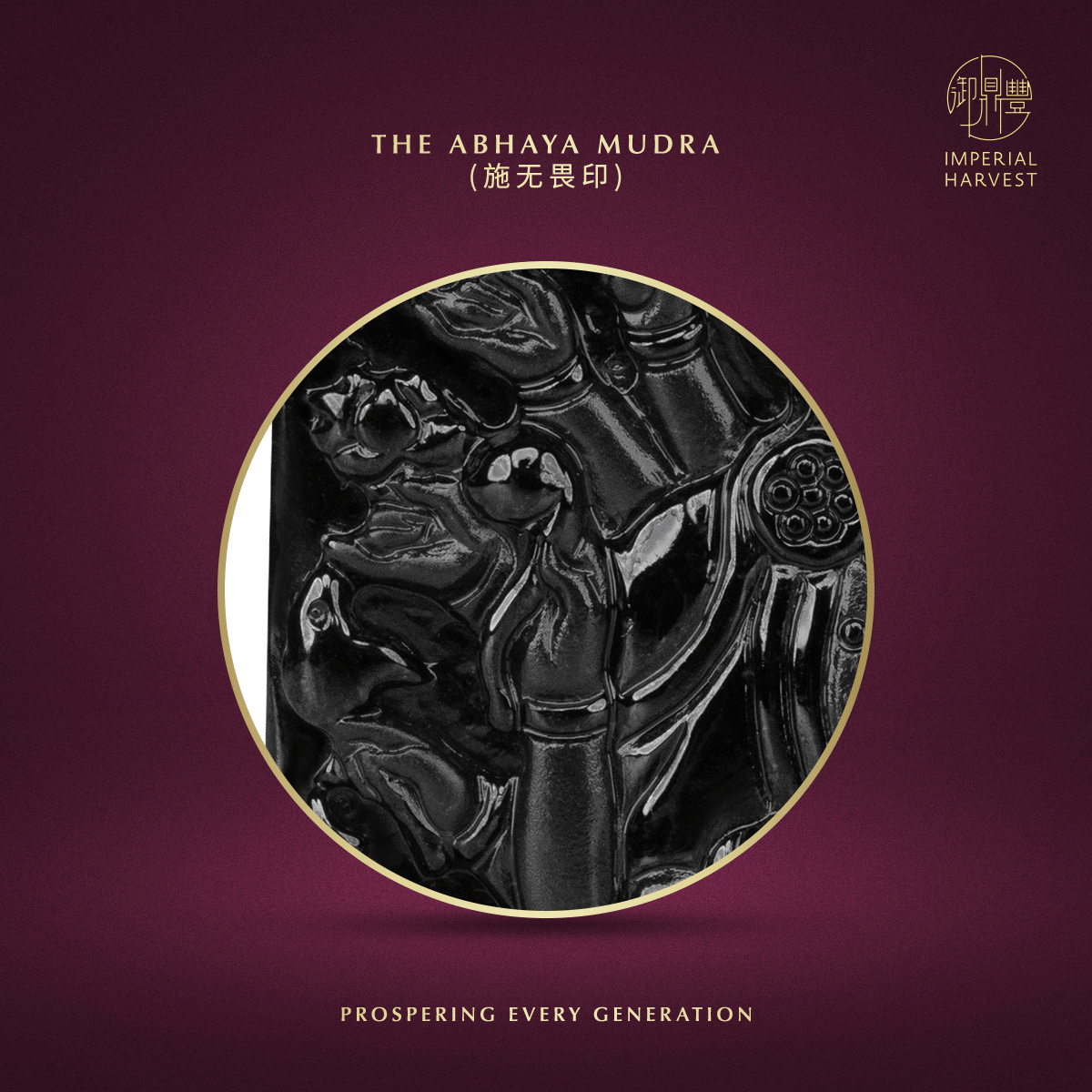
The Abhaya mudra (施无畏印) is the gesture of fearlessness. In Buddhist iconography, the raised open palm offers protection and reassurance to all who come before the deity, dispelling fear at its root.
On the pendant, it is Cundi Guan Yin’s promise to her devotees that they do not walk forward alone.
Many opportunities are lost not to rivals but to hesitation: the application never submitted, the proposal held back one meeting too long, the move deferred until the moment has passed. The Abhaya mudra governs the courage to pursue one’s goals, dreams and aspirations with a settled heart, so that the moment of decision is met with conviction rather than doubt.
The Guardian Canopy (华盖): Authority
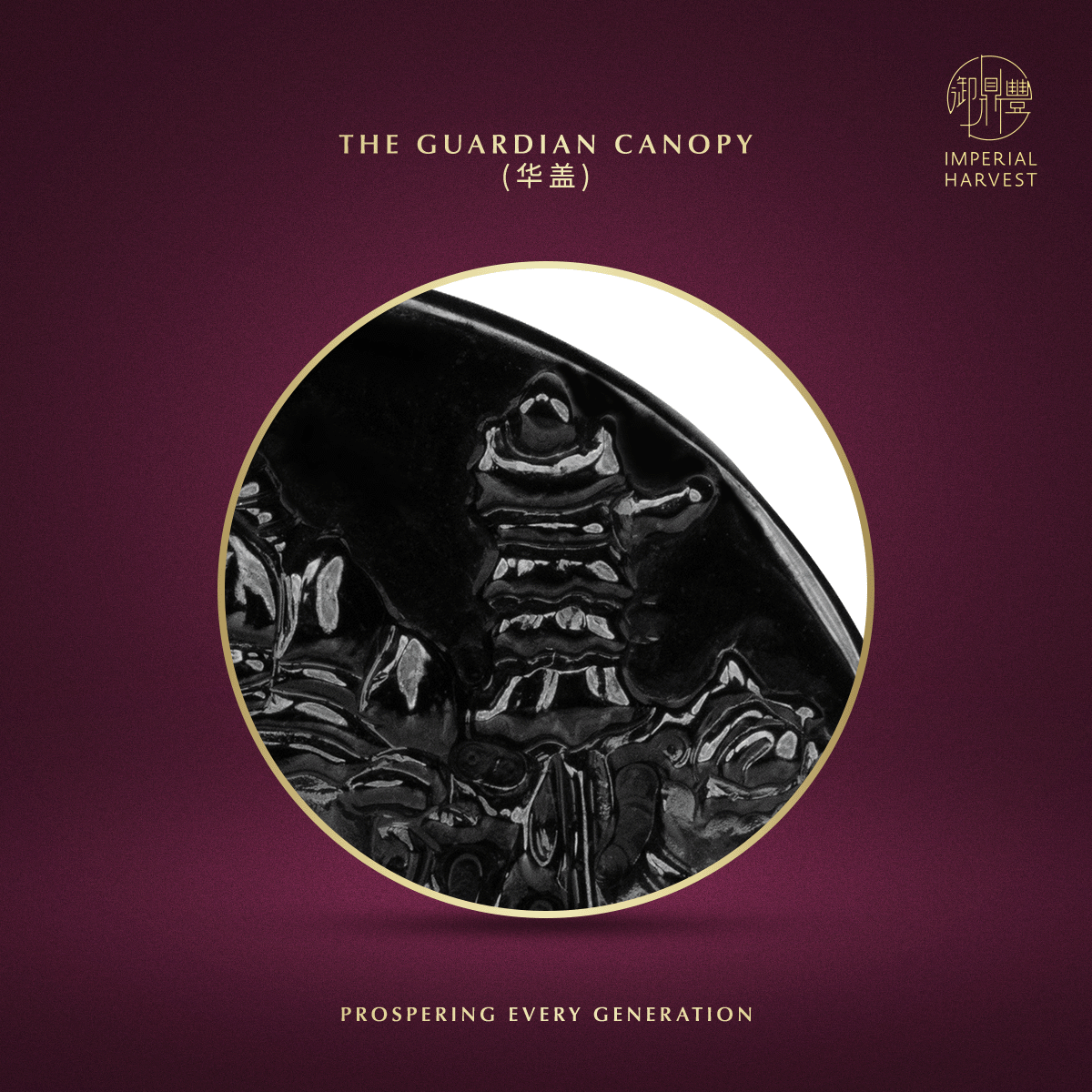
The Guardian Canopy (华盖) was an emblem of the emperor’s authority and his divine right to rule. During imperial processions, attendants held it above the emperor, sheltering him from the elements and, just as importantly, marking his station above all others for every onlooker to see.
In Cundi Guan Yin’s hand, the canopy confers that same standing: authority that others recognise without needing to be told.
For the wearer, it supports the power to outshine, out-win and outwit competitors in career and business. It governs the quiet distinction that draws the right attention at the right time, so that when decision-makers look across the room, they see the one already standing under the canopy.
The Lotus (莲花): Clarity Amid Turmoil
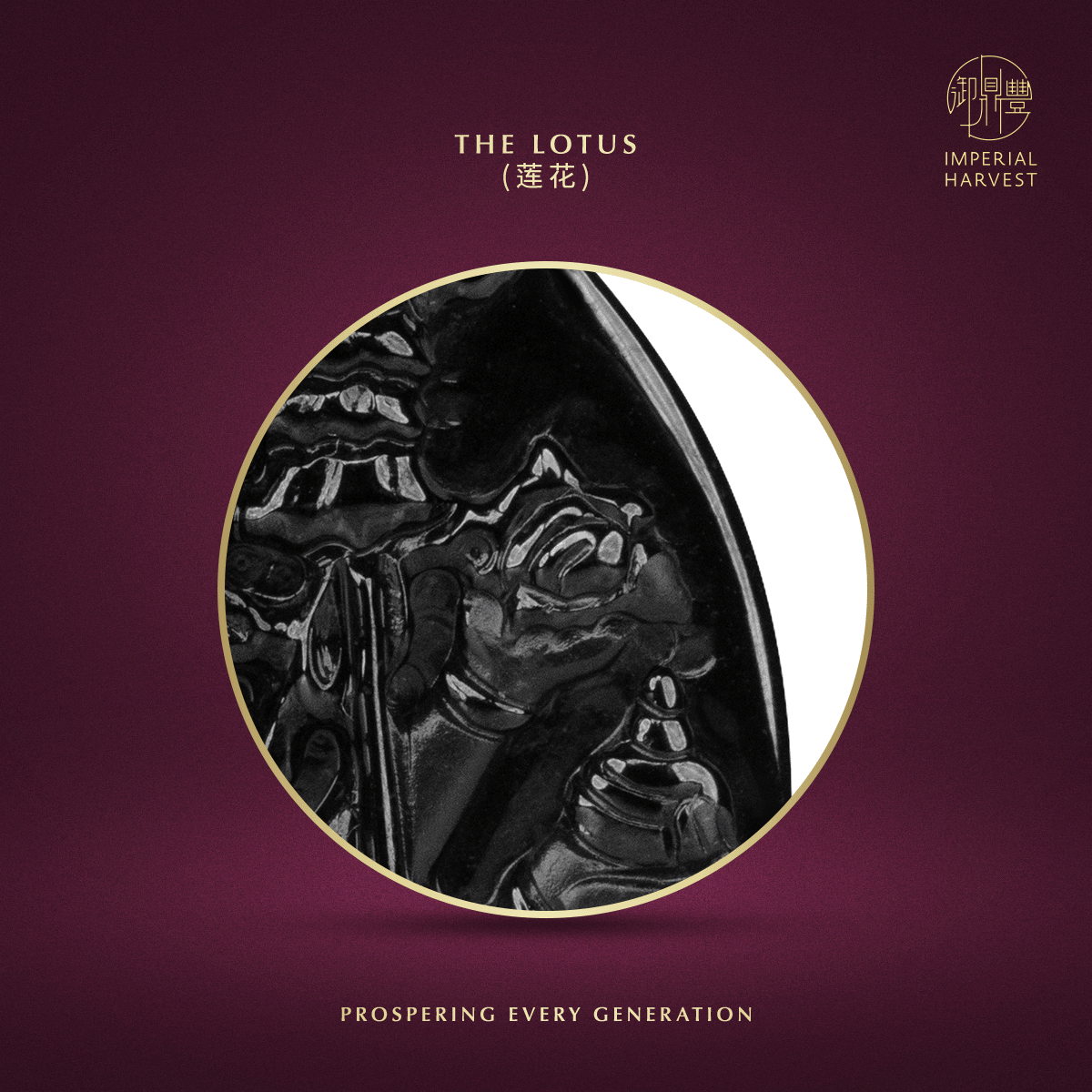
The lotus rises from the depths of the mud to open in the sunlight, its petals unstained by the water it grew through. On the pendant, it is carved to show the delicacy of its petals and the grace of its form.
It embodies the resilience and strength required to overcome obstacles and emerge victorious, and the capacity to find clarity and serenity even in the midst of turmoil.
Every career passes through seasons of confusion: shifting priorities, office politics, markets that refuse to settle. The Lotus governs the clarity to remain composed through them, and the resilience to emerge with one’s standing and reputation intact.
The Bathing Vase (澡罐): Purification
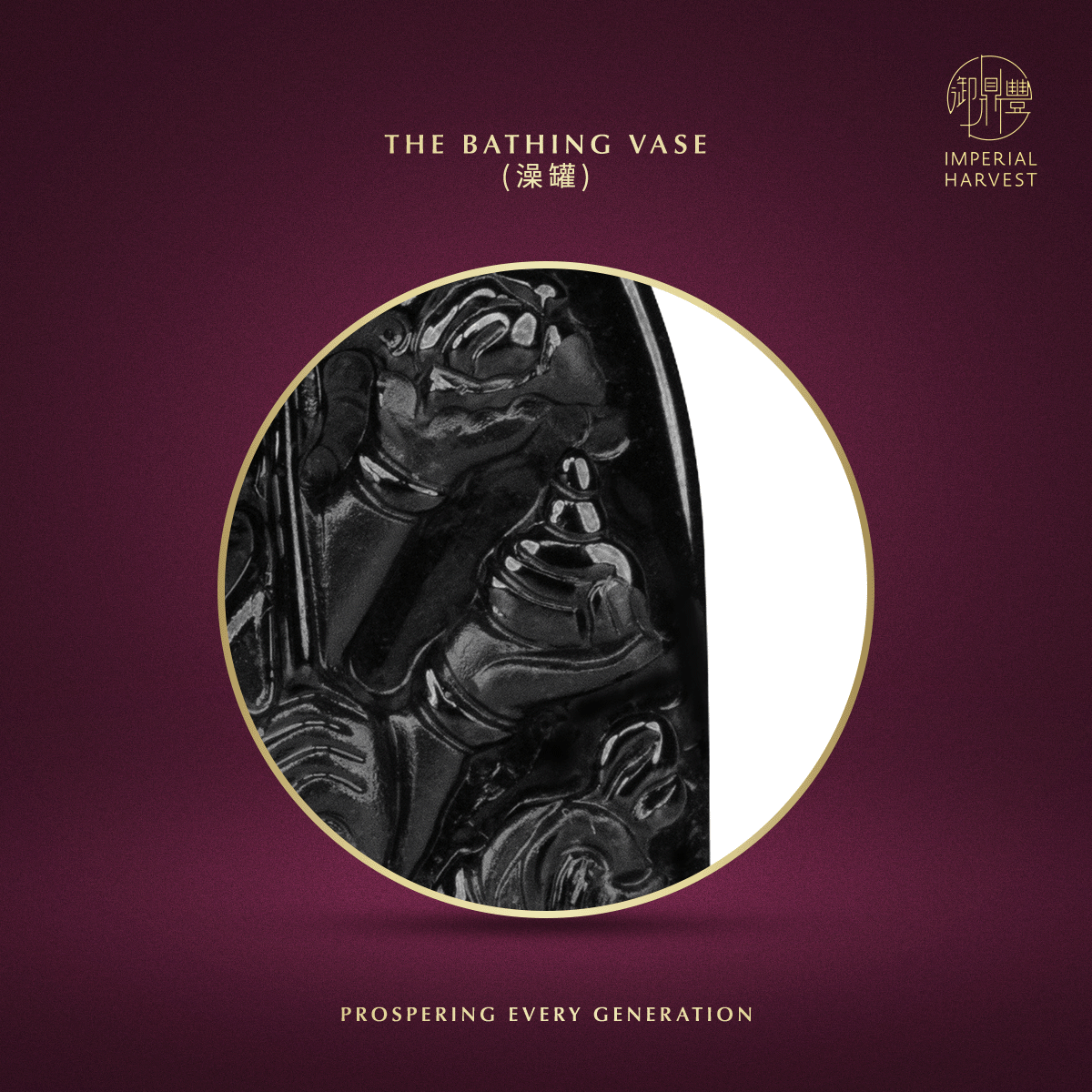
The Bathing Vase (澡罐) holds the divine nectar of life, which purifies and protects. It represents Guan Yin’s compassion in relieving suffering and washing obstacles from the devotee’s path.
Beyond purification, the vase signifies the endless flow of blessings and prosperity that follows once the path is clear.
Accumulated setbacks leave a residue: a reputation dented, momentum lost, a sense that luck has turned. The Bathing Vase governs renewal, clearing what has gathered so that blessings can flow freely once more and the wearer can begin again on clean ground.
The Vajra Lasso (金刚羂索): Subduing Obstacles
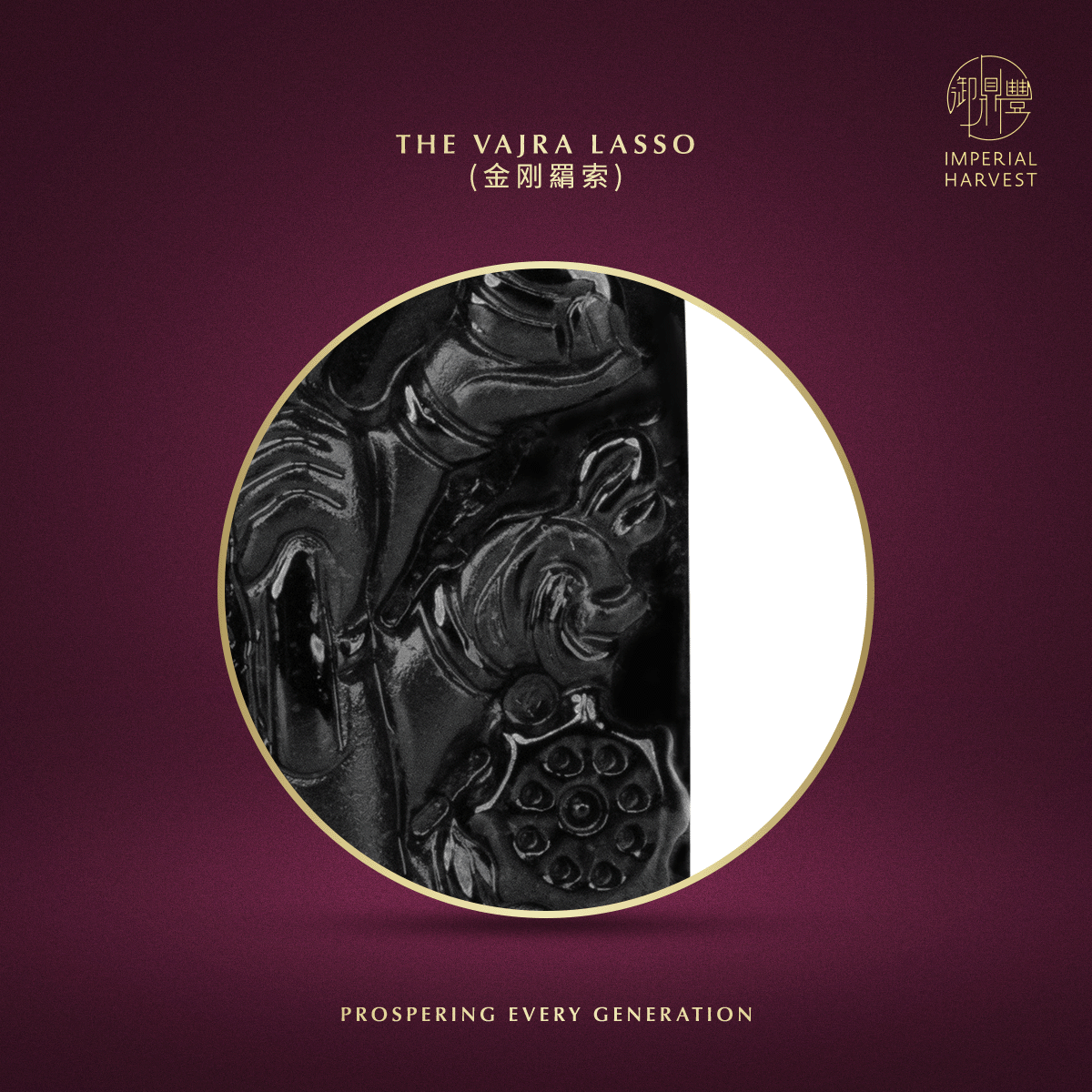
The Vajra Lasso (金刚羂索) embodies the profound power to subdue negative forces and guide beings towards enlightenment. It represents the idiom 驯服恶魔, “taming the evil spirits”.
More than an emblem of authority, it symbolises the ability to overcome obstacles and eliminate negative influences, leading to a life of protection and spiritual progress.
Some obstacles cannot be avoided, only contained. The Lasso governs that containment: negative influences restrained before they can disrupt the wearer’s progress, and the steady protection that allows ambition to proceed undisturbed.
The Eight-spoked Wheel (法轮): Breakthrough
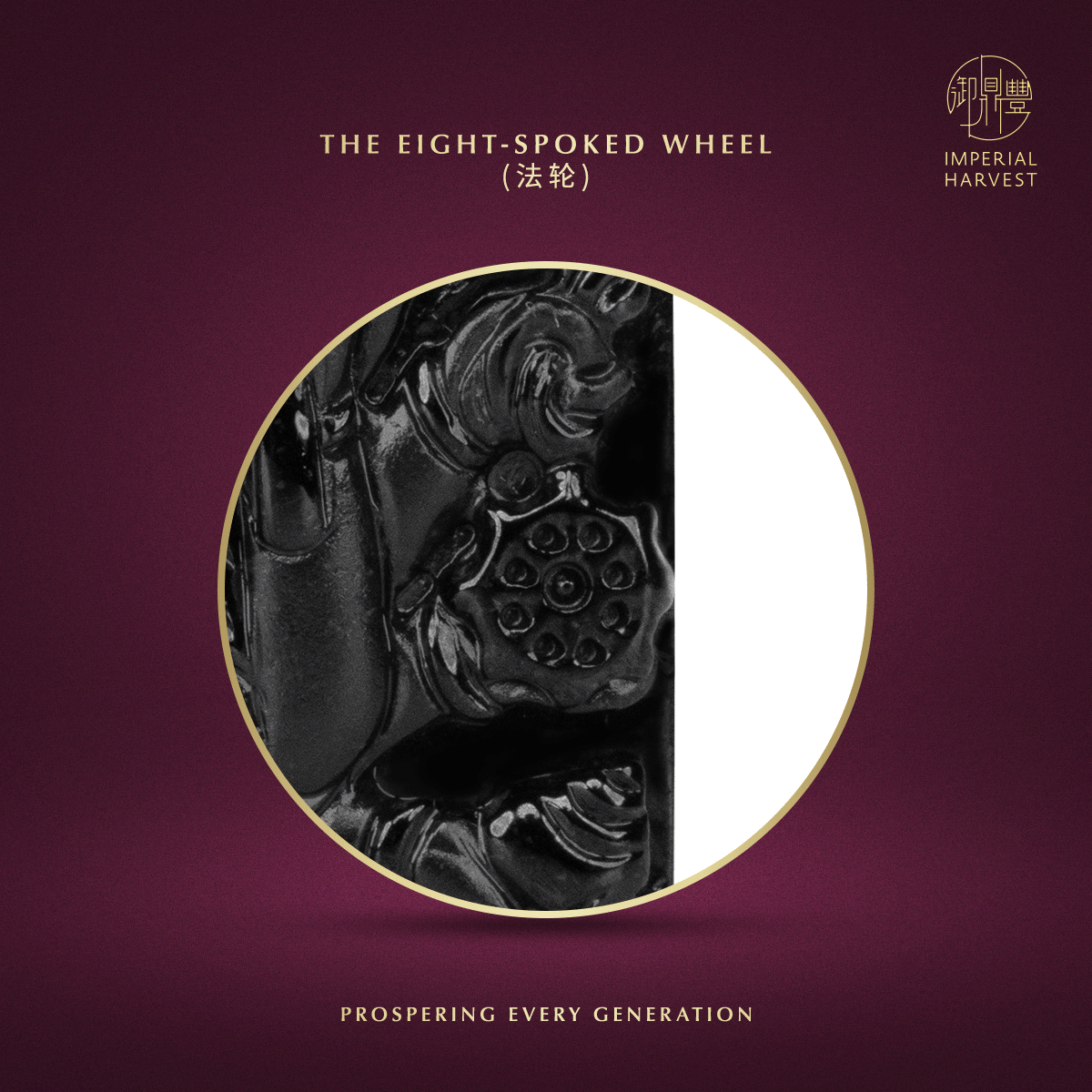
The Eight-spoked Wheel, also known as the Dharma Wheel or Dharmachakra (法轮), is one of the most important symbols in Imperial Feng Shui. Its eight spokes represent the Noble Eightfold Path, the path to enlightenment and breakthrough: right view, right intention, right speech, right action, right livelihood, right effort, right mindfulness and right concentration.
Held by Cundi Guan Yin, the wheel signifies her role in guiding devotees towards wisdom. To turn the wheel is to set the path in motion and lead beings out of stagnation.
For the wearer, it governs breakthrough: the moment a long-stalled career, business or negotiation begins to move again, and progress returns to every aspect of life that had come to a standstill.
The Conch (法螺): Reputation
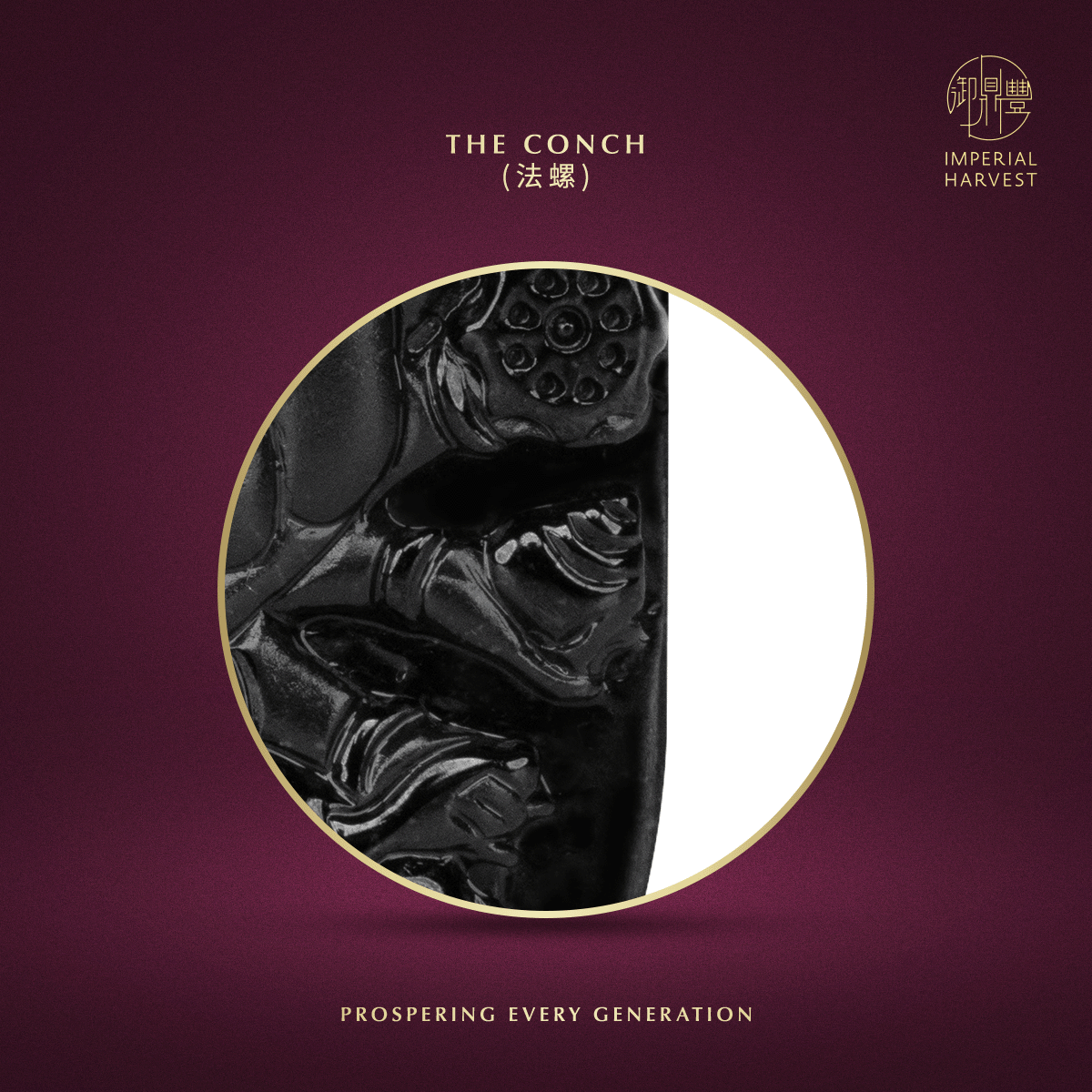
The Conch, also known as the Dharma Conch (法螺), is a significant symbol in Imperial Feng Shui. Its sound echoes words of wisdom and enlightenment, awakening beings from ignorance and calling them towards the path.
Just as the sound of the conch carries far and wide, so too can the reputation and prestige of the one who wears it.
The Conch governs recognition that extends beyond one’s immediate circle. With the blessings of Cundi Guan Yin, it supports international expansion, overseas career opportunities, and a name that arrives in the room before its owner does.
The Treasure Vase (宝瓶): Wish Fulfilment
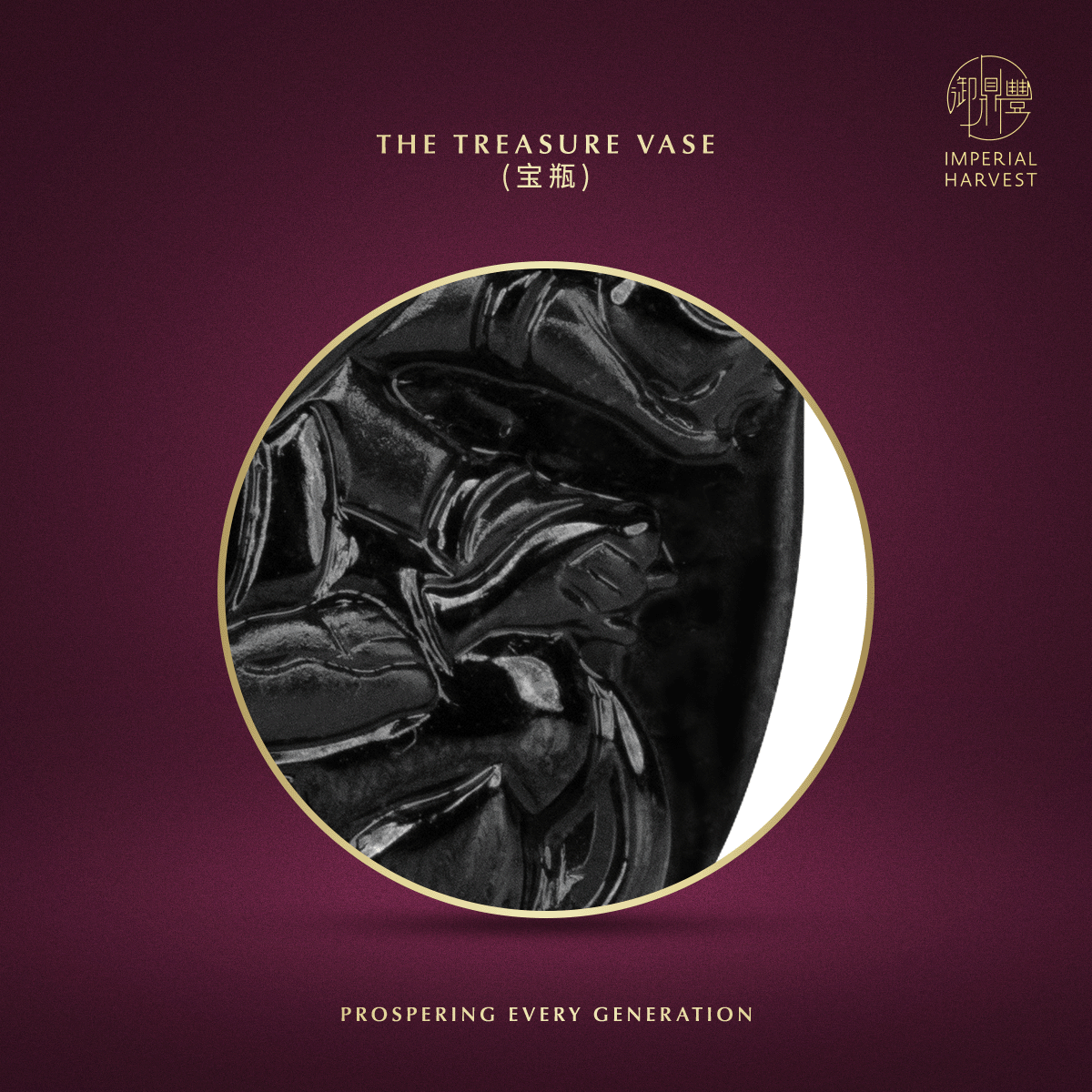
In Buddhist tradition, the Treasure Vase (宝瓶) is an inexhaustible source of blessings, a vessel of wealth, health and prosperity that never diminishes however much is drawn from it.
Held by Cundi Guan Yin, it represents her role as the provider of endless blessings, and the sacred power to fulfil the wishes of those who seek her.
For the wearer, the Treasure Vase governs the capacity to attract and contain positive energies. It supports wishes fulfilled and divine favour received, and ensures that what is gained is kept rather than spent as quickly as it arrives.
The Wisdom Sutra (般若箧): Understanding
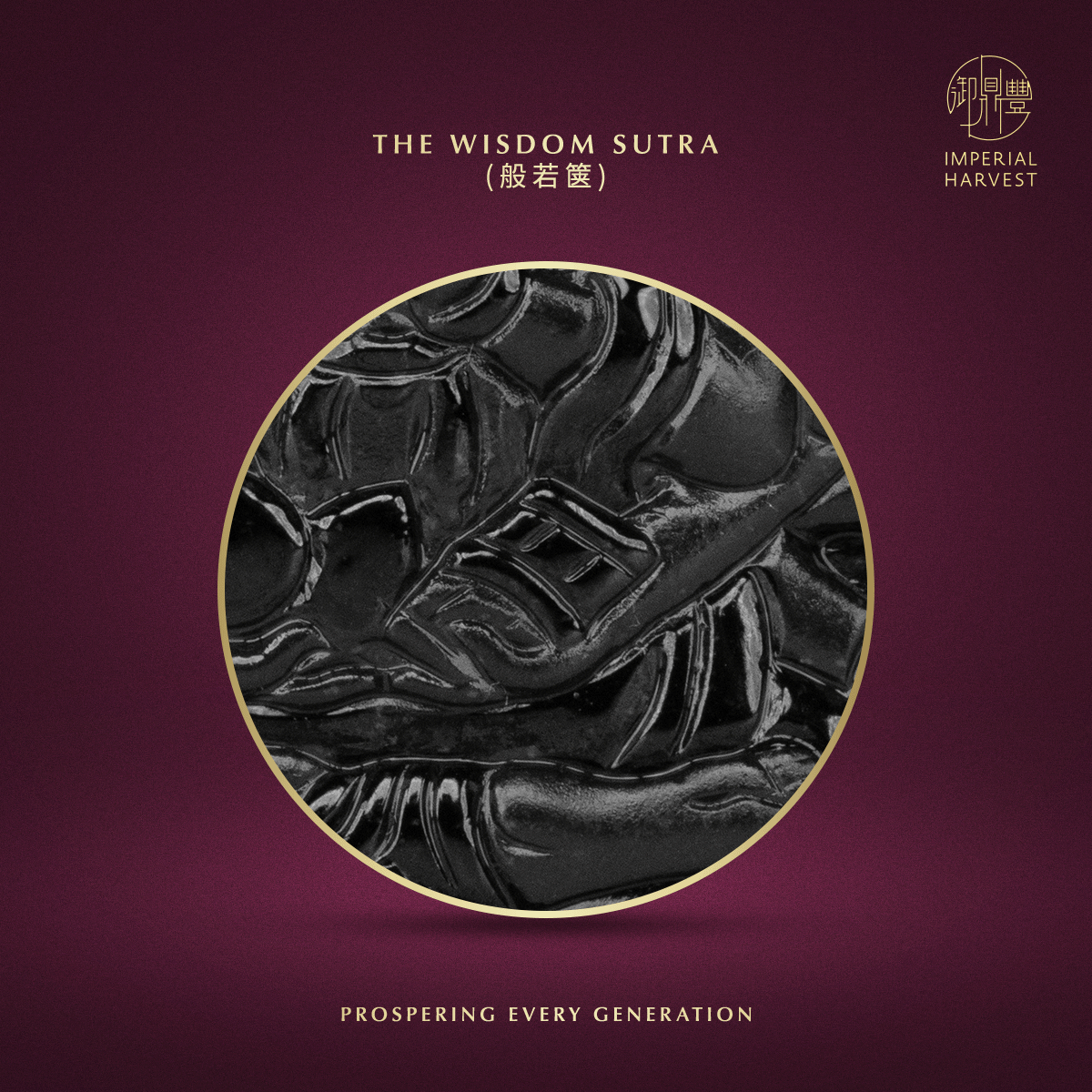
The Wisdom Sutra (般若箧) is the casket of prajna, the transformative wisdom Cundi Guan Yin bestows upon her devotees. It represents enlightenment and the power of understanding to change the course of a life.
The most consequential decisions are rarely obvious, and the cost of a wrong one compounds over years. The Wisdom Sutra guides the wearer towards clarity: the understanding to see a situation as it truly is, and the loving kindness that keeps that wisdom grounded in daily life and in every relationship it touches.
The Precious Garland (宝鬘): Fruition
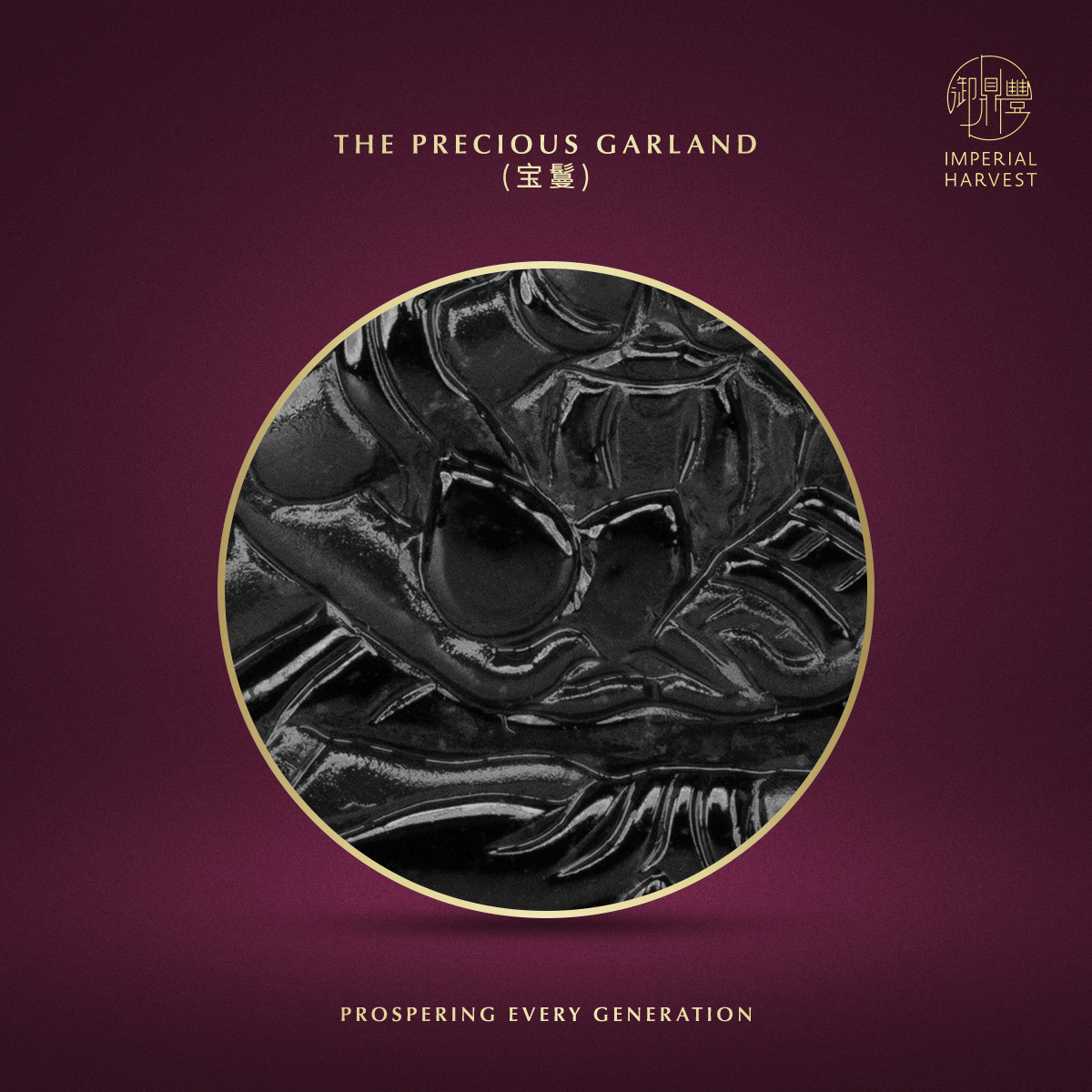
The Precious Garland (宝鬘) is crafted from interwoven flowers and leaves. More than an adornment, it embodies the idiom 开花结果, “to blossom and bear fruit”, a symbol of the attainment of enlightenment.
Effort that blossoms but never bears fruit is the most familiar frustration of a working life: the project praised but never funded, the talent noticed but never promoted. The Precious Garland governs fruition, the point at which sustained work finally produces its rightful result.
The Vajra Sceptre (金刚杵): Unshakeable Resolve
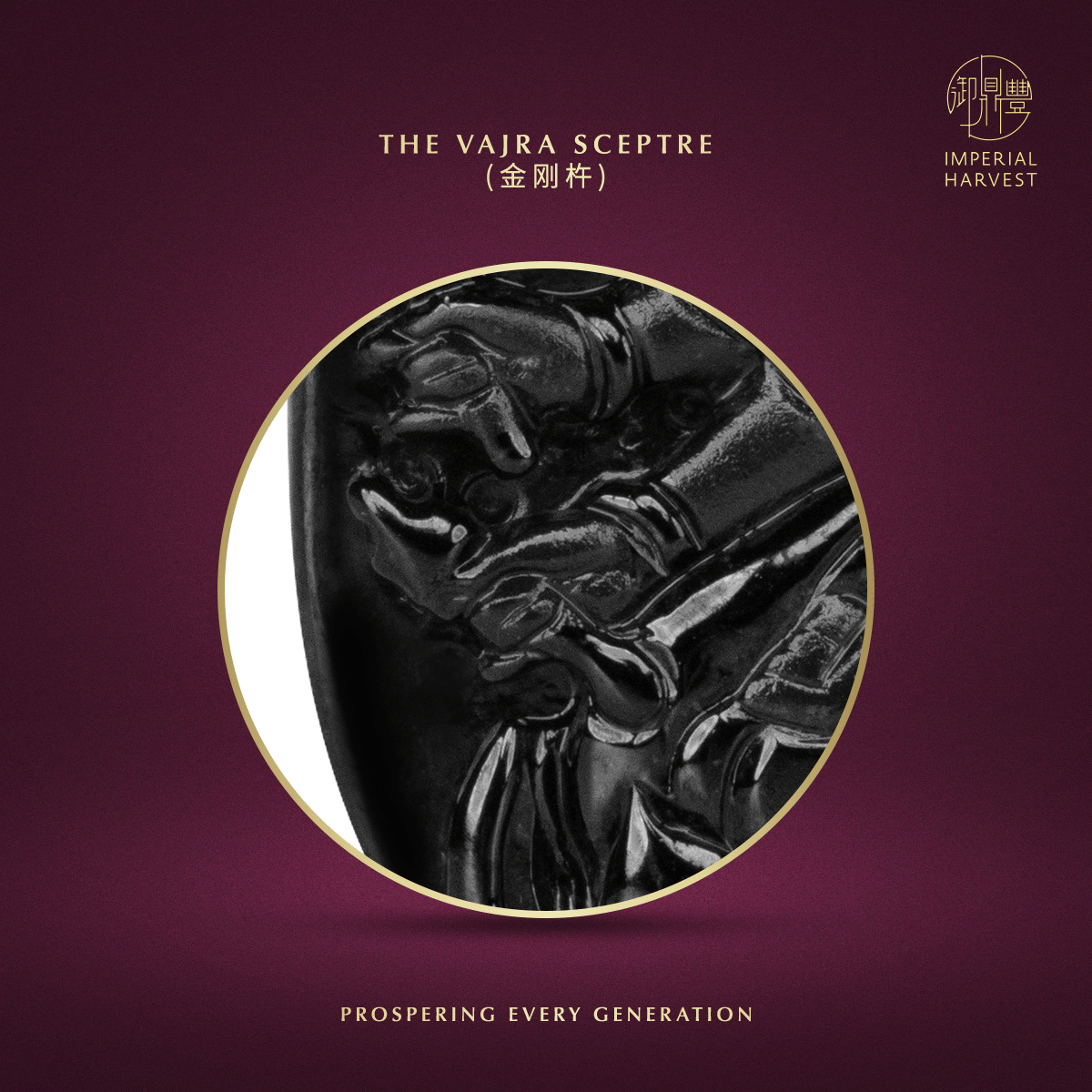
Known in Sanskrit as “vajra”, meaning both “diamond” and “thunderbolt”, the Vajra Sceptre (金刚杵) represents unshakeable spiritual power and wisdom. It is the emblem of indestructible truth and the dispelling of ignorance.
It embodies the idiom 坚如磐石, “as solid as a rock”: unwavering strength and resilience.
Pressure tests every position eventually. The Vajra Sceptre governs the resolve to hold firm when it does, with strength that does not crack under scrutiny, competition or setback.
The Vajra Hook (金刚钩): Drawing In Blessings
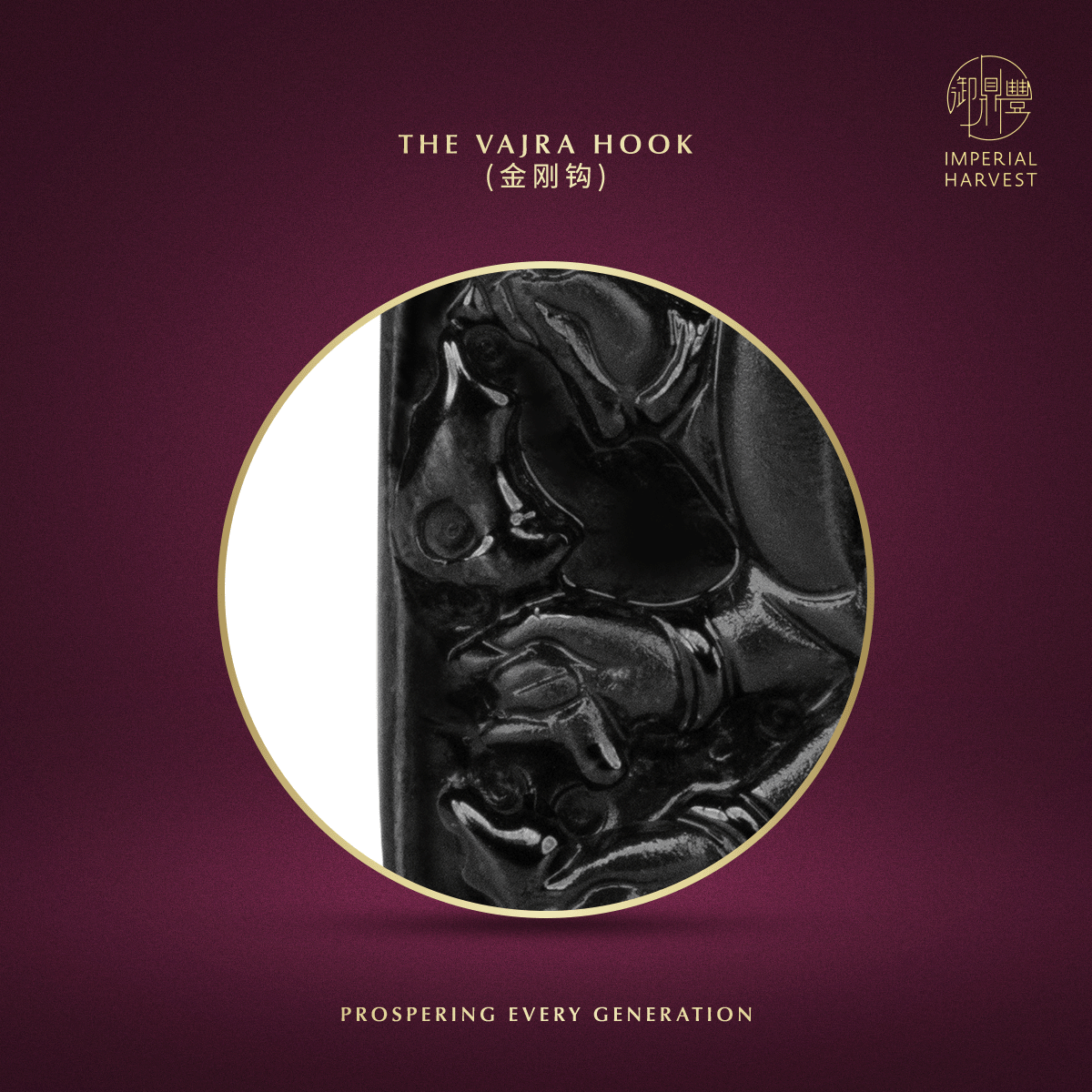
The Vajra Hook (金刚钩) signifies Cundi Guan Yin’s compassionate power to protect her devotees, drawing them away from negative influences and towards enlightenment.
Where the Lasso restrains what is harmful, the Hook draws in what is beneficial. It embodies the ability to attract positive energies, so that the wearer’s journey is filled with prosperity and growth.
For the wearer, it governs the attraction of favourable people, offers and opportunities into one’s orbit: the introduction that changes a career, the client who arrives at the right moment.
The Axe (钺斧): Seizing Opportunity
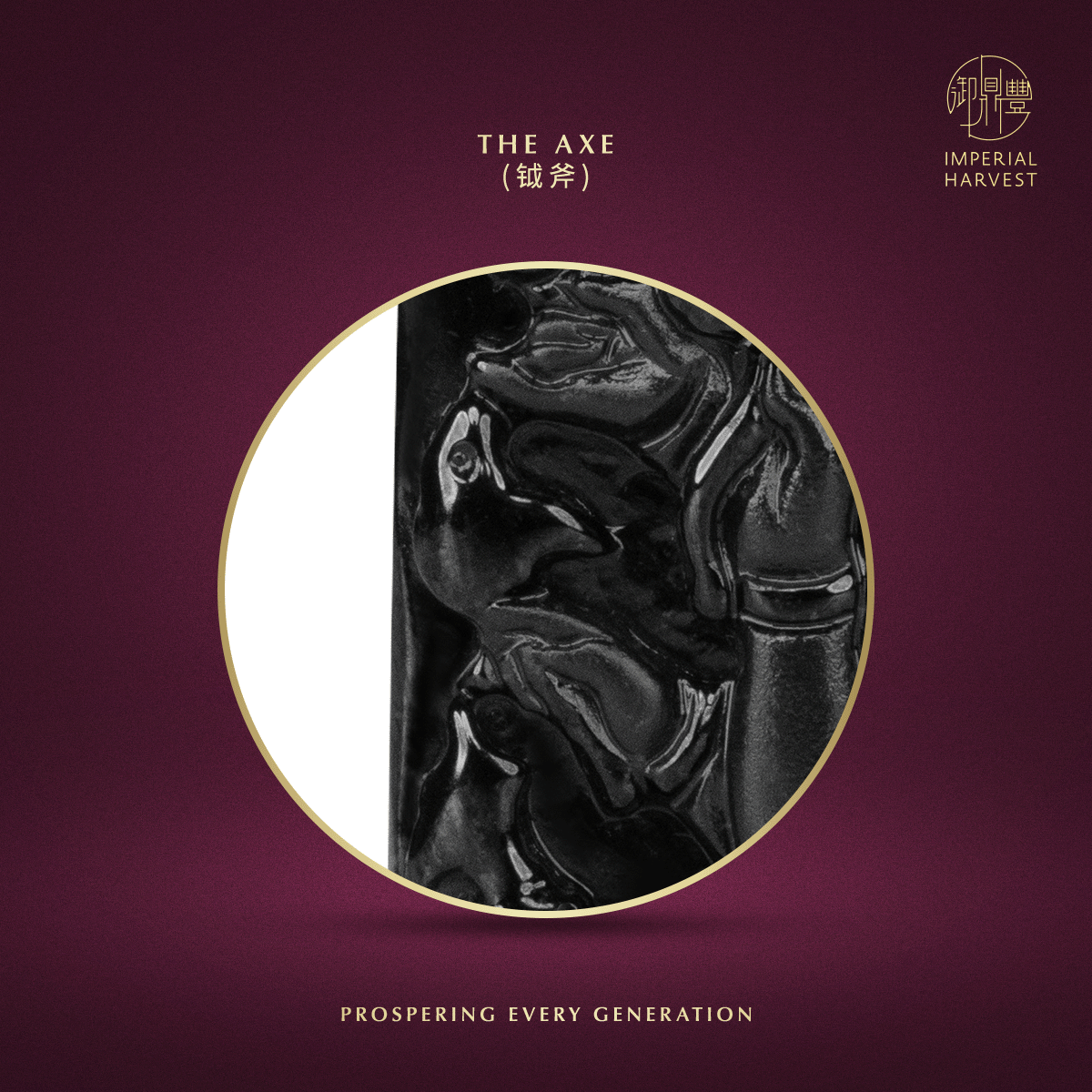
The axe held by Cundi Guan Yin, known as the Vajra Axe (钺斧), is a powerful symbol of opportunity and the decisive action needed to seize it. It reflects the idiom 斩获机会, “to capture opportunities”.
As a sacred instrument, it represents the Bodhisattva’s ability to cut through obstacles and clear the path for new possibilities.
Opportunity rarely waits for deliberation to end. The Axe governs decisive action: recognising the opening when it appears, and moving through it before it closes.
The Heavenly Fruit (天妙果): Abundance
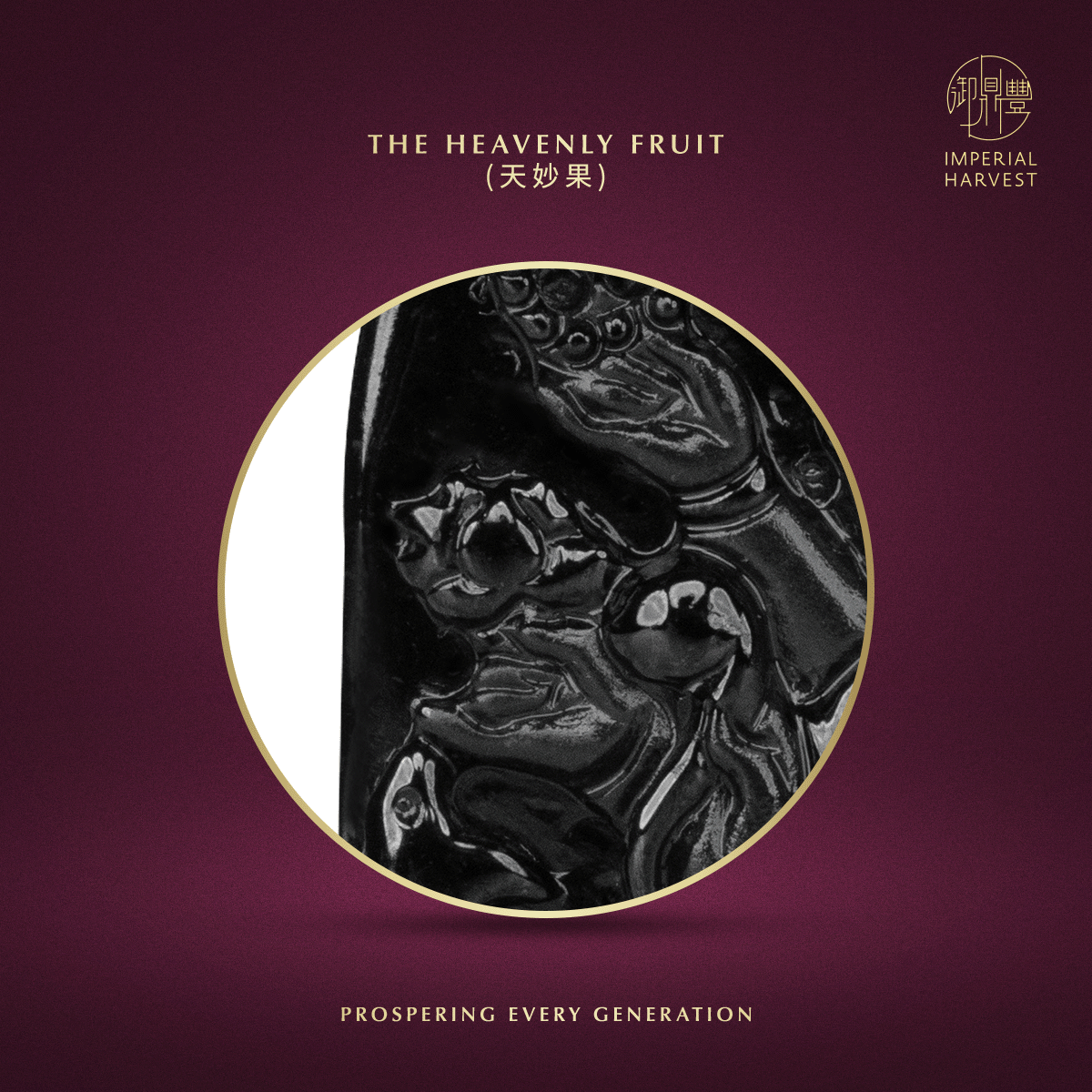
The Heavenly Fruit (天妙果) is a potent symbol of abundance, prosperity and the fruition of virtuous deeds. It reflects the Bodhisattva’s ability to bestow bountiful blessings and the realisation of one’s highest aspirations.
Often depicted with numerous seeds, the fruit symbolises the multitude of virtues and the potential for endless growth and success.
For the wearer, it governs a harvest proportionate to the effort sown, so that work pursued with determination and integrity yields prosperity and well-being in return.
The 108 Agarwood Beads (108沉香念珠): Completeness
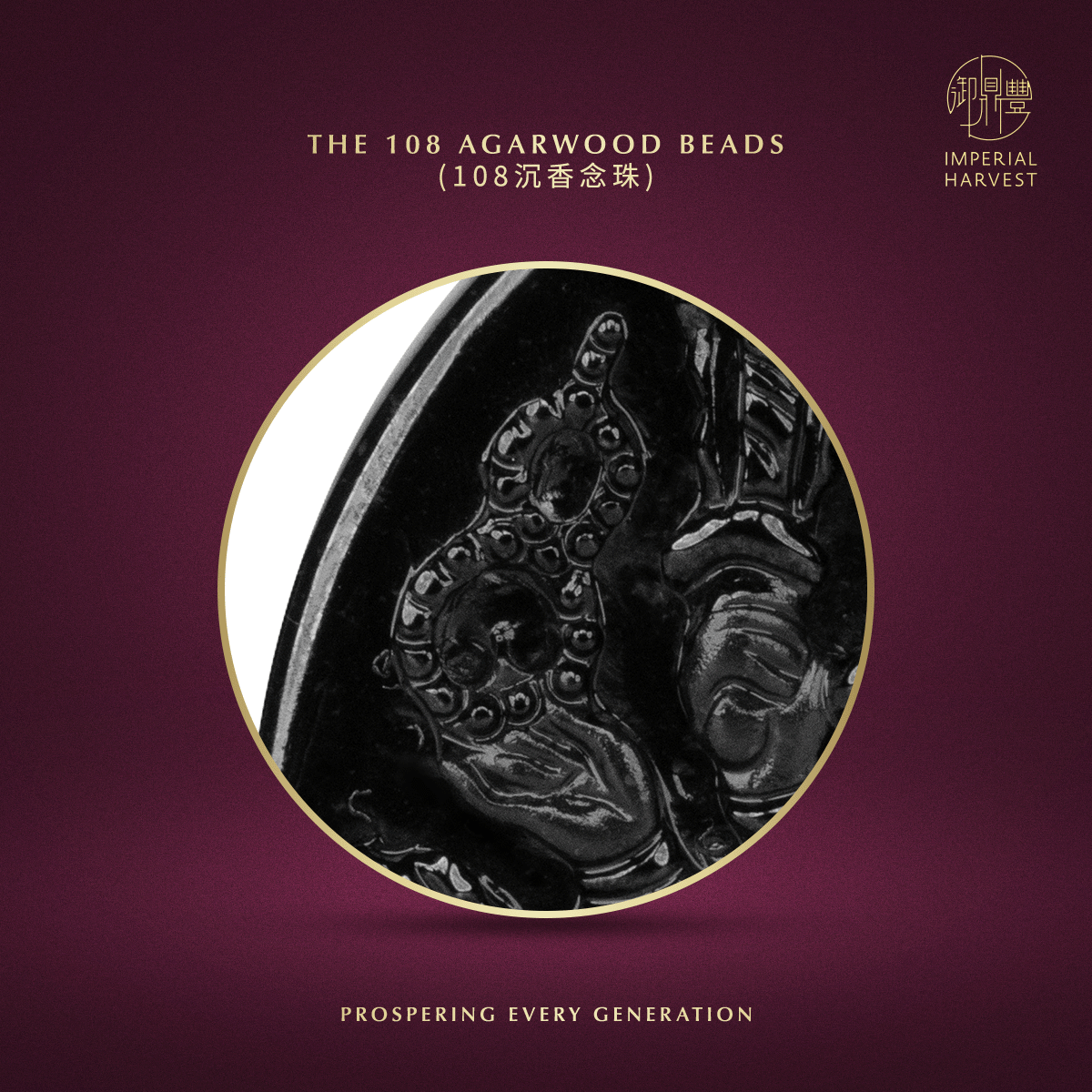
The 108 Agarwood Beads signify the thoroughness of Cundi Guan Yin’s blessing, extending prosperity to every aspect of life. Each bead represents a step towards purifying the mind and soul, promoting inner peace and spiritual growth.
In meditation, the beads are used to clear the mind, deepen concentration and foster connection with the divine.
A blessing that reaches only one part of life leaves the rest exposed. The beads govern completeness: prosperity extended across career, wealth, health and relationships alike.
The Sword of Wisdom (智慧剑): Discernment
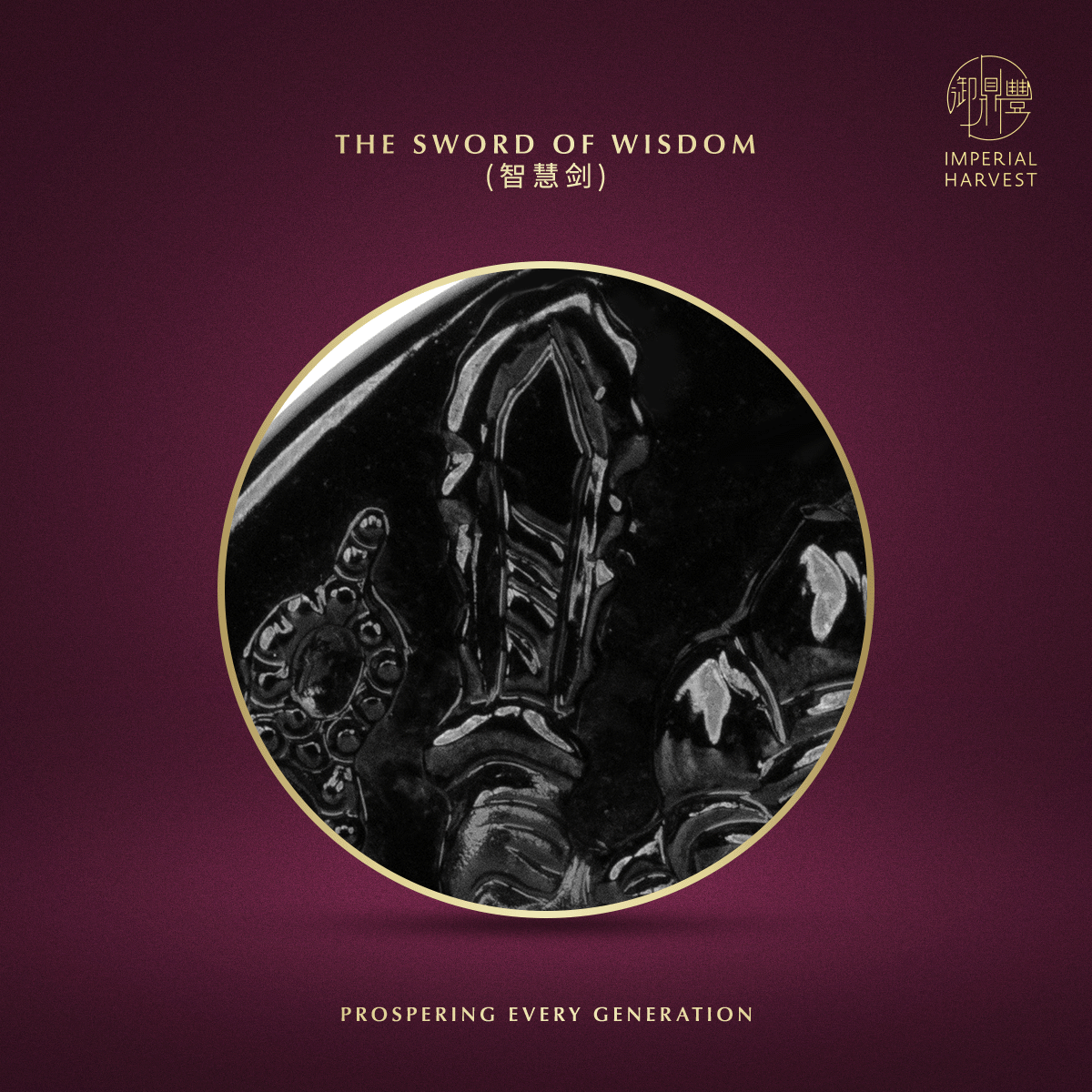
The Sword of Wisdom (智慧剑) signifies the ability to pierce through the veils of ignorance and delusion, providing clarity and insight. It represents Cundi Guan Yin’s power to help devotees see the true nature of reality.
Few things are as costly as a decision made on a false impression: the partner whose promises do not hold, the deal whose terms conceal more than they reveal. The Sword governs discernment, the clarity to see past appearances and navigate both personal and professional journeys with wisdom.
The Imperial Harvest Emblem
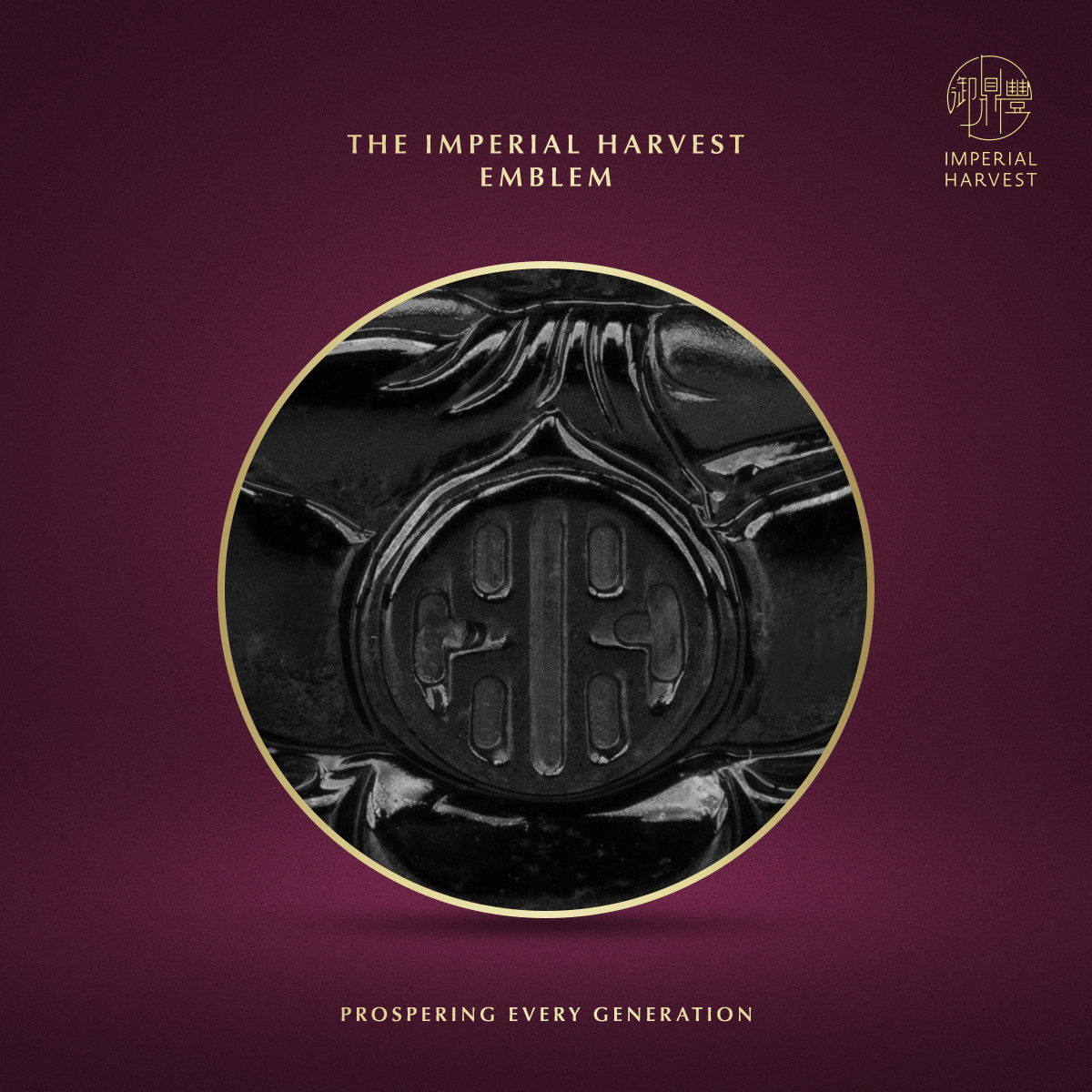
Every Fine Jadeite Cundi Guan Yin Pendant carries the Imperial Harvest emblem, carved on the front of the pendant as the house’s mark of consecrated authenticity. At its core sits the stylised character 鼎 (ding), the ceremonial cauldron through which emperors once communicated with Heaven. It is framed by an octagon representing the Eight Trigrams (八卦) and encircled by a round edge representing 天圆地方, the balance of celestial and terrestrial forces.
On this pendant, the emblem binds eighteen arms into a single working blessing, opening the compassion of Cundi Guan Yin onto the life of its destined owner.
Fine Jadeite: Major Yin (太阴) Across Five Elemental Colourways
As a carved jadeite pendant, the Fine Jadeite Cundi Guan Yin Pendant channels the Major Yin (太阴): the force behind the conditions a person receives rather than generates. It governs the timing of opportunity, the appearance of the right people, and the quiet cooperation of circumstance.
The alignment is precise. Cundi Guan Yin is the one who answers wishes, and an answered wish is, by nature, something received. Her doctrine and the channel through which it reaches the wearer move in the same direction.
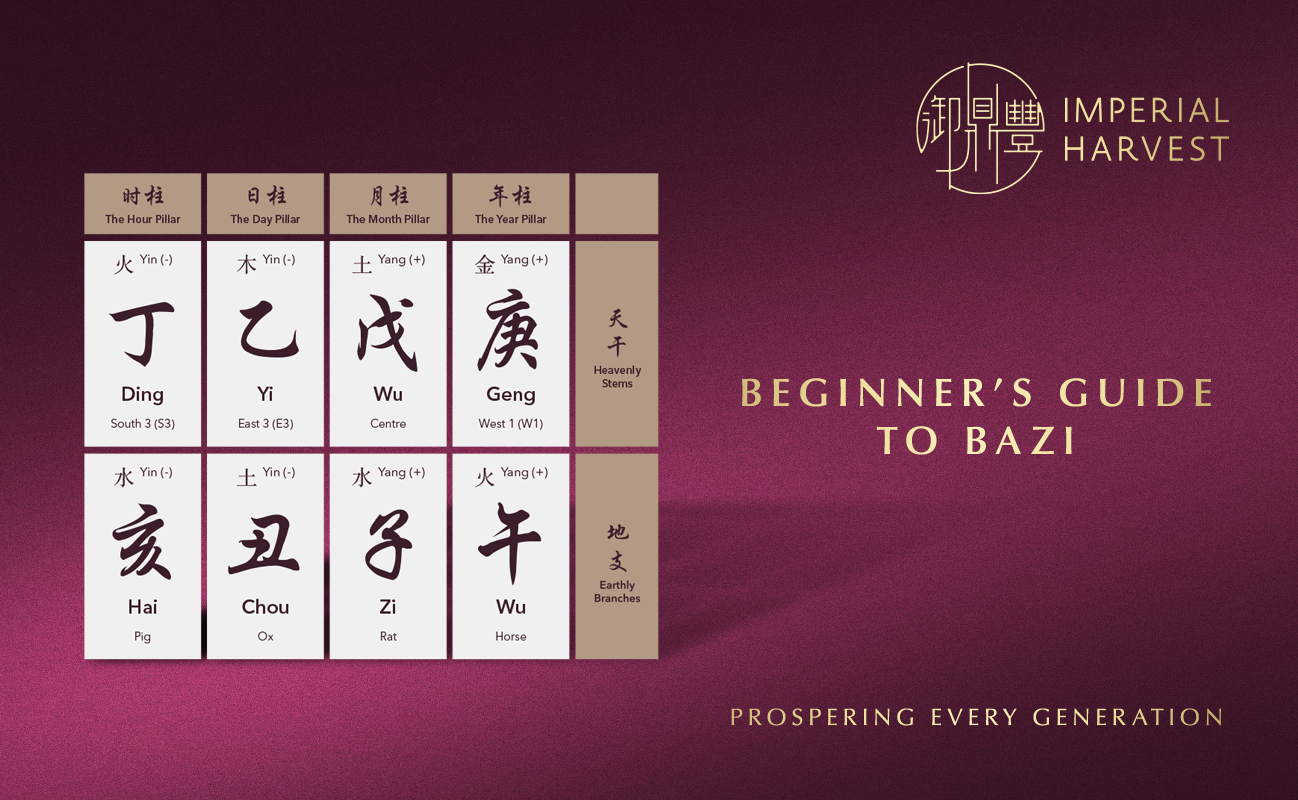
In the Four Quadrants of Destiny, the framework through which Grand Master David Goh reads every client’s Bazi chart, the Major Yin is typically the first quadrant addressed. It determines whether effort has favourable conditions to land on.
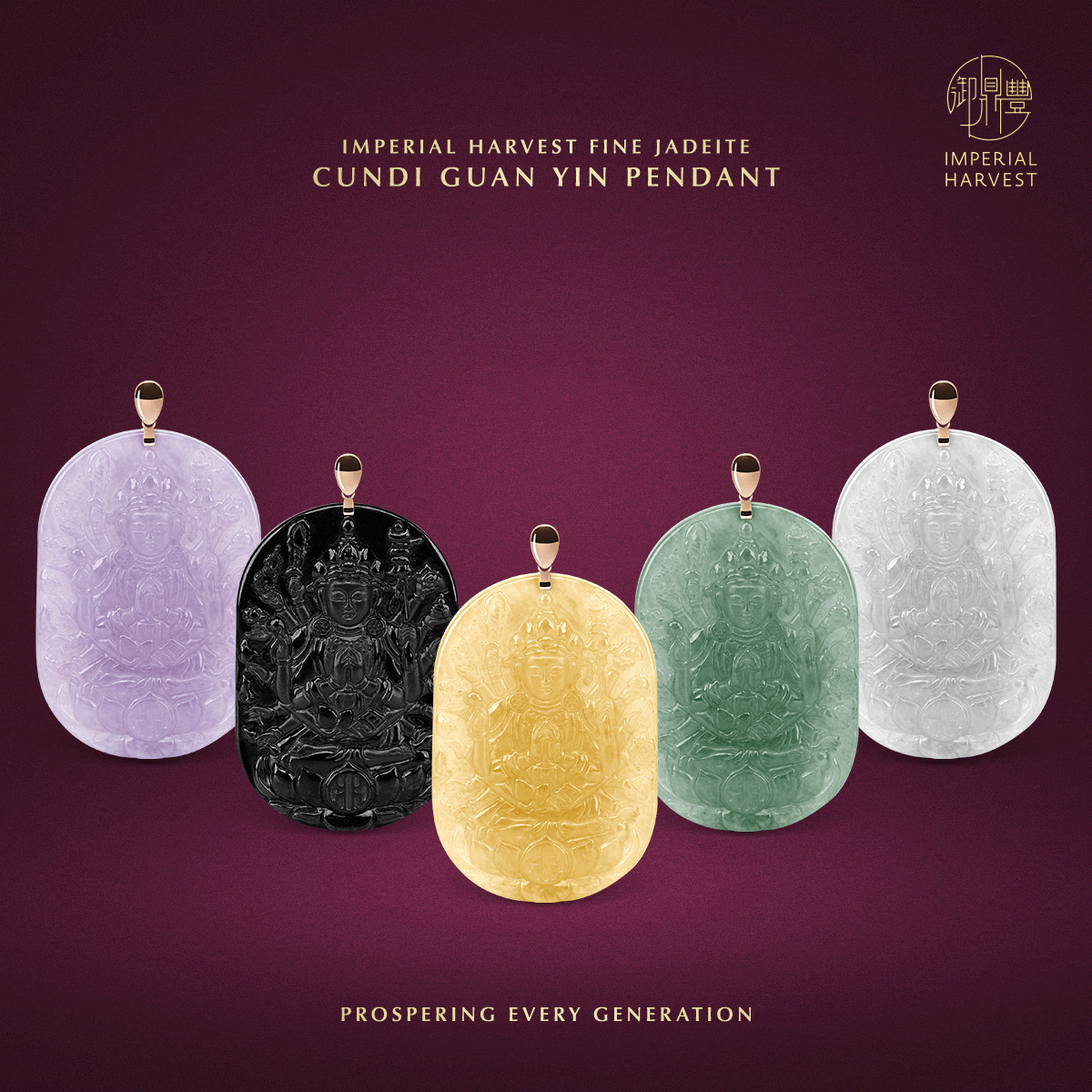
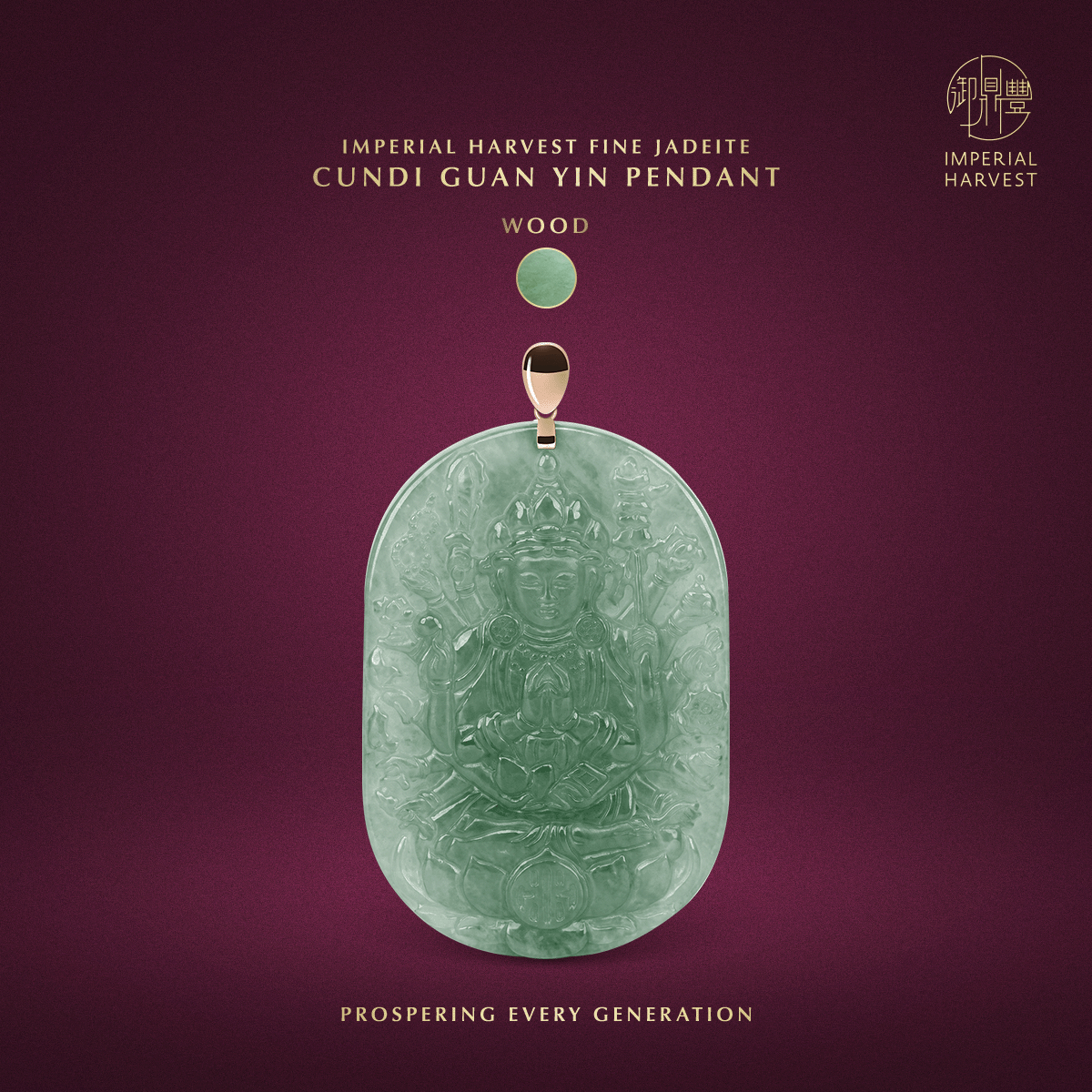
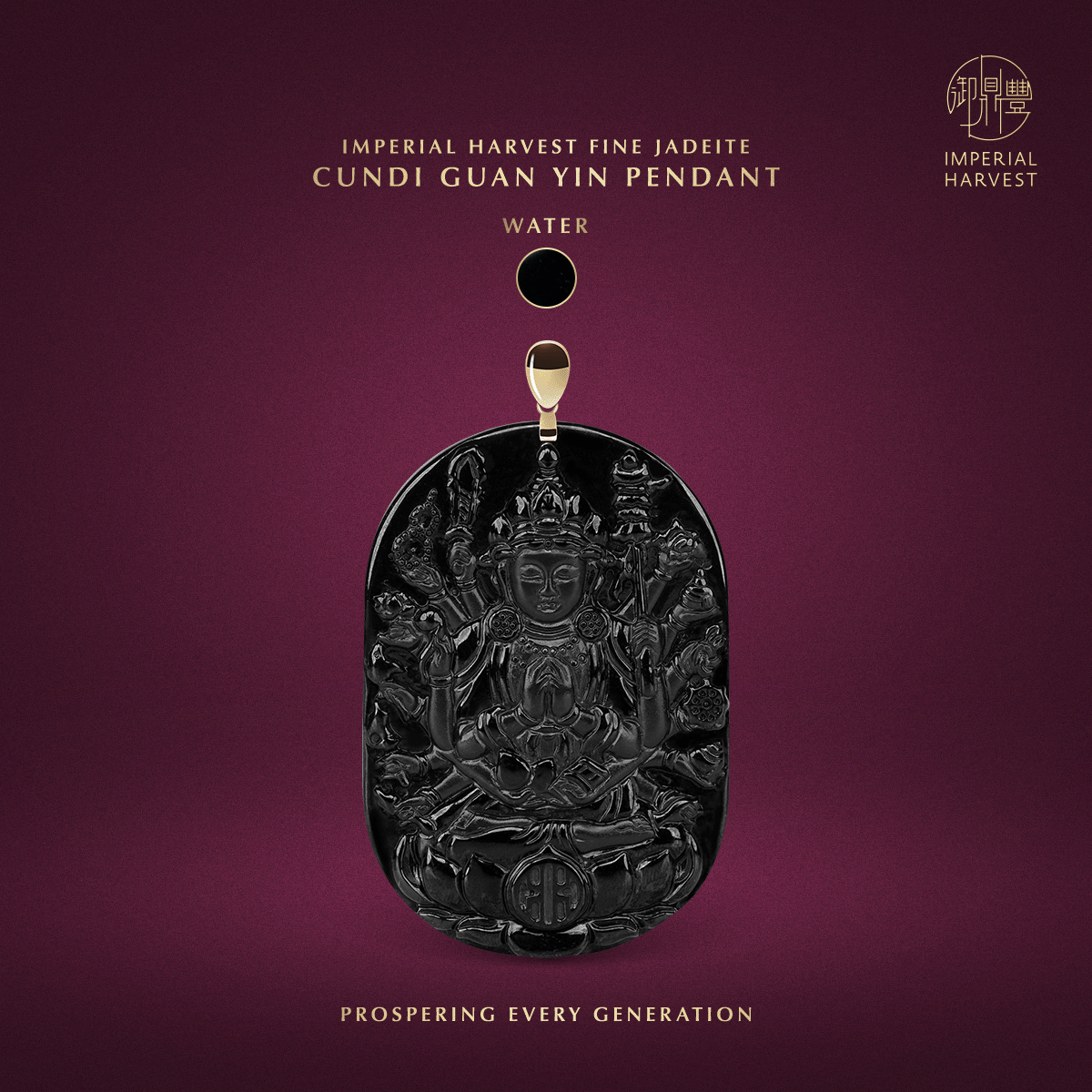
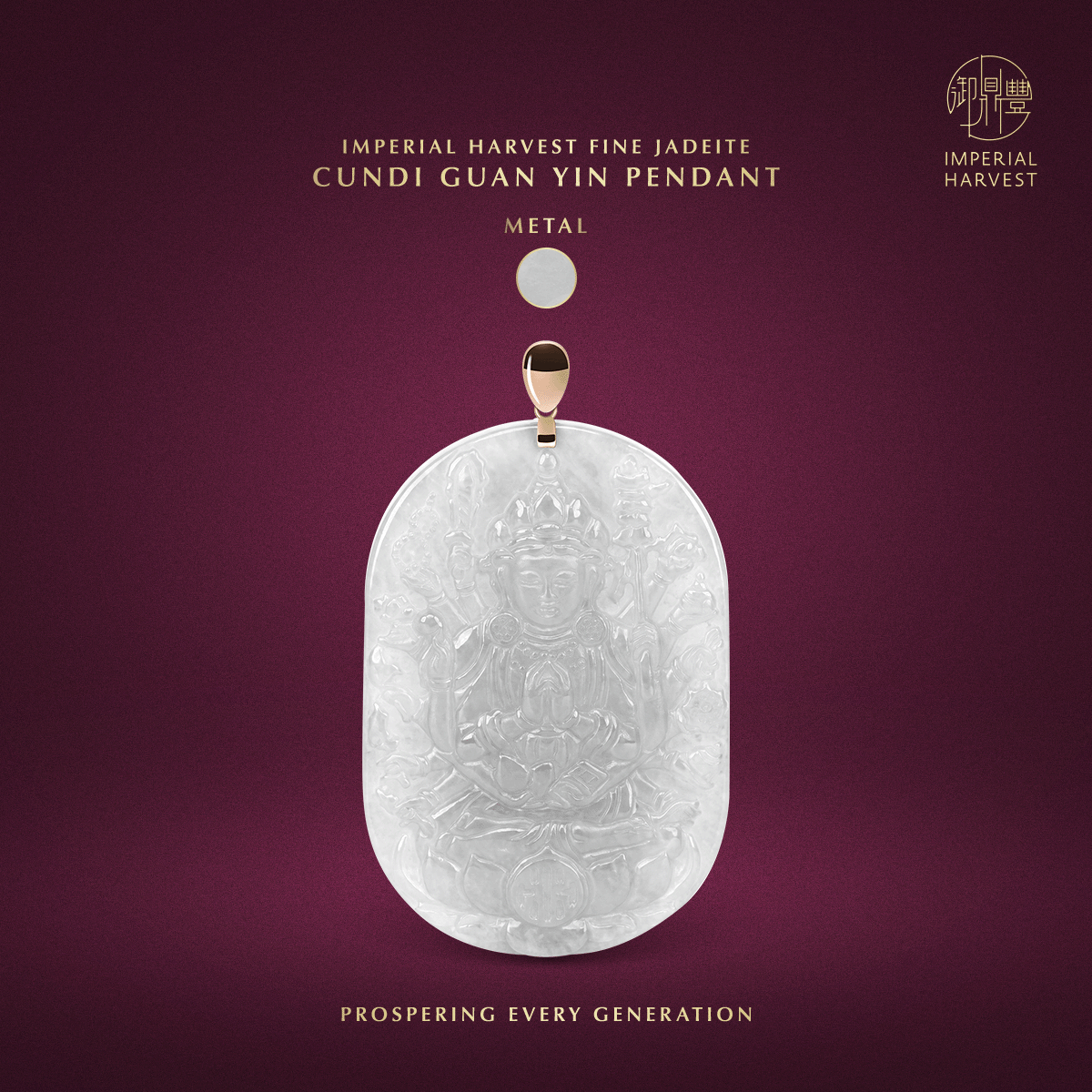
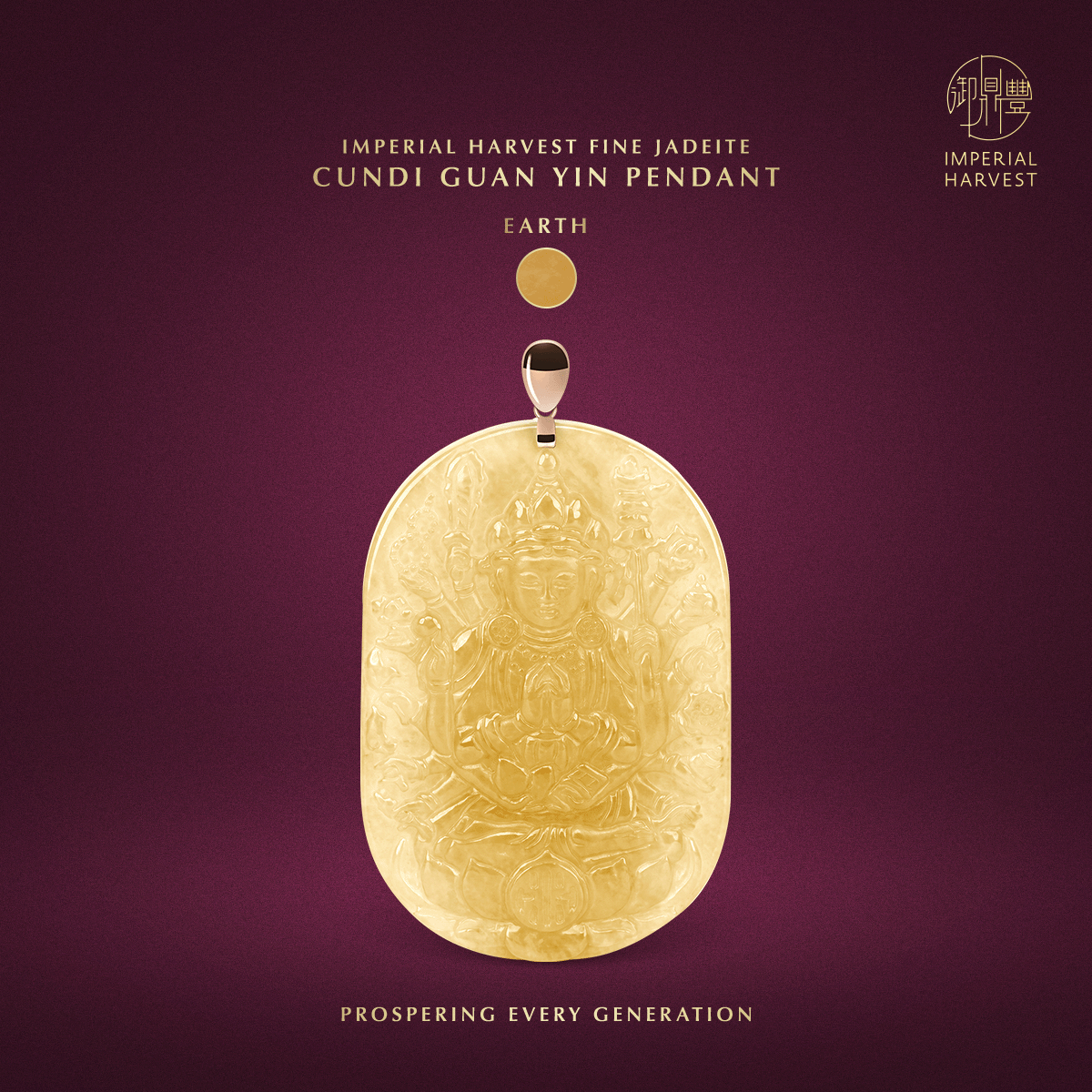
The Imperial Harvest Fine Jadeite Cundi Guan Yin Pendant is available in five elemental colourways:
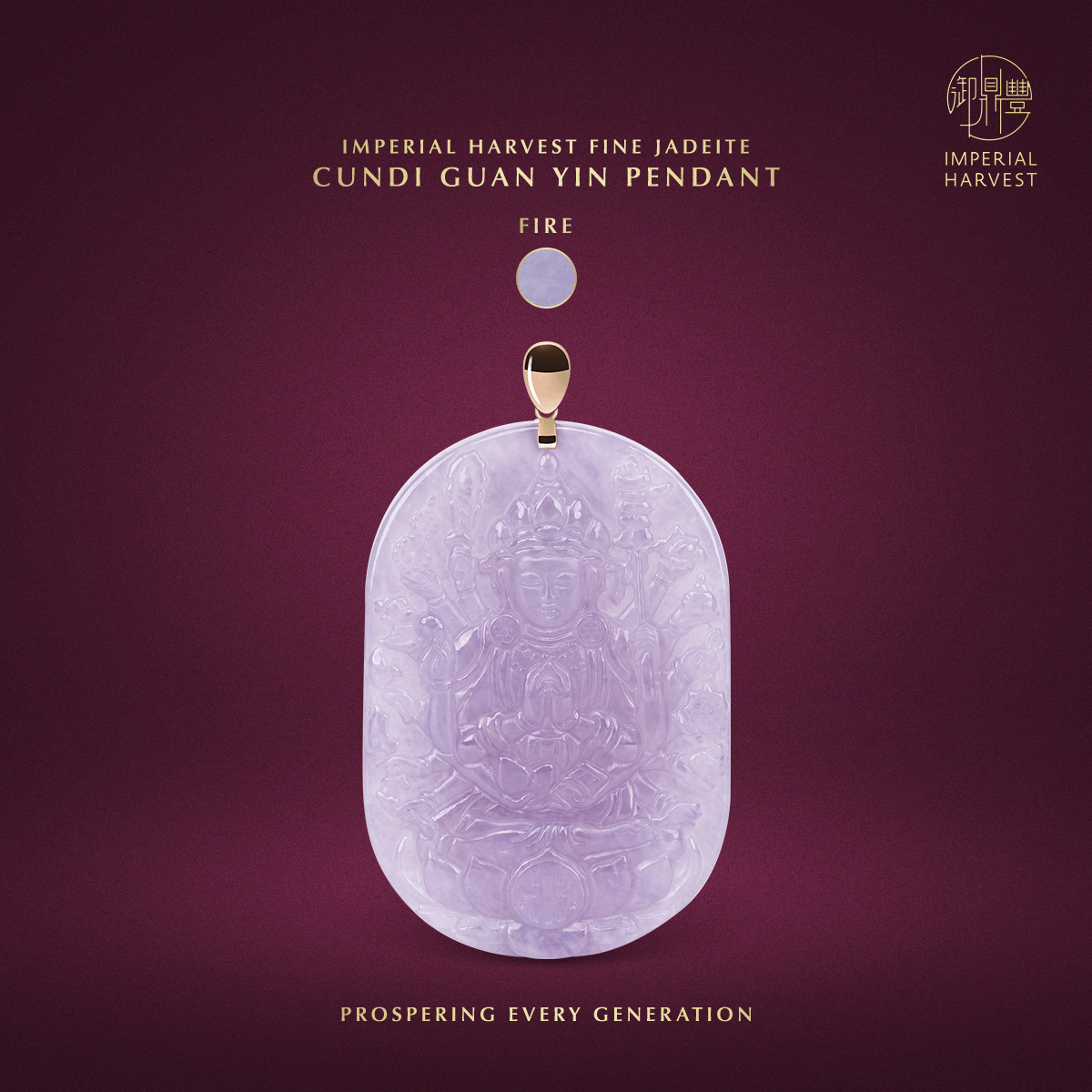
- Lavender (Fire)
- Green (Wood)
- Black (Water)
- White (Metal)
- Yellow (Earth)
The elemental colour is not decorative. It is the second layer of Grand Master David Goh’s prescription, determining which element strengthens the destined owner’s chart to receive the blessing most effectively. The correct colourway is identified during a complimentary 1-to-1 Bazi consultation with Grand Master David Goh, not self-selected.
The Pendant and Its Wearer
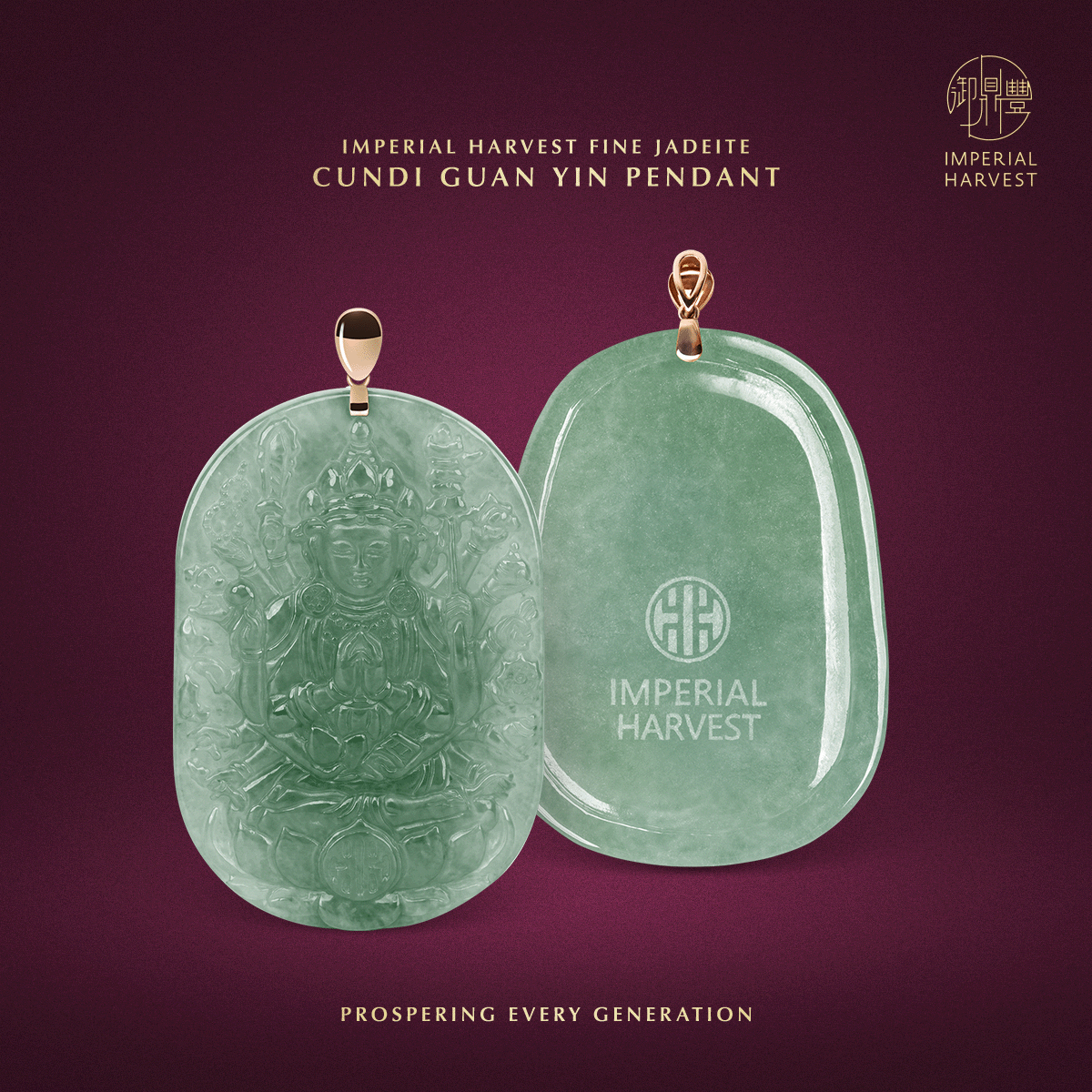
The Fine Jadeite Cundi Guan Yin Pendant carries the Guan Yin who has watched over Singapore for 142 years, carved to accompany a single life.
A firm foundation, held by the Muladhara mudra, and a fearless heart by the Abhaya mudra. Authority conferred by the Guardian Canopy, clarity kept by the Lotus, renewal brought by the Bathing Vase, and obstacles restrained by the Vajra Lasso. Breakthrough set in motion by the Eight-spoked Wheel, and reputation carried far by the Conch. Wishes answered by the Treasure Vase, understanding granted by the Wisdom Sutra, and fruition brought by the Precious Garland. Resolve held by the Vajra Sceptre, blessings drawn in by the Vajra Hook, and opportunity seized by the Axe. Abundance granted by the Heavenly Fruit, completeness assured by the Agarwood Beads, and discernment sharpened by the Sword of Wisdom. All of it channelled through the Major Yin, in fine jadeite carved for the wearer whose chart it is aligned to.
It is commissioned for those standing at a threshold: the professional awaiting a long-deserved promotion, the candidate pursuing a prestigious offer, the business owner with a decisive deal on the table, the leader seeking to expand overseas, and more. Each pendant is aligned to its wearer’s Bazi chart, and its colourway identified, before it leaves the gallery.
Five colourways. Eighteen arms. One Cundi Guan Yin, carried close.
Some treasures help you push the door. This one asks the door to open.
Begin with Your Bazi
Each Fine Jadeite Cundi Guan Yin Pendant is aligned to its wearer’s Bazi chart before it leaves the house. The correct colourway, and whether this treasure is the right prescription for your destiny, is determined in consultation with Grand Master David Goh.
Imperial Harvest’s expert consultants are always on hand to guide you on your journey and provide you with insights to help you realise your fullest potential. Book a complimentary consultation today.